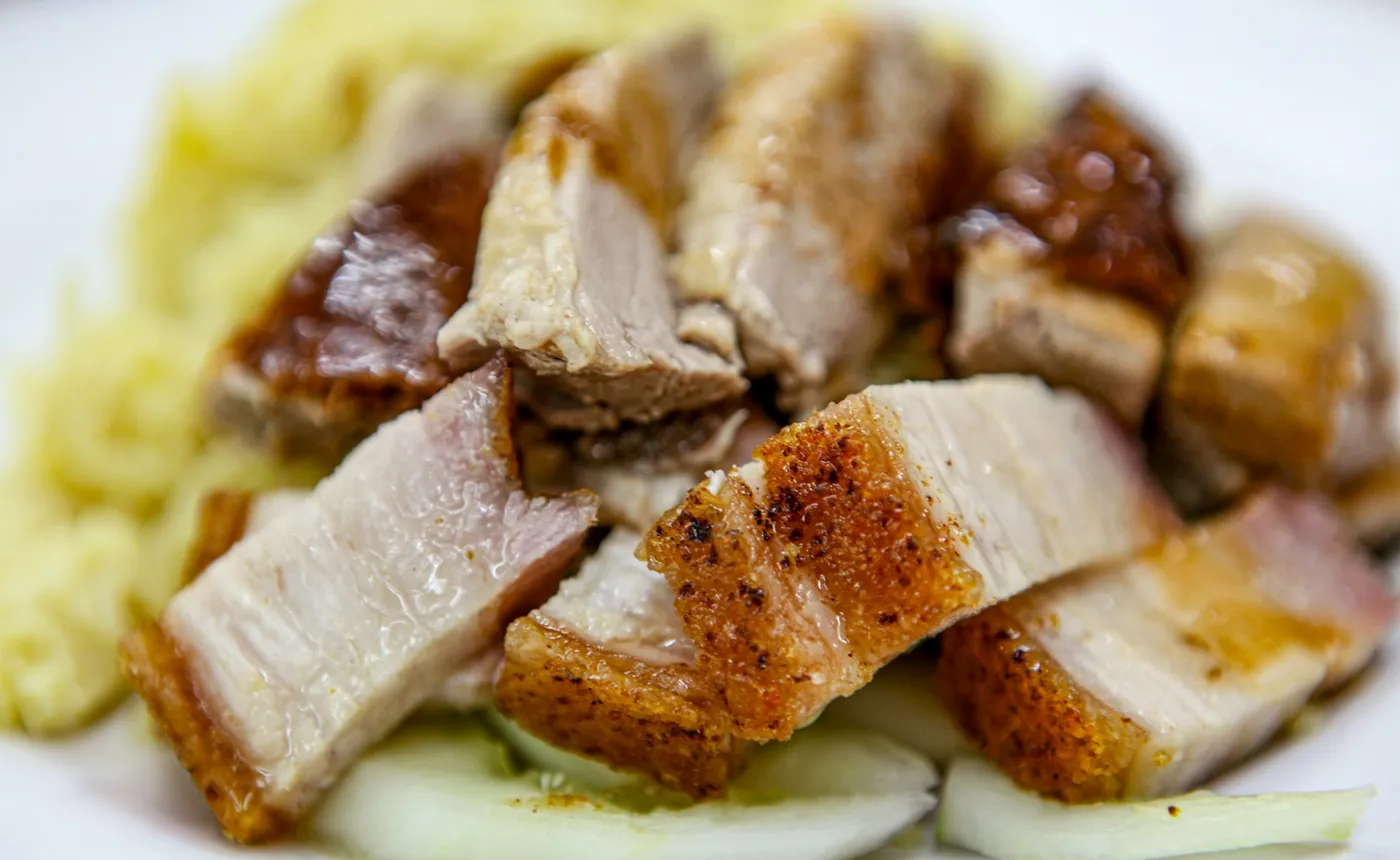
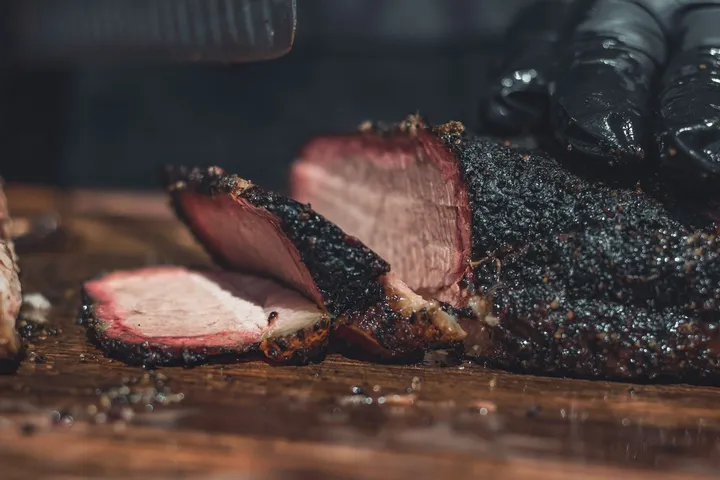
Pork belly burnt ends spend about 2.5 hours in the smoke at 250°F and another 90 minutes in a pan with butter, brown sugar and sauce, and they’re ready when a cube reaches 200 to 205°F and squishes under your finger. Cut them 1.5 inches square and almost nothing else about the cook can go badly wrong.
This recipe is written for a 4 lb skinless belly on a Pit Boss with pecan and cherry pellets. Cubes that go on at 11 a.m. are usually ready by about 3:30. Among the pork recipes here, this is the one for a crowd that’s standing around rather than sitting down. Put them out on a tray with toothpicks and don’t expect the tray to last.
The name is borrowed from brisket burnt ends, which are cubes of the fatty point, sauced after the smoke. Belly costs less, needs no overnight, and already has the fat-to-meat balance you want without any trimming.
Buying pork belly for burnt ends
Look for a skinless slab between 3 and 5 lb. Whole bellies run 8 to 12 lb at the same price per pound, so if the store sells halves, buy a half and freeze the rest. Skin-on is workable, but cut the skin off with a long, thin knife before you cube it, because skin doesn’t render at 250°F and leaves each cube wearing a rubber hat.
Pick a slab with even stripes of meat and fat and a thickness of about 1.5 inches. Avoid bellies that are mostly fat at one end and mostly meat at the other, since cubes from each end cook at different rates. Good belly has firm, white fat and a slight curve to it.
Asian grocers and warehouse clubs often sell belly by the slab for noticeably less than the butcher counter, and it’s the same cut.
Burnt ends timing by cube size and grill temp
| Belly and cut |
Grill temp |
Smoke, then sauced |
Pull at |
| 3 lb, 1.5 inch cubes |
250°F |
2.5 hours, then 1 to 1.5 hours |
190°F, then 200 to 205°F |
| 4 lb, 1.5 inch cubes |
250°F |
2.5 to 3 hours, then 1.5 hours |
190°F, then 200 to 205°F |
| 5 lb, 1.5 inch cubes |
250°F |
3 hours, then 1.5 hours |
190°F, then 200 to 205°F |
| 4 lb, 1 inch cubes |
250°F |
2 hours, then 1 hour |
190°F, then 200 to 205°F |
| 4 lb, 1.5 inch cubes |
275°F |
2 hours, then 1 hour |
190°F, then 200 to 205°F |
| 4 lb, 1.5 inch cubes |
225°F |
3.5 hours, then 1.5 hours |
190°F, then 200 to 205°F |
Cube size matters far more than total weight, because each cube cooks on its own. An extra pound of belly gives you more cubes, not bigger ones, and adds very little time. The smoke time calculator is built around whole cuts, so use it as a rough guide for the smoke stage and plan 90 minutes for the pan.
Prep: cubing, rubbing and spacing
Use a long knife to cut the belly into a 1.5 inch grid, and measure the first few cubes. Under an inch, they shrink to nuggets and dry out. Over 2 inches, the fat in the middle stays waxy. A 4 lb belly gives about 40 cubes.
Toss them in a large bowl with a few tablespoons of yellow mustard, then add the rub: coarse salt, coarse pepper, paprika, brown sugar, garlic powder, onion powder and chili powder. Every cube has six faces, so burnt ends take more rub than any whole cut, about half a cup for a 4 lb belly. Keep turning until nothing bare is showing.
Line the cubes up on a wire rack, fat side up, with a finger’s width between them. The rack goes on and off the grill in one move, which beats handling 40 cubes with tongs. Use two racks if you have them, because cubes packed tight steam each other instead of browning.
You don’t need to rub them ahead. Season them while the grill heats.
The cook: smoke stage, then the pan
I use equal parts pecan and cherry for belly. Pecan tastes like a gentler hickory and goes with the sweet pan stage instead of fighting it, and cherry turns the cubes the deep mahogany color that makes people reach for them. Hickory cut with apple also works. Leave the mesquite in the shed.
Set the Pit Boss to 250°F and give it 15 minutes after it reads ready. The rack goes in the middle of the grate, away from the hot end, because small cubes sitting over the hot spot scorch on the bottom before the rest catch up.
Keep the lid closed for 2 hours, then check a few cubes. You want a dark red-brown surface, rub that has set and doesn’t smear, and a probe reading of around 185 to 190°F. If they still look pale, give them another 30 minutes. Whatever color you have now is the color you’ll serve, because the pan softens bark rather than building it.
Watch out: Two shortcuts ruin a batch together: cutting the cubes at one inch to get more of them, and setting the rack on the hot end because that’s where the space is. By 90 minutes the bottoms are black, the cubes have shrunk to the size of dice, and they eat like bacon jerky. Stick to 1.5 inches and the middle of the grate, and if the grill is crowded, give the burnt ends the cool spot.
Tip the cubes into a foil half pan in a single layer. Add the butter in pats, the quarter cup of brown sugar, the honey and the barbecue sauce, and turn everything gently with a spatula. Cover the pan tightly with foil and put it back on at 250°F for an hour.
After the hour, take the foil off. The sauce will be thin and the cubes soft. Leave the pan uncovered on the grill for another 20 to 30 minutes, stirring once, until the sauce cooks down and goes tacky on the cubes. Skip this step and you’ve made pork in sauce rather than burnt ends.
| Stage |
Time at 250°F |
Internal temp |
What you’re looking for |
| Smoke on the rack |
2 to 3 hours |
185 to 190°F |
Dark bark that doesn’t smear |
| Covered pan |
1 hour |
195 to 200°F |
Fat softening, sauce thin |
| Uncovered pan |
20 to 30 minutes |
200 to 205°F |
Glaze tacky, fat squishes |
When pork belly burnt ends are done
They’re finished when a probe slides into a cube with no drag and the fat gives under a fingertip, usually at 200 to 205°F. Below about 195°F, the fat is still waxy in the center and the meat feels tight. A cube that squishes is done, and one that springs back needs about 15 more minutes.
The sauce should coat the cubes and leave a thin glaze on the pan rather than pooling underneath. If the pan’s still swimming, give it 10 minutes more uncovered.
Let the pan sit for 10 minutes before serving. The glaze firms up a little as it cools, and the cubes hold together when you pick them up. There’s no need for a longer rest on something this small.
Cold days, hot spots and rain
Cubes have a lot of surface for their size, which makes them more sensitive to uneven heat than a whole roast. A Pit Boss already runs hotter near the hopper (AmazingRibs measured about 20°F from left to right on an 820 set to 225°F), and on a 35°F day with wind a grill cycling hard can widen that gap, so cubes on the hot side finish well ahead of the others. On cold days, turn the rack around at the one hour mark and put the back of the grill to the wind.
Warm days give you less to manage. At 85°F, expect the smoke stage to take about 2 hours 20 minutes, with the grill hardly cycling. When it’s hot out, run the first hour at 225°F for more smoke, then go up to 250°F.
Rain mostly matters during the uncovered pan stage, when an open pan sits under a lid that may be dripping. Keep the lid closed, and if the weather turns, finish the uncovered step in a 250°F oven.
Serving and storing burnt ends
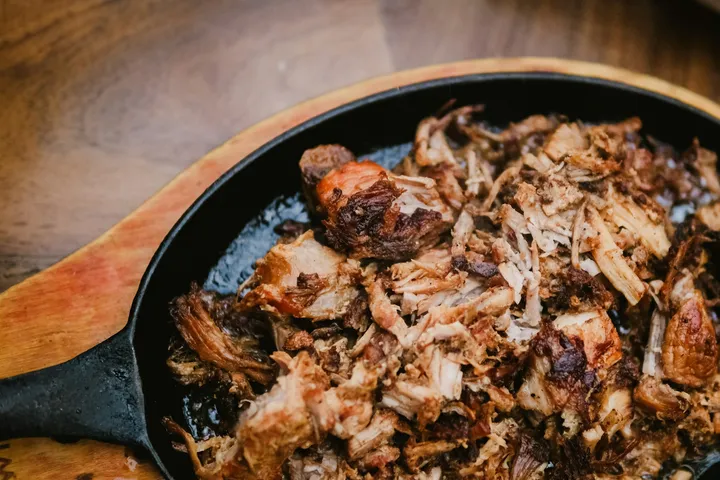
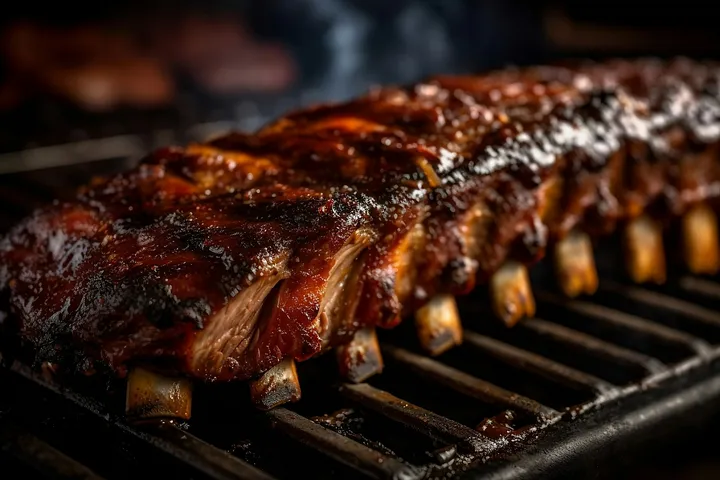
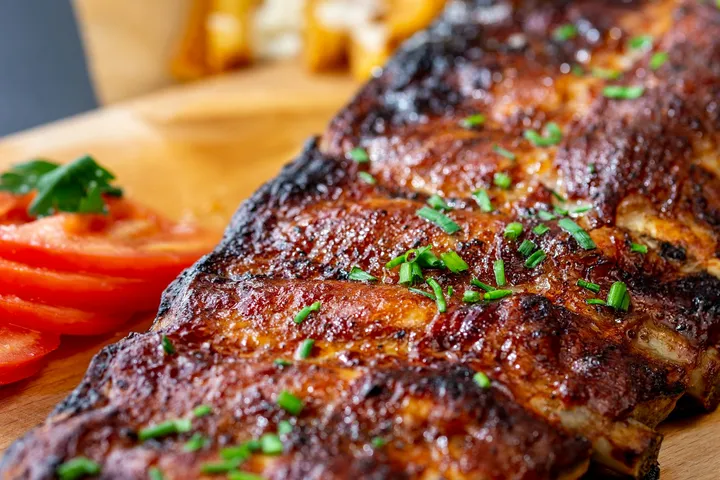
A 4 lb belly gives roughly 40 burnt ends, enough for 10 people as an appetizer or 5 as a main with sides. Put out pickles or slaw to cut the richness. Leftovers also make very good tacos. If you have a long cook going already, pulled pork can take the main grate while the cubes ride along on an upper rack for the last four hours, and a pair of St. Louis ribs racks run at the same 250°F.
Leftovers keep four days in the fridge and reheat better than most smoked meat, since the fat protects them. Warm them in a covered dish at 300°F for 15 minutes, or in a skillet over medium heat until the glaze bubbles. They freeze well for two months in a bag with their sauce.
Pellets and thermometer for pork belly
Anything that finishes in a sweet sauce gets pecan and cherry from me, since pecan tastes like a softer hickory and cherry adds color. With only hickory on hand, cut it with apple. The brands and blends worth buying are in best pellets for smoking.
An instant-read thermometer is the right tool, since you’re probing small cubes and a leave-in probe has nothing to hold onto. The other piece of gear that makes this easy is a wire rack that fits your grill. The thermometers I’d buy are in best wireless meat thermometers.