An 8 lb bone-in pork butt needs about 10 hours on a pellet grill at 250°F, wrapped in butcher paper at 165°F and pulled at 203°F, followed by at least an hour’s rest. The two things that trip people up are the stall in the middle and deciding when it’s actually done, and both come down to patience and a probe.
This recipe is written for a Pit Boss burning two parts hickory to one part apple. On a mild day, an 8 lb butt that goes on at 6 a.m. is usually off the grill by late afternoon. In the run of pork recipes here, this is the one I’d cook second, after ribs. It costs less per pound than anything else you’ll smoke, it’s very hard to overcook, and it teaches you what the stall feels like.
I keep the full stage-by-stage numbers on a separate pulled pork internal temp chart. For this cook you need three of them: 165°F to wrap, 203°F to start testing for tenderness, and a probe that slides in with no resistance before it comes off.
Buying a pork butt (Boston butt)
Get a bone-in Boston butt between 8 and 10 lb. It’s the upper half of the shoulder, roughly square, with a fat cap on one face and a flat blade bone inside. The bone adds a little time, and it also gives you a final check: when the meat is done, it pulls out clean. Boneless butts finish about an hour sooner but tend to fall into two pieces when you lift them, so buy bone-in.
The label might read Boston butt, pork butt, pork shoulder butt or plain pork shoulder. All of those are fine as long as it’s the square upper piece. The lower half, sold as picnic shoulder, has skin and a tapered shape, and it pulls leaner and stringier, so leave it for another day.
Look for a fat cap about a quarter inch thick and visible fat running through the meat. Yellowed, hard fat points to an older cut. Two 8 lb butts take the same time as one, so if the grate has room, cook two and freeze half.
Pork butt smoking time by weight
| Cut and weight |
Grill temp |
Time |
Pull at |
| Boneless butt, 6 lb |
250°F |
8 to 9 hours |
203°F, probe tender |
| Bone-in butt, 8 lb |
250°F |
9.5 to 11 hours |
203°F, probe tender |
| Bone-in butt, 10 lb |
250°F |
11 to 13 hours |
203°F, probe tender |
| Bone-in butt, 8 lb, no wrap |
250°F |
12 to 14 hours |
203°F, probe tender |
| Bone-in butt, 8 lb |
225°F |
12 to 15 hours |
203°F, probe tender |
| Bone-in butt, 8 lb, wrapped |
275°F |
7 to 8 hours |
203°F, probe tender |
Unless noted, those rows assume a paper wrap at 165°F and a grate holding 250°F on a day above 50°F. Work out 75 to 90 minutes per pound and then add two hours. A butt that’s done early sits happily in a cooler for three hours; one that’s done late means dinner waits.
For other weights, the smoke time calculator gives a starting number, and the pellet calculator tells you whether one hopper will last overnight. Expect 10 hours at 250°F to burn about 12 lb of pellets, a bit over half a 20 lb bag.
Prep: trim, rub and the night before
Trim the fat cap to a quarter inch. Thicker fat won’t render in 10 hours, and any rub sitting on top of it never turns into bark. Take off loose flaps of meat and the hard, waxy fat along the sides, and leave the bone where it is.
Pat the butt dry, coat it thinly with yellow mustard, and cover every side with the rub: coarse salt, coarse pepper, paprika, brown sugar, garlic powder, onion powder and a little cayenne. An 8 lb butt takes about half a cup. Press it on with your palm instead of shaking it, because the surface is lumpy and loose rub falls off the sides.
Do this the night before if you can. Set the butt on a rack over a sheet pan, uncovered, in the fridge. The salt works into the meat overnight and the surface dries, which gets the bark going about an hour sooner. Rubbing it while the grill heats still makes good pulled pork.
Put the leave-in probe into the thickest part of the meat, well clear of the bone. A probe touching bone reads high, and you’ll wrap too soon.
Smoking the butt and getting through the stall
I fill the hopper with two parts hickory to one part apple. Hickory is the flavor people expect from pulled pork, and the apple smooths the edge over 10 hours and gives a redder bark. Straight hickory works fine. Straight apple is too mild for a cut this size.
Set 250°F and give it 15 minutes with the lid shut after the grill reports ready. The butt goes on fat side up in the middle of the grate, away from the hot end. On a Pit Boss that’s usually the side near the hopper, and a foil pan of water set there evens out the heat.
Close the lid for three hours, since nothing you do in that window improves the result. From hour three, mist the surface with vinegar and water about once an hour if it looks dry. A light coat is plenty.
Somewhere between 150 and 165°F the internal temperature will stop rising and sit. That’s the stall, and it happens because moisture evaporating from the surface cools the meat about as fast as the grill heats it. It lasts one to three hours and it happens on every butt.
Watch out: The classic stall panic goes like this: the probe sits at 155°F for two hours, so the grill gets turned up to 325°F and the lid opened every 15 minutes to check. The bottom bark scorches black, the fat cap splits, and the meat is still under 160°F. Each lid opening lets out more heat than the higher setting adds. Leave the lid closed and wrap at 165°F if you want the stall over faster.
Once the probe reads 165°F and the bark is dark and doesn’t smear when pressed, lay two overlapping sheets of pink butcher paper on the counter, set the butt on them fat side up, and wrap it tight like a parcel. Paper holds enough moisture to push the meat through the stall while letting steam escape, so the bark stays firm. Foil is faster but leaves the outside soft. Put the parcel back on, push the probe in through the paper, and leave it until 203°F, usually another three to four hours.
If you have the time and want the most bark, skip the wrap and add two to three hours.
| Stage |
Internal temp |
Rough clock on an 8 lb butt |
| Bark forming |
120 to 150°F |
Hours 0 to 4 |
| Stall |
150 to 165°F |
Hours 4 to 7 |
| Wrapped, climbing |
165 to 195°F |
Hours 7 to 9 |
| Testing for tender |
198 to 207°F |
Hours 9 to 10.5 |
When pork butt is done: 203°F and probe tender
At 203°F in the thickest part, probe the butt in four or five places. If the probe goes in everywhere like it’s going into soft butter, it’s done. If any spot feels tight, give it another 30 minutes. Some butts are ready at 198°F and some need 207°F, so treat the number as the signal to start checking.
The pulled pork internal temp page goes through what the meat is doing at 180°F, 195°F and 205°F if you want the detail.
Rest it, still wrapped, in a dry cooler with a towel on top for at least an hour and up to four. Carryover nudges it up a few degrees, then the melted fat and gelatin settle back into the meat. Pulled straight off the grill, a butt shreds into dry strands; after an hour’s rest it pulls into moist chunks. For a 6 p.m. dinner, I aim to have it off the grill by 4 p.m.
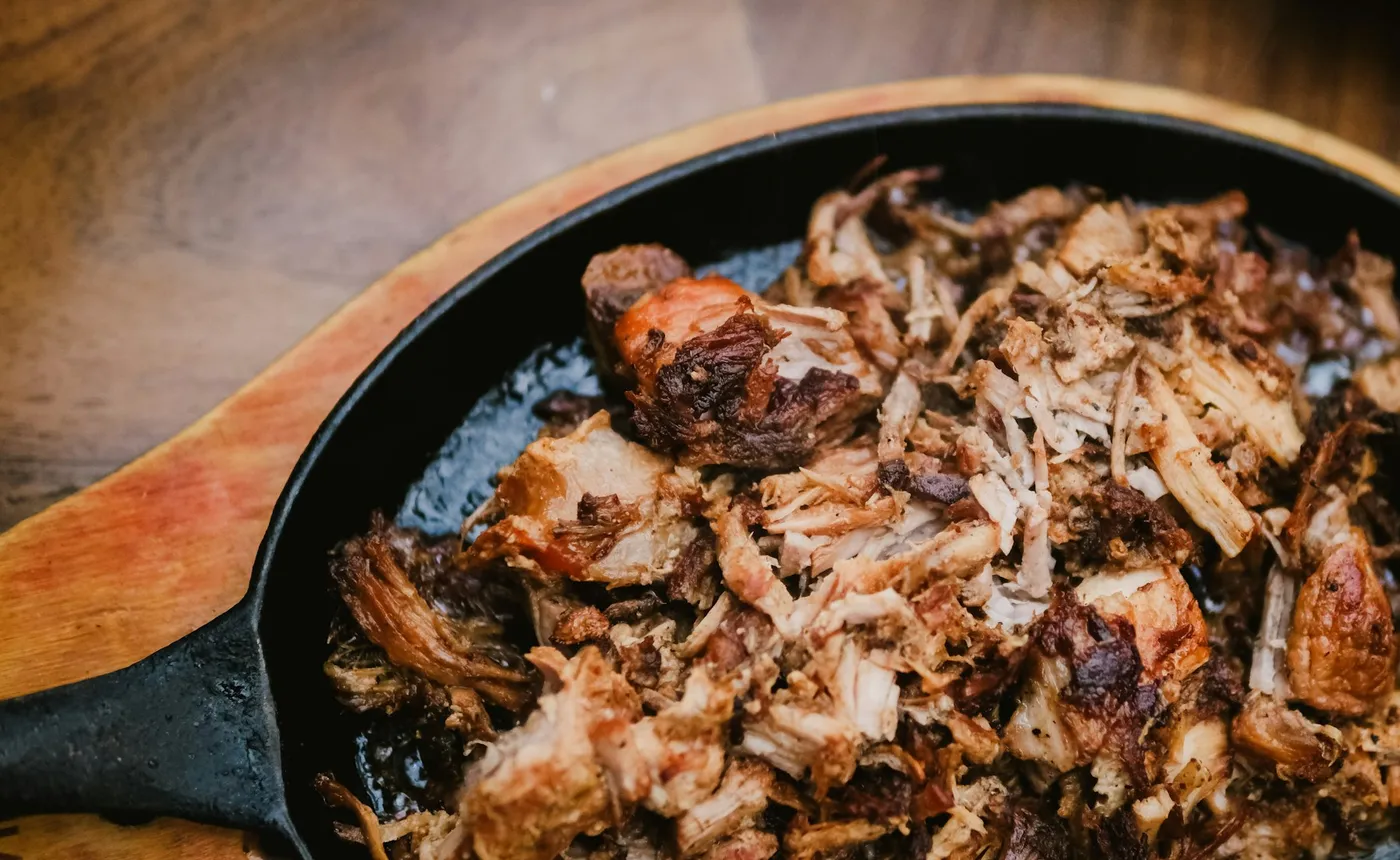
To check your work, grab the blade bone with a paper towel and pull. It should slide out clean. Then shred the meat with two forks or heat-resistant gloves, breaking up the big pieces and mixing the bark through. Chop the soft fat fine and stir it back in with a pinch of salt and a splash of the liquid from the paper.
Pork butt in cold weather, rain and heat
Weather shows up most on the longest cook. On a 30°F morning with wind, expect the grill to burn pellets about 40 percent faster to hold 250°F, and an 8 lb butt to run past 12 hours. The stall runs longer too, since cold air through the fan dries the surface harder. Fill the hopper to the top before bed, turn the back of the grill to the wind, and add an insulated blanket from the accessories list if your grill takes one.
Summer is easier on the grill. At 90°F in July the same cook can finish in about 9.5 hours, and the fire cycles so gently that the smoke comes out lighter. On hot days I run the first two hours at 225°F for more smoke, then go up to 250°F.
Rain is fine as long as the hopper stays shut and dry. Wet pellets swell and jam the auger, and a jammed auger at 2 a.m. ends the cook. Most barrel grills also have a hot end, so point the fat cap toward it and put the probe in from the far side, where you’re reading the slowest part of the meat.
Serving and freezing pulled pork
An 8 lb bone-in butt gives about 5 lb of pulled pork once the bone, fat and moisture are gone, enough for 10 to 12 sandwiches with slaw. I put sauce on the table instead of mixing it into the meat. Smoked mac and cheese can go on the grill for the last hour while the butt rests, and pork belly burnt ends can ride along on an upper rack for the final four hours if you’re feeding a crowd.
Leftovers keep four days in the fridge and three months frozen. Spread the meat on a sheet pan for 30 minutes to cool before bagging, then freeze it flat in quart bags with a spoonful of drippings. To reheat, put it in a covered dish with a quarter cup of apple juice or stock and warm it at 250°F until it reaches 165°F, about 30 minutes from the fridge. Reheat only what you’ll eat, because a second reheat makes it stringy.
Pellets and thermometer for pork butt
Hickory gives pulled pork the smoke people expect, and a third of the hopper in apple adds color and softens the finish. If you can only buy one bag, buy hickory. The best pellets for smoking guide covers brands and blends.
This cook needs a leave-in probe, because you’ll be asleep or away for part of it. A two-channel unit, one probe in the meat and one clipped at grate level, also shows how far your controller’s number sits from the real grate temperature. The ones I’d pick are in best wireless meat thermometers.