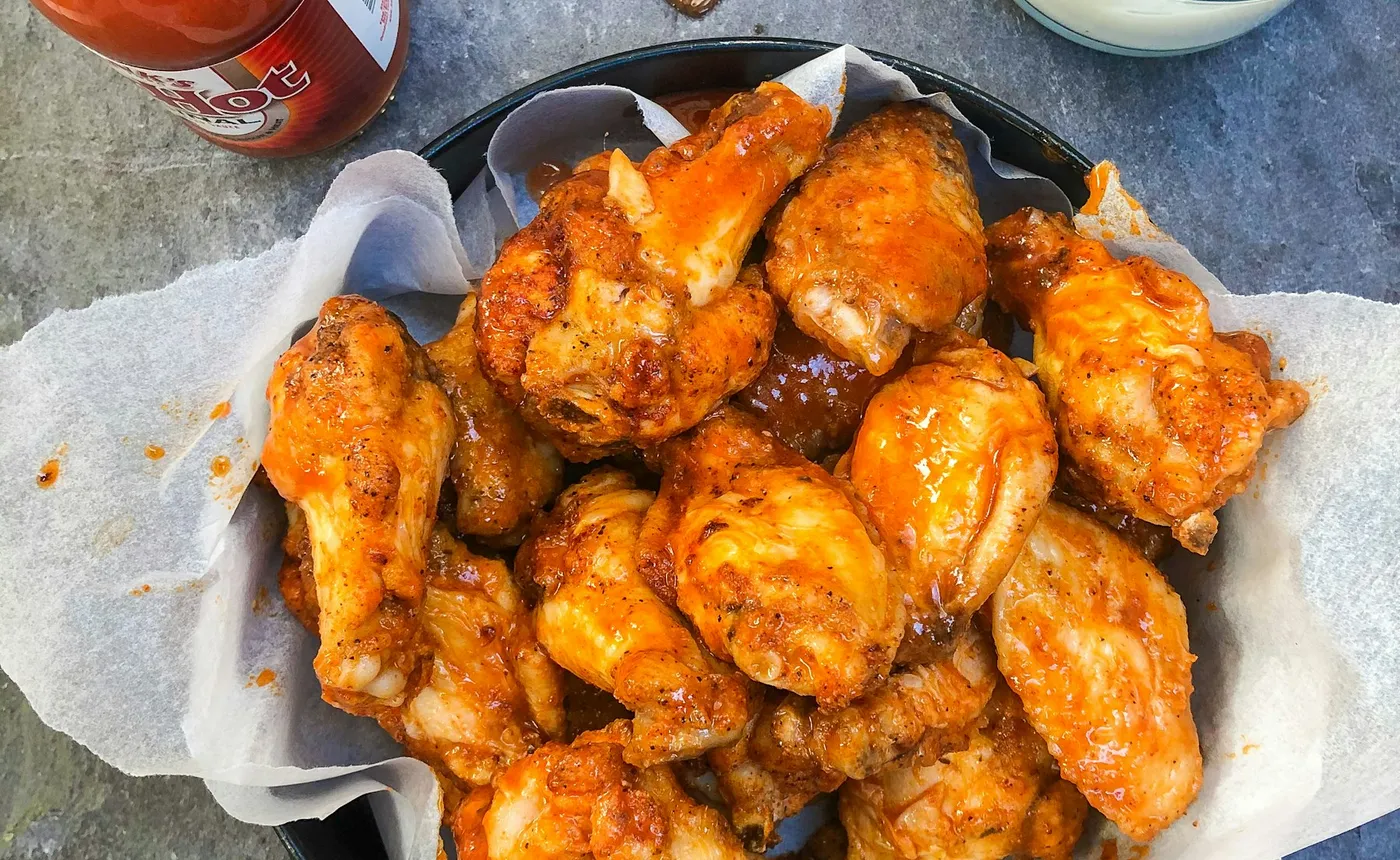
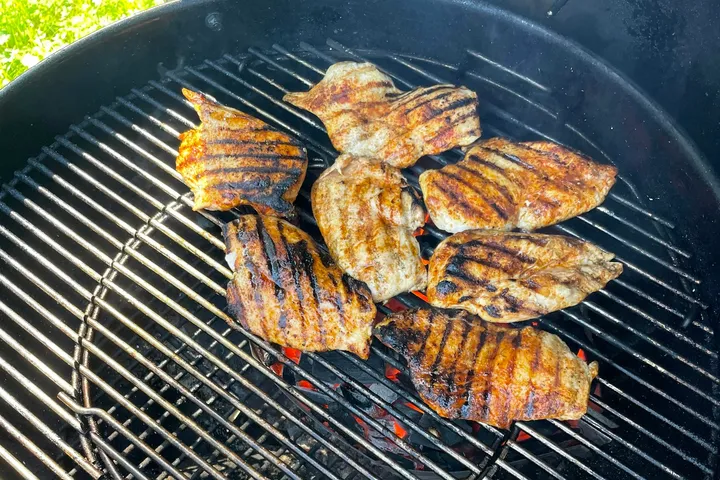
Smoked chicken wings need two temperatures on a pellet grill, 225°F for 30 minutes of hickory smoke and then 400°F until the skin crackles and the thickest drum reads 175°F. A 4 lb batch takes about 75 minutes from grate to bowl.
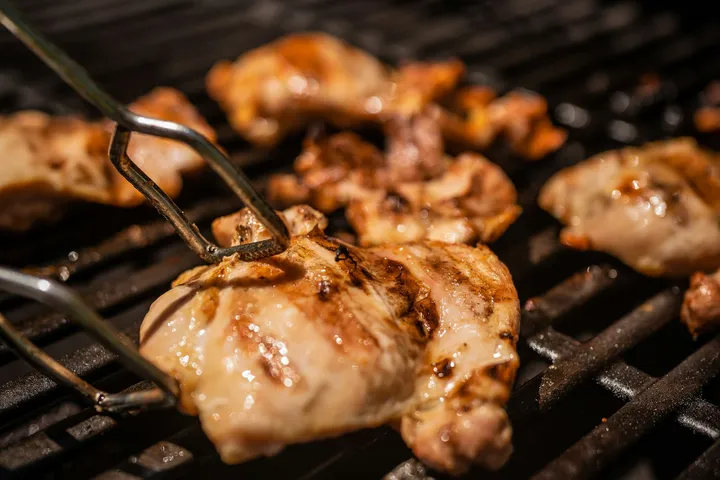
This recipe is written for a Traeger and a 4 lb batch, which fits one grate with space between the pieces, and that spacing matters more than anything in the rub. Wings are the cheapest way to learn how chicken skin behaves on a pellet grill, and what you learn here carries straight over to chicken thighs and the rest of the poultry recipes.
The usual first batch of smoked wings sits at 225°F for two hours, because that’s the number every forum thread repeats. The meat is fine. The skin is a pale, damp sleeve that slides off the bone in one piece when you bite down. The two-stage cook below is the fix for that batch.
Buying and splitting wings
Buy whole wings and split them yourself, or buy “party wings” already cut into flats and drumettes. Either way, 4 lb makes about 40 pieces, which feeds 4 to 6 as a meal.
| Who’s eating |
Pieces per person |
How much to buy |
| Wings are dinner |
8 to 10 |
About 1 lb per person |
| Wings with other food |
5 to 6 |
4 lb covers about 8 people |
| A game with a crowd |
5 to 6, and plan for seconds |
6 lb on two grates |
Look for plump wings with pale, unbroken skin. Skip trays with a lot of liquid pooled in the bottom; that’s water you’ll be blotting off later. Fresh beats frozen for skin, but frozen wings work if they’re thawed fully in the fridge and dried hard.
Keep the tips. They go in the freezer for stock, or on the back of the grate where they turn into crackly cook’s snacks in about 40 minutes.
Wing times by batch size
| Wings |
Smoke stage |
Crisp stage |
Total |
Pull at |
| 2 lb, about 20 pieces |
225°F, 30 min |
400°F, 20 to 25 min |
60 to 70 min |
175°F |
| 4 lb, about 40 pieces |
225°F, 30 min |
400°F, 25 to 35 min |
70 to 80 min |
175°F |
| 6 lb, two grates |
225°F, 40 min |
400°F, 30 to 40 min |
85 to 95 min |
175°F |
| 4 lb, no smoke stage |
none |
400°F, 35 to 45 min |
35 to 45 min |
175°F |
| 4 lb, all at 225°F (not recommended) |
225°F, 2 hours |
none |
2 hours |
175°F, soft skin |
Totals include the 10 to 15 minutes the grill needs to climb from 225°F to 400°F with the wings on board. The smoke time calculator is built for bigger cuts, but it gives a fair number for the smoke stage if you’re running a lot of wings at once.
Count back from kickoff. For wings on the table at 4:00, I want them seasoned and in the fridge by noon, the grill lit at 2:30, and the wings on by 2:40, which leaves a little slack for a cold grill or a slow climb.
Dry skin and baking powder
Pat the wings dry, then do it again. Wet skin steams before it can render, and no amount of heat at the end rescues a wing that went on damp.
Then the baking powder. One tablespoon for 4 lb of wings, tossed in a big bowl with the salt, pepper, paprika, garlic powder and cayenne, gives a thin, even dusting rather than a crust. The powder raises the pH of the skin slightly, so it browns faster, and it draws moisture to the surface where the grill’s fan can carry it off.
Watch out: It has to be baking powder, not baking soda. Soda leaves a metallic, soapy taste on the skin that no sauce covers, and the two boxes sit side by side in most pantries.
Spread the wings skin side up on a wire rack over a sheet pan and leave them uncovered in the fridge for at least an hour. Overnight is better. The skin goes from shiny to matte and slightly tacky, which is what you want to see before they go anywhere near the grill.
I don’t brine wings. They’re small, they cook fast, and the salt in the rub has plenty of time to work overnight. A wet brine leaves water in the skin, the exact thing this whole prep is trying to get rid of.
Smoke low, then crank it to 400°F
Hickory goes in the hopper. Wings only spend half an hour in low smoke, so the wood has to make itself known fast. Apple and cherry are too quiet for this; hickory is strong enough to taste under buffalo sauce, which is the reason to smoke wings instead of frying them.
Set 225°F and let the grill hold for 10 minutes. The wings go on skin side up in a single layer with a finger’s width between each piece. Crowded wings trap steam between them, and the touching sides never crisp. For 4 lb, use the whole main grate and leave the upper rack empty.
Close the lid for 30 minutes. The wings pick up smoke and color while the surface dries a bit more. Then, without opening the lid, set the controller to 400°F. The grill takes 10 to 15 minutes to get there, and the wings keep cooking through the climb.
The two stages exist because of the skin. Chicken skin is mostly collagen and water on top of a layer of fat, and below roughly 300°F that fat doesn’t render and the water leaves slowly, so the skin goes rubbery however long it cooks. At 400°F the fat renders, the water cooks off and the skin tightens and browns. A long low smoke gets you smoke flavor and rubber skin; a short low smoke with a hot finish gets you both things you came for.
Once the grill reads 400°F, give the wings 25 to 35 minutes. Flip them once at the halfway mark and swap the pieces at the hot end of the grate with the ones at the cool end. Every grill has a hottest corner, and wings there can finish about 5 minutes ahead of the ones at the cool end.
The fastest way to ruin a batch is saucing too early. Toss the wings in buffalo sauce and put them back on at 400°F to set the glaze, and the butter and sugar can burn black in six minutes while the skin underneath goes soft again. Sauce goes on in a bowl after the wings come off. For sauce that clings, toss them twice with a minute between tosses.
175°F and skin that crackles
Wings are done at 175°F in the thickest part of a drumette, probed from the fat end alongside the bone. That’s higher than the 165°F you hear for chicken on purpose. The joints carry tendon and connective tissue that’s still chewy at 165°F and softens by 175°F. Flats are thinner and will read 180°F or more by then, and they’re better for it.
Look at the skin too. It should be deep brown, blistered in spots, and crackle when you press it with tongs. If it dents and springs back, give it five more minutes.
| What you see |
What it means |
What to do |
| Probe reads 175°F, skin still pale |
Grate wasn’t really at 400°F |
Give it 10 more minutes and trust the skin |
| Skin dents and springs back |
Fat hasn’t finished rendering |
Five more minutes, lid shut |
| Wings over the fire pot charring |
Hot spot |
Move them to the cool end and flip |
| Skin soft by the time it’s served |
Wings sat too long or got sauced early |
Re-crisp at 400°F for 5 minutes, then sauce |
There’s no rest for wings. Crisp skin is at its best for about 10 minutes, and after that the steam from the meat starts to soften it. Sauce them or don’t, and get them to the table.
Cold days, weak grills and hot spots
The crisp stage is where weather gets in. A pellet grill asked for 400°F on a 35°F day with wind may only hold 370°F at the grate, and the skin takes 10 to 15 minutes longer to brown. It also burns about half again as many pellets. Set the controller to 425°F on a cold day, and the first time you do it, put a cheap oven thermometer on the grate to see what you’re really getting. On a 90°F day the climb from 225°F to 400°F takes about 8 minutes instead of 15, and the wings at the hot end can scorch, so flip earlier.
Some pellet grills top out at 450°F and a few older ones struggle to hold 400°F at all. On one of those, keep the lid shut through the whole crisp stage; every peek costs around 40°F and three minutes of recovery. Grills with a direct-flame sear slider can crisp wings in about 15 minutes, but stand there, because the fat drips straight onto the flame.
Wings are small, so hot spots show up fast. The pieces over the fire pot finish first. One shuffle at the halfway point evens it out.
Sauces, sides and reheating
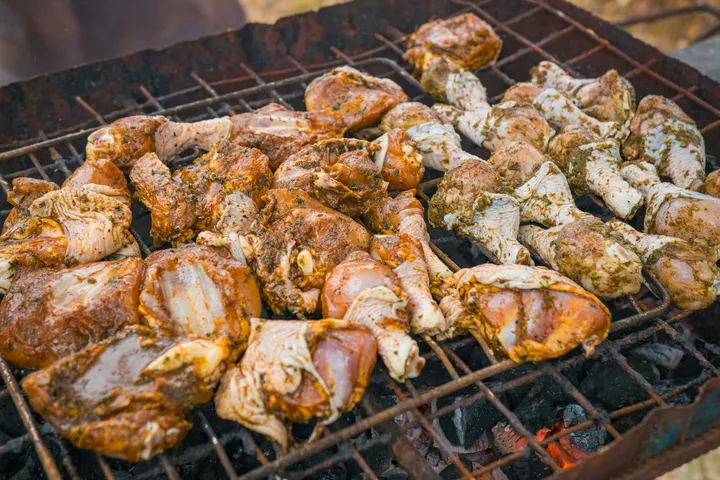
Buffalo is half a cup of hot sauce whisked with 4 tablespoons of melted butter. Dry-rubbed wings with ranch on the side often go first, which tells you the hickory is doing its job. Smoked queso fits on the upper rack during the 225°F stage and makes a better dip than anything from a jar. If you’re feeding a bigger crowd, chicken legs run on the same two-stage method and share the grate.
Leftover wings keep three days in the fridge. Reheat them on a rack in a 400°F oven or on the grill for 10 minutes, and the skin comes most of the way back. An air fryer at 375°F for about 6 minutes does the same. The microwave turns them rubbery in under a minute.
Hickory and a fast instant-read
Hickory on its own is my wing wood, because the smoke stage is short and the flavor has to carry under sauce. To soften it, cut it with cherry for color, but don’t go to straight fruit wood or you won’t taste it. The best pellets for smoking guide covers which brands burn clean.
Wings need an instant-read thermometer with a thin tip; a leave-in probe has nowhere to sit in a drumette. Pick one that reads in two or three seconds, because you’ll be checking a dozen pieces with the lid open. The ones worth owning are in best wireless meat thermometers.