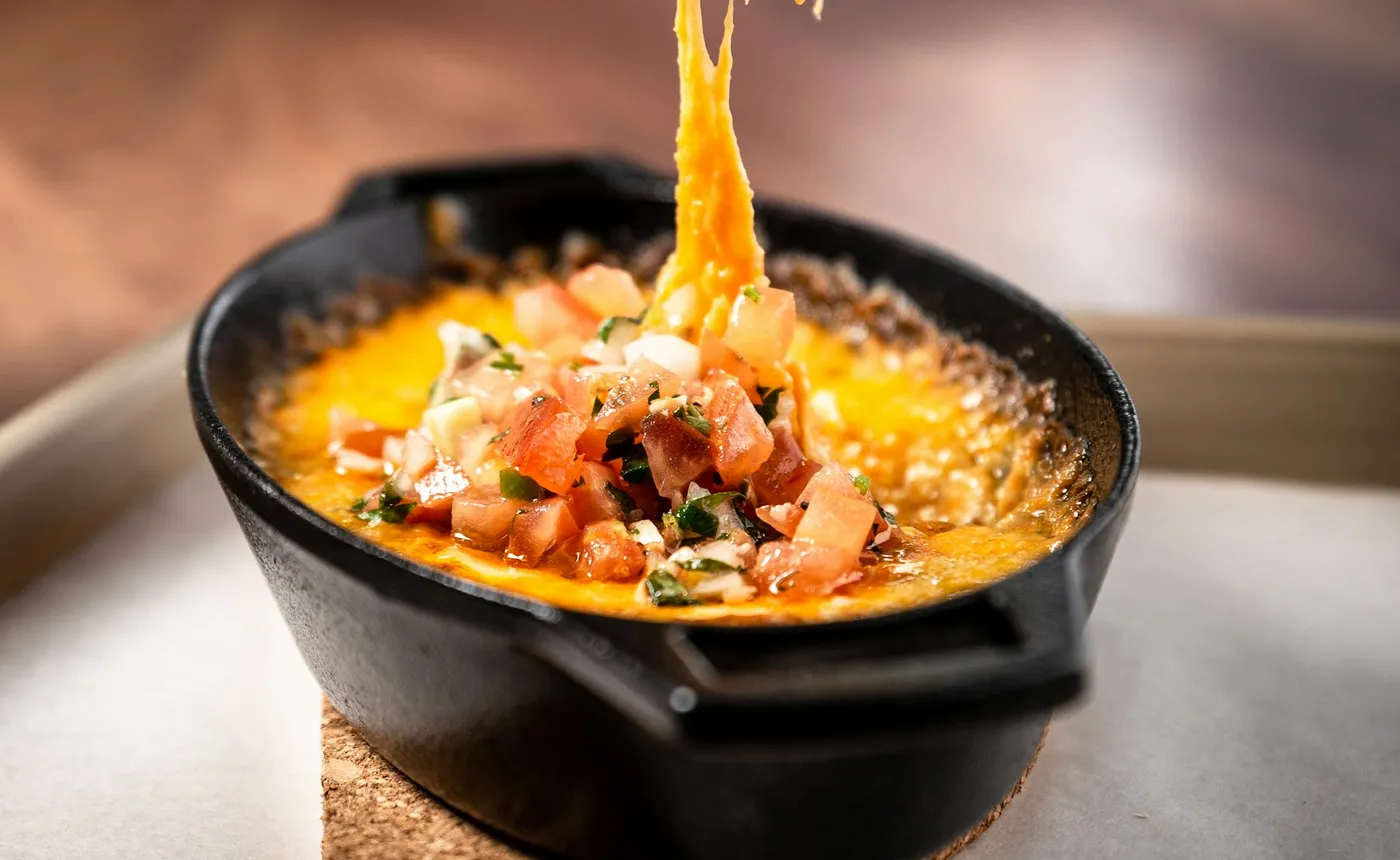
A 9 by 13 foil pan of smoked queso needs 60 to 90 minutes at 250°F on pecan pellets, stirred every 30 minutes, and it’s done when it reads about 160°F and has no lumps left. Velveeta handles the melt, block cheddar and pepper jack bring the flavor, and a pound of chorizo with a can of tomatoes and green chiles fills out the rest.
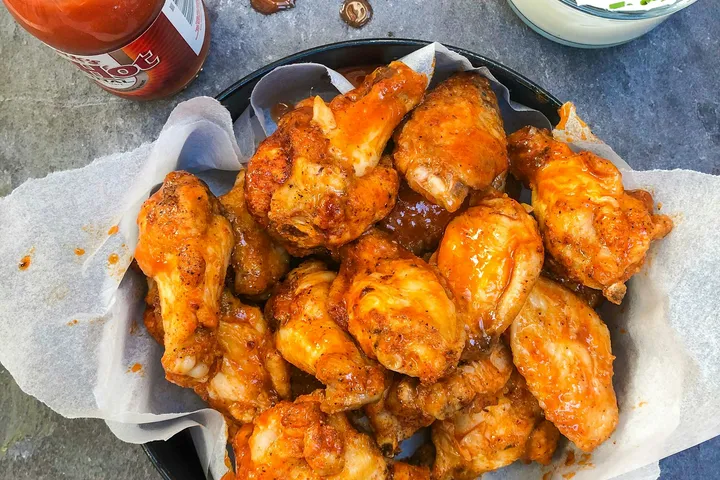
This recipe is written for a Z Grills, and it can go on ahead of a tray of wings. It’s filed under sides and seafood, though in practice it’s a game day dip that will sit at the back of the grill at 225 or 250°F under almost anything else you cook.
The classic failure is skipping the Velveeta out of snobbery about processed cheese and using only block cheddar and jack. By 60 minutes that pan splits into a pool of orange grease around a rubbery lump, and no amount of stirring brings it back. With a pound of Velveeta in it, the same dip stays smooth through 90 minutes on the grill and another hour on the table.
Cheese, chorizo and the rest of the pan
Start with a pound of Velveeta, cubed. It contains emulsifying salts, and those salts keep the fat and water bound together while the dip sits at 160°F for an hour. You can get the same result with real cheese plus a teaspoon of sodium citrate. Under chorizo and jalapeno the two are hard to tell apart, so I’d use Velveeta, which every grocery store carries, where sodium citrate is usually an online order.
For flavor, add 8 oz of sharp cheddar and 8 oz of pepper jack, both grated from blocks. Bagged shredded cheese is coated in starch and makes the dip grainy. Four ounces of cream cheese rounds it out.
For the rest you need a pound of fresh chorizo (or ground beef, or chopped leftover brisket), browned and drained. Add a 10 oz can of diced tomatoes with green chiles, drained, half a white onion diced, two sliced jalapenos and a clove of garlic. Half a cup of whole milk loosens it, and cilantro and lime finish it at the end.
| If you have |
Swap it in for |
What changes |
| Sodium citrate, 1 teaspoon |
The Velveeta (add 1 lb more real cheese) |
Sharper cheese flavor, same smooth texture |
| Ground beef, 1 lb |
The chorizo |
Milder; add a teaspoon of chili powder |
| Leftover brisket, chopped |
The chorizo |
Smokier; stir it in at 60 minutes instead |
| Fresh pico de gallo |
The canned tomatoes |
Brighter; add it at the end, not the start |
How long to smoke queso
| Pan |
Grill temp |
Time |
Pull at |
| 9 by 13 inch foil pan (full recipe) |
250°F |
60 to 90 minutes |
Smooth, about 160°F |
| Half pan, 8 by 8 inch |
250°F |
45 to 60 minutes |
Smooth, about 160°F |
| 10 inch cast iron skillet |
250°F |
60 to 75 minutes |
Smooth, about 160°F |
| 9 by 13 pan |
225°F |
90 to 120 minutes |
Smooth, about 160°F |
| 9 by 13 pan |
275°F |
45 to 60 minutes |
Smooth, about 160°F |
| Reheat from the fridge, covered |
300°F |
20 to 25 minutes, stir once |
160°F |
Queso doesn’t have a cook time the way meat does; it’s ready once it’s fully melted. The longer end of each range gives a deeper smoke flavor, but at 250°F the gain stops around 90 minutes, and after that the dip only dries out. If the queso is sharing the grill, set the temperature for the meat and use the smoke time calculator for that, then pick the queso row that matches.
Ten minutes of prep
Brown the chorizo in a skillet over medium heat, breaking it up, for about 8 minutes, until it’s cooked through and the fat has rendered out. Drain it on paper towels. If you skip draining, about a quarter cup of orange grease ends up in the dip and floats on top as a slick.
Cut the Velveeta and cream cheese into 1 inch cubes. Grate the cheddar and jack. Dice the onion, slice the jalapenos (leave the seeds in for heat or scrape them out for a milder dip), mince the garlic, and drain the tomatoes.
Build the pan in layers: half the cheeses, then the chorizo, onion, jalapeno, garlic and tomatoes, then the rest of the cheeses. Pour the half cup of milk over the top.
Use a disposable foil pan rather than good cast iron, unless you enjoy chiseling baked cheese off it. A 9 by 13 foil pan is the right depth. A shallower pan dries the dip out, and a deeper one takes too long to melt in the center.
Watch out: Don’t skip draining the chorizo. When queso turns out greasy, the cheese is usually fine; the fat came from the meat.
Smoking and stirring
Pecan is my pellet for queso. It’s milder than hickory and a little sweet and nutty, and for cheese and chorizo I’d pick it over any other wood. Dairy absorbs smoke faster than meat, so a strong wood turns harsh in 90 minutes. Without pecan, apple or cherry are fine, and so is whatever the main cook is running, hickory included. On hickory, pull at 60 minutes instead of 90.
Set the Z Grills to 250°F and give it 15 minutes. Put the pan on the grate uncovered, in the cooler half of the grill, which on many grills is the side away from the chimney. Close the lid.
At 30 minutes, open up and stir. The edges will have melted while the middle is still cubes, so fold the edges in until everything is coated. Close the lid. At 60 minutes, stir again, and it should be mostly smooth. If the center is still lumpy, give it another 20 to 30 minutes and a third stir.
Skip the first stir on a cold day, busy with the wings, and the top grows a skin, the edges scorch to the pan, and the middle is still solid. Stir every 30 minutes without exception. The lid is open about 30 seconds each time, which costs almost nothing. On cold or windy days the edges cook much faster than the middle, and stirring is the only thing that evens the pan out.
When the queso is ready
When it’s smooth and an instant-read shows about 160°F in the middle, it’s done. Food safety isn’t the issue here, since everything in the pan was already cooked or pasteurized. Texture is. Below 150°F the Velveeta hasn’t fully let go and the dip is stiff. Above 170°F it starts to tighten and fat separates out at the edges. Right around 160°F it’s a dip.
You don’t need to plan for carryover. Take it off, stir in a handful of chopped cilantro and the juice of half a lime, and taste for salt; the chorizo and the canned tomatoes usually bring enough.
On the table it stays dippable for about an hour before it thickens. If the party runs long, stir in a splash of warm milk and put it back on the grill, or move it to a slow cooker on warm.
Cold days, hot days and thin foil pans
Cold makes the edges-versus-middle problem worse. On a 38°F day with wind, expect the same pan to need about 1 hour 45 minutes to melt through, with the edges setting hard before the first stir. In cold weather, cover the pan loosely with foil for the first 30 minutes. You give up a little smoke and get an even melt, and then the foil comes off for the rest of the cook.
On a hot day it’s done in about an hour. The grill coasts, the smoke is lighter, and the dip goes smooth sooner.
Thin foil pans scorch over hot spots. Keep the pan in the cooler half of the grill and turn it 180 degrees at the first stir. If your grill runs very hot at one end, use the top shelf. It’s the best place on the grill for queso, with gentle heat and thick smoke.
Serving it, and what to do with leftovers
A full pan serves 10 to 12 as a dip with tortilla chips, or about 6 if the chips are good ones. Spoon it over burgers on a pellet grill, over wings, or into tacos. It’s also a good home for the last pound of leftover brisket, chopped small and stirred in at the 60 minute mark.
Leftovers keep 4 days in the fridge in a covered container. Reheat covered at 300°F on the grill or in the oven with a splash of milk, stirring once, or in a pan on low. The microwave works in 30 second bursts with a stir in between. It doesn’t freeze, because the emulsion breaks when it thaws.
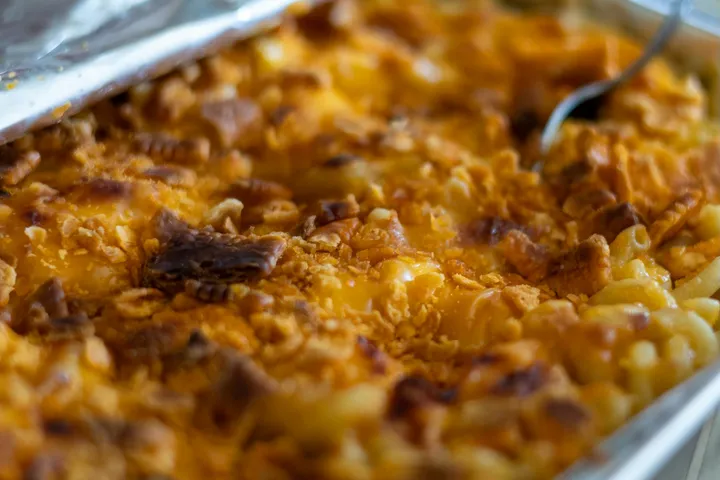
If you want the same cheese and smoke as a side instead of a dip, smoked mac and cheese runs at the same temperature and fits on the grill next to it.
Pellets, smoke tubes and a thermometer
Pecan, which is sweet and mild and suits cheese in a way hickory doesn’t. Apple or cherry if you can’t find it. For more smoke without more time on the grill, a smoke tube burning beside the pan adds it, and which smoke tubes are worth buying is covered on its own page. The pellet brands I trust, and the ones that are mostly oak with a flavor printed on the label, are in best pellets for smoking.
This cook needs only an instant-read, pushed into the middle once at the hour mark. If wings or ribs are cooking above the queso, you’ll want leave-in probes for those, and both kinds are covered in best wireless meat thermometers.