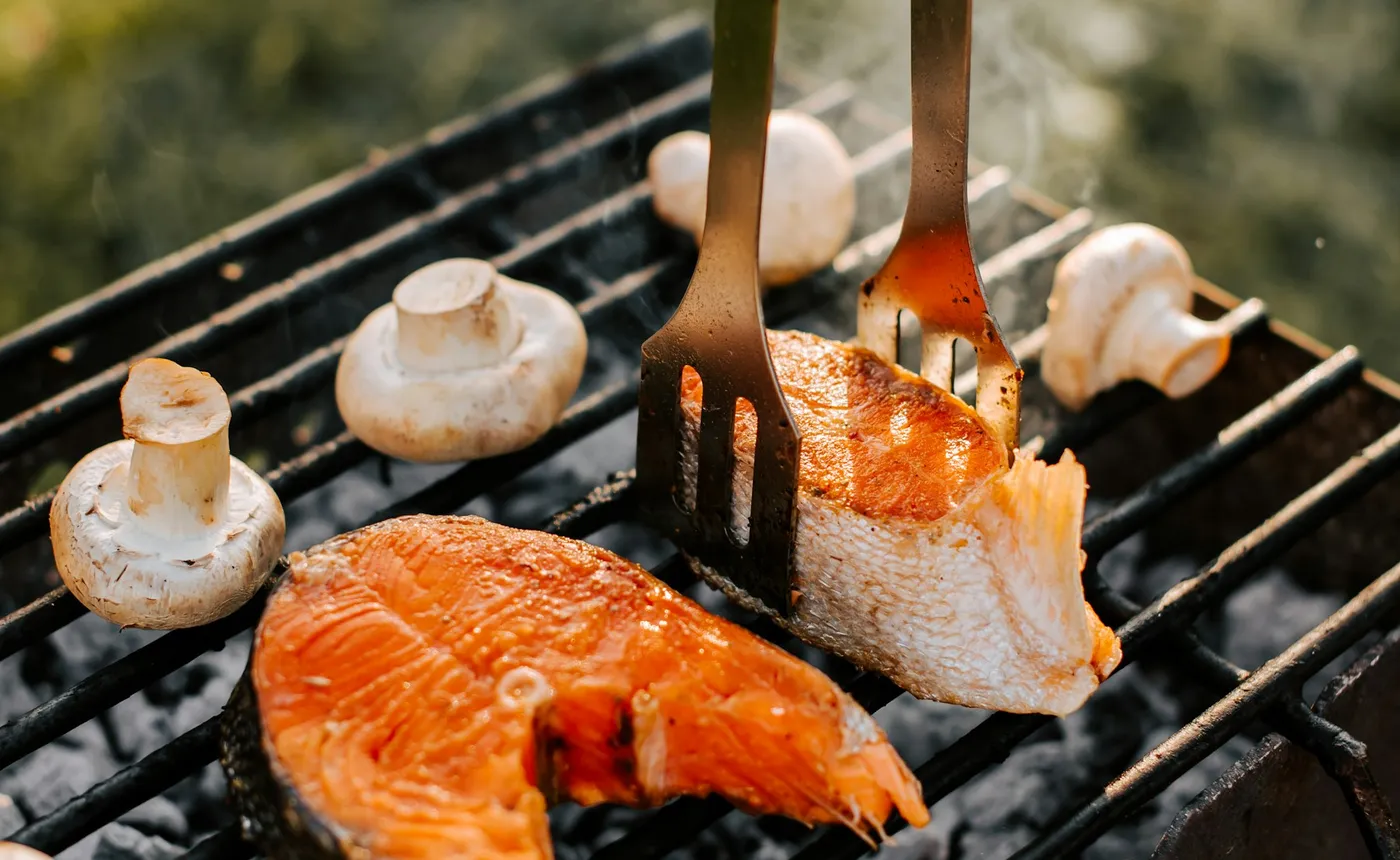
At 225°F with alder pellets, a 2 lb skin-on side of salmon reaches 130 to 135°F in about 45 minutes, and that’s where I take it off. This is hot smoked salmon, served warm and flaking with a brown sugar crust, and a different thing from the cold smoked lox at the deli counter.
This recipe is written for a Weber Searwood, with times for a mild evening. It’s the quickest cook on the sides and seafood page, and the one I’d give someone who has owned a pellet grill for a week and wants dinner rather than a project. With a 30 minute dry brine, it’s on the table about an hour and a half after you get home from the fish counter.
The usual first mistake is taking a side to 145°F, because that’s the number on the government chart. It comes out chalky and dry and covered in white albumin. Pulled at 135°F, the same fish stays moist enough that the chart stops looking like good advice for salmon.
Buying salmon for the smoker
A whole side, skin on, at 2 to 2.5 lb, is the easiest thing to cook: one piece, with one thick end to watch. Individual 6 oz fillets work as well and cook faster (see the table). Keep the skin on either way, because it holds the fish together on the grate and stops the bottom drying out. Nobody has to eat it.
The type of salmon changes the pull temperature.
| Salmon |
Fat level |
Pull at |
Notes |
| Farmed Atlantic |
High |
130 to 135°F |
Forgives an extra 5 minutes; usually the cheapest, roughly $10 to $15 a pound at US supermarkets (November 2026) |
| Wild sockeye or coho |
Lean |
125 to 130°F |
Redder, stronger flavor, dries out quickly past 130°F |
| King |
High |
130 to 135°F |
Rich, the best of both; the priciest by far, often $35 a pound or more for wild King (November 2026) |
Good salmon has firm flesh that springs back when you press it, no gaps opening between the flakes, and nothing but a clean ocean smell. Previously frozen fish is fine, since much of it is frozen on the boat. Ask the counter to pull the pin bones, or do it yourself with needle-nose pliers: run a finger down the center line from head to tail and you’ll feel them.
Salmon smoking times at 225°F
| Fish |
Grill temp |
Time |
Pull at |
| 6 oz fillets, 1 inch thick |
225°F |
25 to 30 minutes |
130 to 135°F |
| Side, 1.5 lb |
225°F |
35 to 45 minutes |
130 to 135°F |
| Side, 2 to 2.5 lb |
225°F |
45 to 55 minutes |
130 to 135°F |
| Side, 3 lb |
225°F |
55 to 70 minutes |
130 to 135°F |
| Side, 2 lb, on a cedar plank |
250°F |
40 to 50 minutes |
130 to 135°F |
| Side, 2 lb |
275°F |
30 to 35 minutes |
130 to 135°F |
| Wild sockeye side, 2 lb |
225°F |
35 to 45 minutes |
125 to 130°F |
Thickness decides this cook more than weight. The thin tail of a side is done about 15 minutes before the thick end, which is why I fold the tail under or cut it off and add it later. The smoke time calculator gives you a start time, and a probe in the thickest part tells you when to stop. If dinner is in half an hour, the 275°F row works. You lose some smoke flavor and the window for pulling at the right moment gets narrower.
Brining and seasoning
For the dry brine, mix a quarter cup of brown sugar with 2 tablespoons of kosher salt. Lay the salmon skin side down on a sheet pan, pack the mix over the flesh, and refrigerate it for 30 to 45 minutes. Go past an hour and the salt starts to cure the fish, firming it up toward lox, which is a different recipe.
Rinse the brine off under cold water and pat the fish dry with paper towels. If you can spare the time, put it back in the fridge uncovered for 30 minutes to an hour. The surface turns slightly tacky and shiny. That’s called a pellicle, and smoke sticks to it far better than it does to wet fish.
Brush the flesh with a tablespoon of olive oil and dust on the rub, which is 2 tablespoons of brown sugar, a teaspoon each of smoked paprika and black pepper, and half a teaspoon of garlic powder. Don’t add more salt, since the brine already took care of it. Oil the skin side too, and oil the grate, or the skin sticks to the bars and the fillet tears when you lift it.
Slide a leave-in probe into the thickest part of the side from the edge, level with the grate, so the tip sits in the middle of the flesh. Salmon is thin enough that a probe pushed in from the top usually comes out the bottom.
Smoking the side, skin down
Alder is the wood for salmon. Cooks in the Pacific Northwest have smoked fish over it for generations, and it’s mild and slightly sweet, so it leaves the fish tasting like fish. Apple or cherry are the next best picks. Hickory is too heavy for a 45 minute cook on a fillet. If it’s all you have, mix it half and half with apple, or pull the salmon at 125°F and let carryover finish it.
Set the Searwood to 225°F and give it 10 minutes after it reports it’s at temperature. Put the salmon on skin side down with the thick end toward the hot side of the grill, and close the lid. Don’t flip it, and keep the lid shut for the first 20 minutes.
By 20 minutes the surface has gone from translucent orange to a deeper, opaque color and the rub has set. From 30 minutes, keep an eye on the probe. A typical 2 lb side reads around 110°F at 30 minutes, 125°F at 40 and the mid 130s by about 45, so the last 10 degrees come fast. Stay near the grill for that stretch.
Cook a side with the thin tail lying flat, and by the time the thick end hits 130°F the tail is at 150°F and falling apart. Either fold the last 3 inches of the tail under so the whole side is close to one thickness, or cut the tail off and put it on 15 minutes after the rest. The second way leaves the cook with a snack.
Watch out: If white albumin starts beading up across the surface, the fish is cooking too hot or has been on too long. A few spots are normal. A lot of it means take the salmon off now, whatever the probe says.
The right pull temperature for salmon
For farmed Atlantic, pull at 130 to 135°F in the thickest part. For wild sockeye or coho, pull at 125 to 130°F. At those temperatures the flesh flakes under a fork and is just turning opaque in the center, and wild fish keeps a darker pink line right in the middle. The USDA recommends 145°F, and I don’t cook salmon to it; farmed salmon at 145°F is dry, and good fish costs too much for that.
On a 2 lb side, carryover adds about 5°F over a 5 minute rest, so a 130°F pull lands around 135°F on the plate. Pulling at 135°F means serving at about 140°F, which is still good and the top of my range.
Lift the side off with two wide spatulas, or slide a thin metal spatula between the skin and the flesh and leave the skin on the grate; it scrapes off easily once it cools. Rest the fish for 5 minutes on a board, then cut portions across the side. Serve the skin or don’t; at 225°F it comes out soft rather than crisp.
Wind, cold and grill hot spots
A 45 minute cook gives the weather little time to cause trouble. On a 40°F evening, expect closer to 55 minutes than 45. Wind matters more than cold, because when the fan is fighting a breeze the grate temperature on a pellet grill can swing 20 to 30°F through each cycle, and salmon that spends five minutes at 275°F cooks unevenly. Turn the back of the grill to the wind and keep the lid closed.
On a grill with a strong hot spot, turn the fish 180 degrees at the 20 minute mark. By then it’s firm enough to move without breaking. Rain doesn’t matter for this one, since the lid stays down for the whole cook.
What to serve with smoked salmon, and leftovers
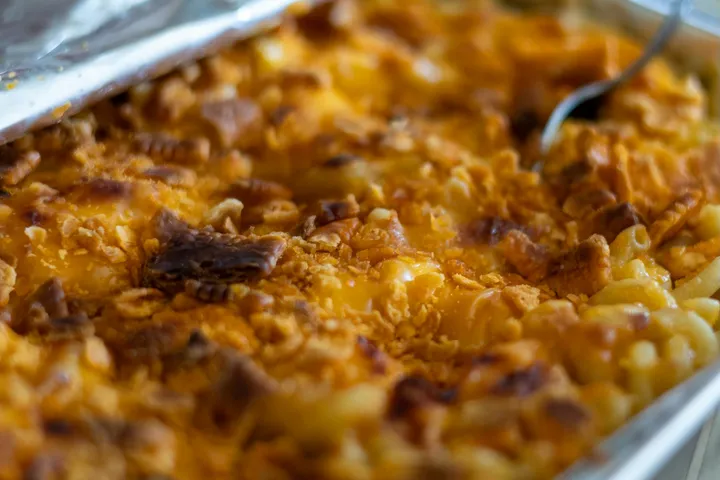
A 2 lb side serves 4 to 6. Lemon, dill and a bowl of rice are all it needs. Smoked mac and cheese can share the grill, but it wants 250°F, so set the grill there and pull the salmon about 5 minutes sooner than the 225°F times. Flaked over a salad with the brown sugar crust still on, it makes a very good next-day lunch.
Leftover smoked salmon keeps 3 days in the fridge and is better cold than reheated. Flake it into scrambled eggs, onto a bagel with cream cheese, or into pasta with cream and peas. I don’t freeze it once it’s cooked, because the texture turns mealy.
Once you’re comfortable with probing and pulling on time, pellet grill chicken breast and pork tenderloin on a pellet grill use the same approach with different numbers, and both fit a weeknight.
Pellets and thermometers for fish
Buy alder on purpose. Many hardware stores don’t carry it, so it’s often an online order. Apple is the easy stand-in. Putting a strong wood over fish is a mistake most people make only once, and it’s why the pellet notes in best pellets for smoking sort bags by strength.
A thermometer matters more on fish than on any other cook, since the gap between done and dry is about 10 degrees and 5 minutes. Use a leave-in probe in the thick end and an instant-read to check two other spots before you pull. The models with a probe thin enough for a fillet are in best wireless meat thermometers.