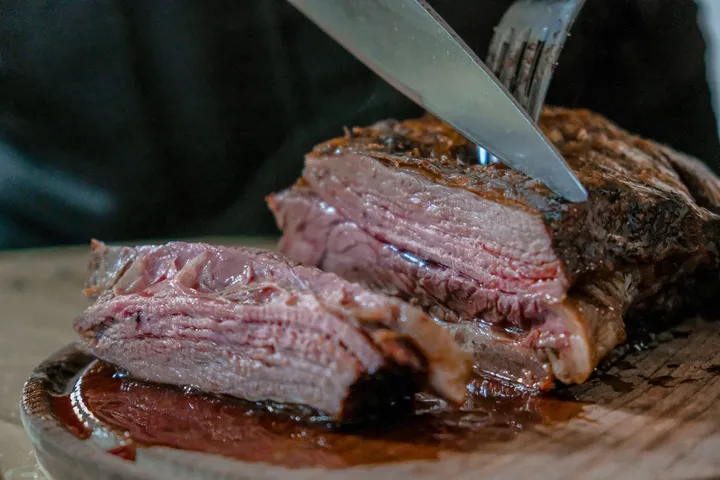
Smoked chuck roast
Smoke the chuck roast at 250°F on hickory for about 3 hours until the bark sets near 165°F, then cover it in a foil pan with broth and cook to 205°F, about 3 hours more. Rest 30 minutes and shred.
- Grill
- 250°F
- Pull at
- Time
- 6¾ hr
Pellet grill brisket at 250°F on oak and hickory: about 10 hours for a 13 lb packer, paper wrap once the bark sets, a 203°F probe-tender pull and a long rest.
Each recipe gives the pellets, grill temperature, pull temperature and time first. Pull temperatures meet USDA minimums or the doneness barbecue cooks aim for, whichever is higher. Our own cook photos are being added page by page; current photos are credited stock.
Set the grill to 250°F with oak and hickory pellets, wrap the brisket in butcher paper around 165°F, and pull it at about 203°F when the probe slides in easily. A 13 lb packer needs about 10 hours on the grill plus 1 to 2 hours of rest.
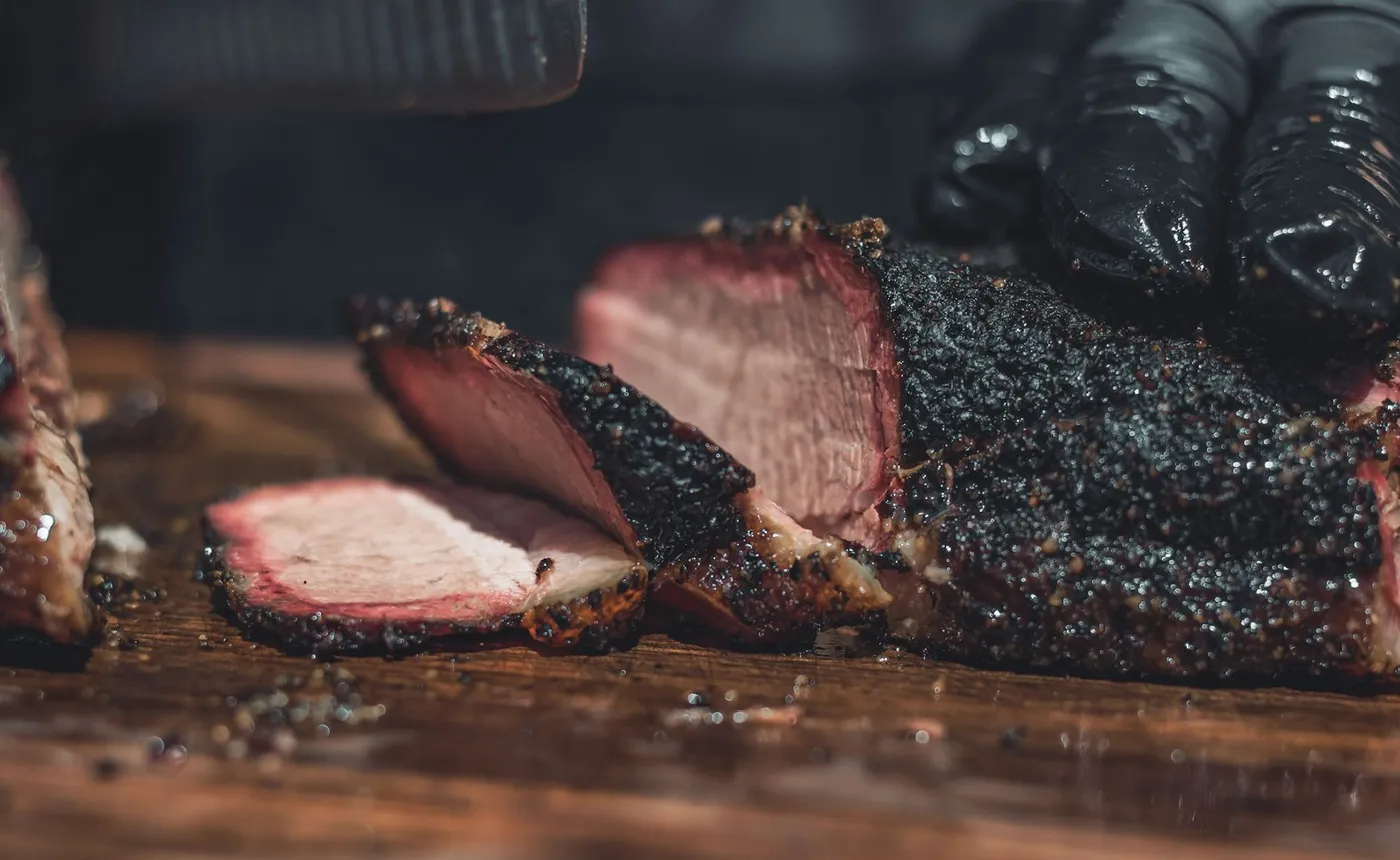
Plan on about 10 hours at 250°F for a 13 lb packer brisket on a pellet grill, wrapped in butcher paper when the bark sets near 165°F and pulled when the probe slides into the flat at around 203°F. Then it needs at least an hour resting in a cooler, so a 6 p.m. dinner means the brisket goes on around 5 in the morning.
This recipe is written for a Traeger running oak and hickory pellets, half and half, and the times assume a mild day with little wind. Of all the beef recipes on this site, it’s the long one and the one with the most money riding on it. The pellet grill handles what used to make brisket hard, which is keeping a fire steady while you sleep.
What it can’t do is make the calls for you. First briskets tend to fail on all three of the usual ones: wrapped in foil at 150°F because the stall looks scary, so the bark turns to pot roast, then sliced 20 minutes off the grill. Everything below is how to avoid those.
Get a whole packer, the point and the flat in one piece, at 12 to 14 lb before trimming. Packers under 10 lb usually come with a thin flat that dries out long before the point is ready. A 14 lb brisket still fits a standard pellet grill grate if you lay it on the diagonal.
Grade matters more on brisket than on anything else I cook. Choice is the floor. Prime costs more per pound, and on your first couple of briskets that extra marbling in the flat covers for an overshoot or a rest that went long. I’d leave Select in the case; ten hours will find every weakness in a lean brisket.
Before you buy, look at the thin end of the flat. You want it at least an inch thick, with a fat cap of even depth instead of one that tapers to nothing. Then pick the brisket up by the middle. A good one droops over your hand, and a stiff one is carrying a lot of hard fat that you’ll trim off and still have paid for.
| Trimmed weight | Grill temp | Cook time | Pull when |
|---|---|---|---|
| Flat only, 6 lb | 250°F | 6 to 7 hours | 203°F and probe tender |
| Packer, 10 lb | 250°F | 8 to 9 hours | 203°F and probe tender |
| Packer, 12 lb | 250°F | 10 to 11 hours | 203°F and probe tender |
| Packer, 14 lb | 250°F | 11 to 13 hours | 203°F and probe tender |
| Packer, 12 lb | 225°F | 13 to 15 hours | 203°F and probe tender |
| Packer, 12 lb | 275°F | 8 to 9 hours | 203°F and probe tender |
Every row assumes a paper wrap at about 165°F and a mild day. If you don’t wrap, add 2 to 3 hours. Add another 1 to 2 hours of rest to whichever row you pick. The smoke time calculator works out a start time from your weight and dinner time, and the pellet calculator tells you whether one hopper fill will last the night. Expect a Traeger to burn about 12 to 14 lb of pellets over a 12 hour cook at 250°F in mild weather, so fill the hopper and leave a bag beside the grill.
Pit tip: When the schedule is tight, cooking at 275°F is a fair trade. It saves about 2 hours on a 12 lb packer and costs a little evenness in the bark, which I’d accept before I’d cut the rest short.
Trim it cold, straight out of the fridge. Warm fat smears under the knife and you end up sawing. Take the fat cap down to about a quarter inch over the whole flat, then find the hard, waxy seam of fat between the point and the flat on the top side and cut it out, because it won’t render in any amount of time. Round off the thin corners of the flat so nothing hangs loose to burn, and shave off any gray, dried-out edge.
Expect it to take about 20 minutes and remove 2 to 3 lb. Save the trim for burger grind, or render it for the tallow that goes in the wrap.
For the rub I use coarse kosher salt and 16 mesh black pepper in equal parts by volume, plus a tablespoon of garlic powder. About half a cup of the mix covers a 12 lb packer. A thin coat of mustard or hot sauce underneath helps it stick, and you won’t taste either one. Seasoning the night before and leaving it uncovered in the fridge gives a darker, firmer bark, though same-morning seasoning is close.
Load the hopper with oak and hickory, set 250°F, and wait 20 minutes after the controller says it’s there, because the steel of the cook chamber lags behind the display.
On a Traeger the brisket goes on fat side up. The heat rises from the fire pot under a drip tray, so the bottom of the meat is already shielded and the fat cap bastes the top as it renders. If your grate sits close to the heat (some vertical pellet smokers, or a lower rack right above the deflector), turn it fat side down. Either way, point the thick end toward the hot end of the grill. On many pellet grills that’s the hopper side.
The leave-in probe goes into the thickest part of the flat, not the point. The flat is the half that dries out, so it’s the half you watch. Then close the lid and leave it shut for 3 hours. There’s nothing to check and every lid opening costs you heat.
| Checkpoint | Internal temp | What I do |
|---|---|---|
| Hours 0 to 3 | 40 to 140°F | Lid closed, nothing else |
| Hour 3 onward | 140°F and up | Light spritz every 45 to 60 minutes |
| The stall | 150 to 165°F | Wait it out, up to 2 hours; don’t raise the heat |
| Bark set | 160 to 170°F | Wrap in butcher paper with tallow |
| Getting close | 195°F | Start probing the flat for feel |
| Done | 200 to 205°F | Off the grill and into the cooler |
The spritz is water with a splash of cider vinegar, a quick mist to stop the edges drying, never a soaking. The stall is evaporation off the surface cooling the meat about as fast as the grill heats it.
The usual second-brisket mistake is spritzing too hard and too often out of nerves about the stall, and then the bark never sets. At hour six it’s still tacky and pale, it has to stay unwrapped until hour nine to dry out, and a 6 p.m. dinner moves to 9. Spritz lightly and decide when to wrap by looking at the bark. If you rub a finger across it and nothing comes off, it’s ready; if your finger comes away with rub on it, give it another 30 minutes.
To wrap, lay two overlapping sheets of pink butcher paper on the counter, set the brisket in the middle fat side up, pour about a quarter cup of melted tallow or beef broth over the flat, and fold it up tight like a parcel. Paper lets enough steam out to keep the bark firm, where foil traps it and softens everything. Put it back on the grill seam side down and push the probe back in through the paper.
Wrapped, it climbs steadily. Expect the climb from 165°F to 200°F to take 3 to 4 hours.
Use the number as a guide and the probe as the test. From 195°F on, push an instant-read probe into the flat from the top every 20 to 30 minutes. When it slides in and out with almost no drag, like pushing into a jar of peanut butter, the connective tissue has broken down and the brisket is done. That usually happens between 200 and 205°F, and 203°F is a sensible figure to aim for. The brisket internal temp chart covers the edge cases, including the flat that’s tender at 198°F.
Carryover on a wrapped brisket is small, 2 to 4°F, so there’s no need to pull early to allow for it.
Resting is part of the cook. Keep the brisket in its paper, wrap a towel around it, and set it in a dry cooler for at least an hour and up to four. The juices thicken and stay in the meat when you slice instead of running across the board. For a 6 p.m. dinner, aim to have it off the grill by about 4. If the rest is going to run past 2 hours, leave the brisket on the counter for 15 minutes before it goes into the cooler, so it doesn’t keep cooking past tender.
If things go sideways, here’s what I do:
| Problem | Fix |
|---|---|
| Running 2 hours behind | Wrap in foil instead of paper and raise the grill to 275°F |
| Done 3 hours early | Leave it wrapped in the cooler; it holds safely up to 4 hours |
| Flat tough at 205°F | It isn’t done; give it another 30 to 60 minutes and probe again |
| Flat dry when sliced | Slice thinner and spoon the juice from the paper over it |
Slice the flat across the grain, about as thick as a pencil. The grain in the point runs a different direction, so cut the point away, turn it 90 degrees, and slice it a little thicker, or cube it for burnt ends.
Cold weather costs you time and pellets. At 34°F with wind, a brisket that takes 10 hours on a mild day can take 13, and the hopper may need a top-up around hour nine. The controller works harder to hold 250°F and the grate temperature swings further on each cycle. For a winter brisket, start an hour earlier than the table says, put the grill somewhere out of the wind, and use an insulated blanket if your grill has one.
At 92°F in July it goes the other way: expect it done in about 9 hours, with lighter smoke because the fire cycles less. If you want more smoke in summer, run the first 3 hours at 225°F and then move up to 250°F.
Rain doesn’t hurt the cook as long as the hopper lid stays shut. Wet pellets swell and jam the auger, and that tends to happen around 2 a.m. Keep the spare bag indoors.
To find your grill’s hot end, put a cheap oven thermometer at each end on an easy cook. The fattier point goes toward it.
A 12 lb packer cooks down to about 6 lb of sliced meat, which feeds 10 to 12 with sides. Put slices from both the flat and the point on the same board so people can pick lean or fatty. White bread, dill pickles and raw onion are the classic Texas sides. The grill is free while the brisket rests, so I put smoked mac and cheese on at 250°F for that hour.
Leftover brisket keeps 4 days in the fridge, or 3 months vacuum sealed in the freezer with a spoon of the juice. Reheat slices in a covered pan with a splash of broth at 300°F until they reach 160°F, or chop it for tacos.
If a full packer feels like too big a first step, smoked chuck roast is the same idea in 6 hours on a much cheaper cut, and pulled pork teaches you the stall and the wrap on a forgiving pork butt.
I run oak and hickory, half and half. Oak gives a clean, steady base and hickory adds the sharper smoke most people think of as barbecue. Mesquite is traditional in parts of Texas, but over 10 hours in a pellet grill it tends to turn bitter. Pecan in place of hickory is a softer option that still works. Which bags are real hardwood and which are mostly filler with flavor oil is covered in best pellets for smoking.
You need two thermometers for brisket. A leave-in wireless probe in the flat lets you watch the stall from bed without lifting the lid, and an instant-read handles the probe-tender test at the end. The ones I’d buy are in best wireless meat thermometers.
thepelletpit.com/recipes/brisket/
Trim it cold
Straight from the fridge, take the fat cap down to about 1/4 inch, cut out the hard fat between the point and the flat, and round off thin edges. Plan on losing 2 to 3 lb.
Season
Brush on a thin coat of mustard or hot sauce, then cover every side with the salt, pepper and garlic. An uncovered night in the fridge gives a better bark, but same-day is fine.
Bring the grill up
Load the hopper with oak and hickory, set 250°F, and give it 20 more minutes once the controller says it has arrived.
Smoke, lid shut
Lay the brisket fat side up with the point toward the hot end and a leave-in probe in the thickest part of the flat. Keep the lid closed for the first 3 hours.
Spritz lightly through the stall
From hour 3, give the surface a quick mist every 45 to 60 minutes. Expect the internal temperature to sit between 150 and 165°F for up to 2 hours.
Wrap in paper
Once the bark is dark and no longer smears, usually 160 to 170°F, wrap it tight in two sheets of butcher paper with the tallow poured over the flat. Put it back seam side down.
Cook to tender
Start probing at 195°F. It is done when the probe goes into the flat with almost no resistance, usually 200 to 205°F.
Rest in a cooler
Keep it in the paper, wrap it in a towel and set it in a dry cooler for 1 to 4 hours.
Slice
Cut the point away from the flat. Slice the flat across the grain about as thick as a pencil, and the point a little thicker or in cubes.
Budget about 1 hour per pound of trimmed weight at 250°F, so 10 to 11 hours for a 12 lb packer wrapped in paper around 165°F. Then add 1 to 2 hours of rest. Unwrapped, add another 2 to 3 hours.
I use 250°F. At 225°F you get slightly more smoke and add 3 to 4 hours; at 275°F you save about 2 hours and the bark comes out a little patchier. Any of the three works if you pull on feel at 200 to 205°F.
Yes, in butcher paper, after the bark has set (around 160 to 170°F). Paper gets you through the stall faster and keeps the bark firm. Foil is quicker still but softens the bark. Skipping the wrap works and costs 2 to 3 extra hours.
Fat side up on most pellet grills, since the heat rises from the fire pot through the drip tray and the top of the brisket is shielded anyway. Go fat side down only if your grate sits close to the heat source, as on some vertical pellet smokers.
Enough for a visible smoke ring and a clear smoky taste, especially with oak and hickory over 10 hours. For more, run the first 3 hours at 225°F or add a smoke tube beside the brisket.
Smoke the chuck roast at 250°F on hickory for about 3 hours until the bark sets near 165°F, then cover it in a foil pan with broth and cook to 205°F, about 3 hours more. Rest 30 minutes and shred.
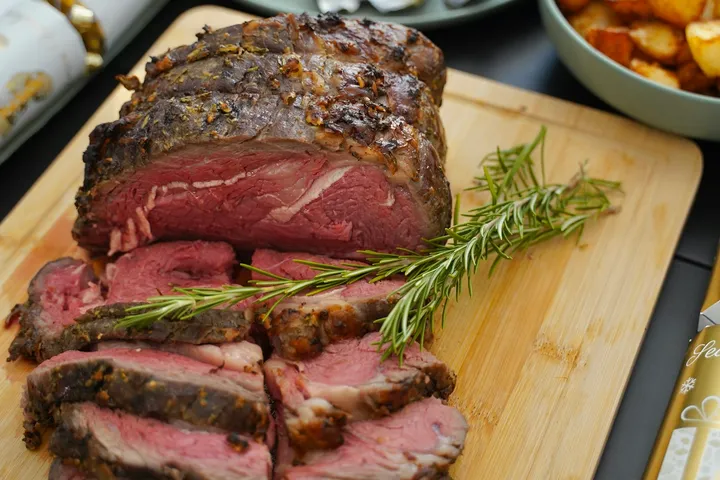
Smoke the roast at 225°F on oak and cherry pellets until the center reads 120 to 125°F, about 4 hours for a 7 lb 3 bone roast. Rest it while the grill heats to 450°F, sear 8 to 12 minutes, and rest 20 minutes for 130 to 135°F medium rare.
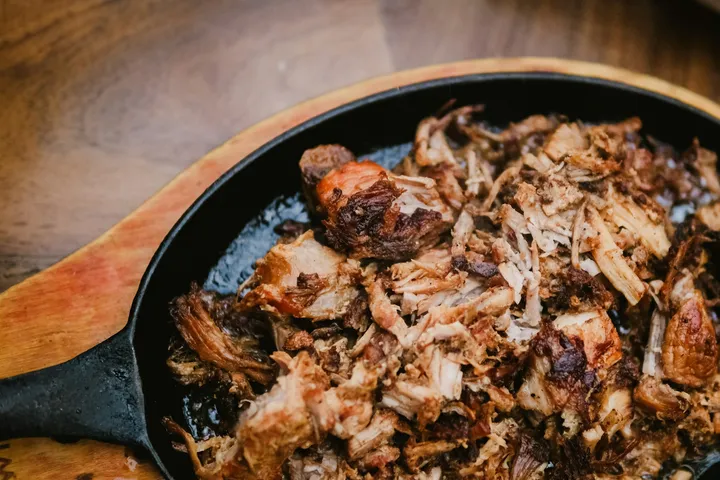
Smoke an 8 lb bone-in butt at 250°F on two parts hickory to one part apple, wrap in butcher paper at 165°F, and pull at 203°F when the probe slides in with no resistance. Budget about 11.5 hours including an hour's rest.
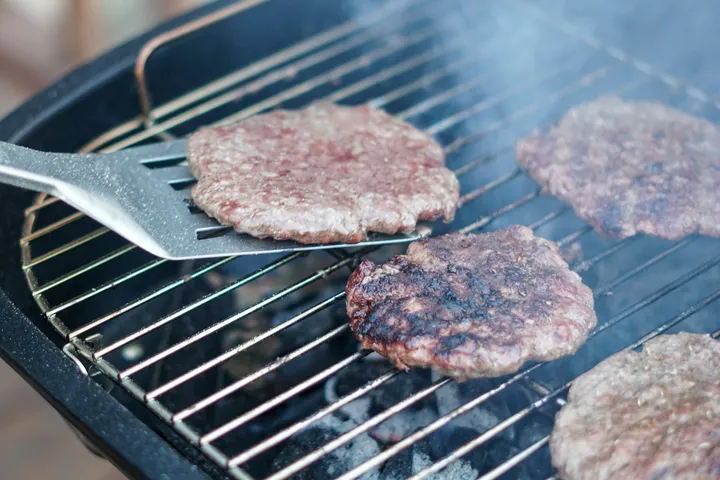
Smoke half pound patties at 225°F on hickory for 30 to 35 minutes until they read about 115°F, then sear at 450°F for 2 to 3 minutes a side to 160°F. Total time is under an hour.