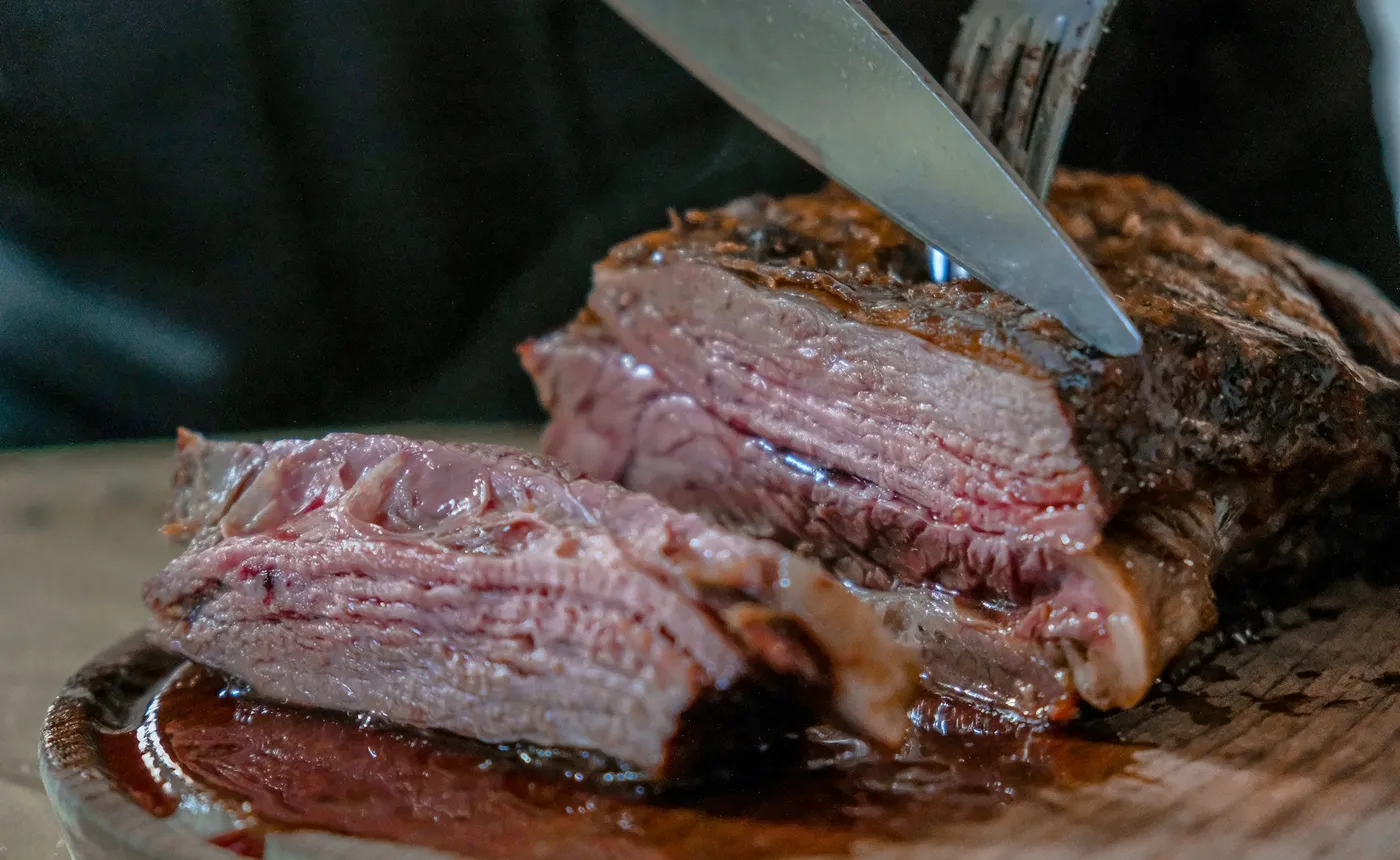
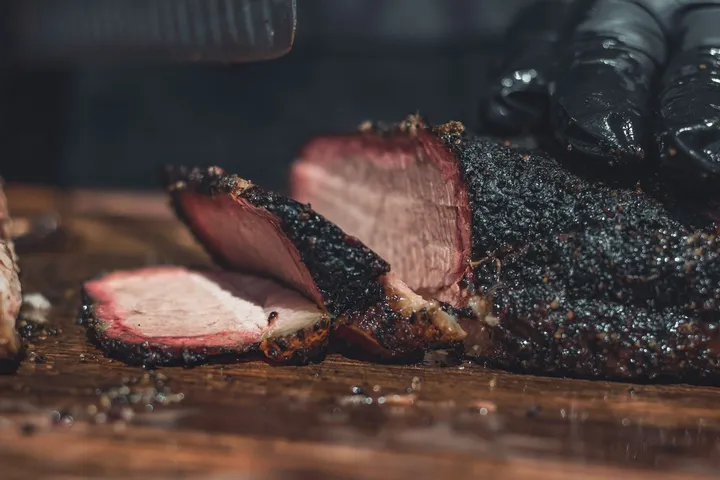
Hickory at 250°F gets a 3.5 lb chuck roast to shreddable, 205°F, in about 6 hours: three hours bare on the grate to build a bark, then three more covered in a foil pan with broth and onions. Rest it 30 minutes, pull it apart with forks, and toss it in the pan juices.
This recipe is written for a Pit Boss, with times for a still, mild afternoon. For anyone starting out with beef on a pellet grill who doesn’t want to give up a whole Saturday to a packer brisket, this is the one I’d point them to. Chuck has the same kind of fat and connective tissue as brisket, in a piece that fits in a 9 by 13 pan, and it forgives the mistakes a brisket punishes.
The usual first mistake is treating it like a small brisket and pulling at 195°F to slice it. The slices come apart in the wrong places and chew like an old pot roast. Take the same roast to 205°F in a covered pan and it turns into pulled beef I’d put up against a good brisket.
Buying the right chuck roast
Ask for a boneless chuck roast of 3 to 4 lb that’s at least 2 inches thick. Thickness matters more than weight here. A wide, flat 3 lb roast dries out before the connective tissue breaks down, and a tall 3 lb roast of the same weight doesn’t.
Choice grade is plenty, since chuck is well marbled at every grade, which is the reason this cook works. Look for visible seams of fat running through the meat and a fat cap on one side.
Skip anything labeled chuck eye or chuck tender if pulled beef is the goal. Those are leaner muscles that do better cooked like a steak. A plain “chuck roast” or “chuck shoulder roast” is what you want. To feed more people, buy two 3 lb roasts rather than one big one; they cook side by side in about the same time as a single roast.
How long to smoke a chuck roast
| Roast |
Grill temp |
Time |
Pull at |
| 2.5 lb |
250°F |
4.5 to 5 hours |
205°F and probe tender |
| 3 to 3.5 lb |
250°F |
5.5 to 6.5 hours |
205°F and probe tender |
| 4 to 5 lb |
250°F |
7 to 8 hours |
205°F and probe tender |
| Two 3 lb roasts in one pan |
250°F |
6 to 7 hours |
205°F and probe tender |
| 3.5 lb |
225°F |
7 to 8 hours |
205°F and probe tender |
| 3.5 lb |
275°F |
4.5 to 5 hours |
205°F and probe tender |
These times include moving the roast into the pan at about 165°F and assume mild weather. Add a 30 minute rest. For other weights or a set dinner time, the smoke time calculator will work it out. Fuel isn’t a worry on this one: the cook burns about 6 to 8 lb of pellets, so a full hopper covers it with room to spare.
If you’re short on time, the 275°F row is the one to use. The bark ends up a little lighter and the shredded beef is no worse.
Seasoning the roast
There’s almost nothing to trim. If one side has a thick slab of hard fat, take it down to a quarter inch so the rub can reach the meat. Leave the internal seams of fat alone, because they’re what makes the shredded beef rich.
Pat the roast dry, smear on a tablespoon of yellow mustard, and season heavily with coarse salt, coarse pepper, garlic powder and a teaspoon of smoked paprika. Heavier than looks right. A chuck roast has a lot of outside for its size, and almost all of that outside ends up mixed through the meat when you shred it, so the rub seasons the whole dish.
An uncovered night in the fridge helps the bark a little. I usually skip it and season while the grill heats.
Slice the onion and measure out a cup of beef broth and two tablespoons of Worcestershire before you start. That liquid turns into the sauce you toss the beef in, and you’ll want it ready when the bark sets, not hunting for it with the lid open.
Smoking it bare, then in the pan
Fill the hopper with hickory, set the grill to 250°F, and let it hold temperature with the lid shut for 15 minutes. Put the roast straight on the grate, fat cap up, with a leave-in probe in the middle, and close the lid for 3 hours. No spritzing is needed. The roast is going into liquid later and the bark softens a little in the pan whatever you do, so this first stage is about smoke and color.
Around 150°F the temperature will stall. Expect it to sit between about 152 and 160°F for an hour or more while surface moisture evaporates and cools the meat. Leave the grill at 250°F and let it happen.
The mistake almost everyone makes with chuck is riding out the whole stall unwrapped. On a windy day the roast can lose so much moisture that the shredded beef is dry even after an hour sitting in broth. Chuck has more surface per pound than a brisket and can’t survive a long, bare stall the way a packer can. So move it into the pan when the bark looks right, dark and firm with nothing smearing off on a fingertip, and on most cooks that falls between 160 and 170°F.
Watch out: Pour the broth around the roast, not over it. Liquid poured on top washes off the rub and leaves you with gray, boiled-looking beef.
Lay the sliced onion in the bottom of the foil pan, set the roast on top, and pour in the broth and Worcestershire. Cover the pan tight with foil and push the probe back through it into the meat. Once it’s back on the grill, the temperature climbs steadily, about 15°F an hour.
At 195°F, start checking every 20 minutes with an instant-read in the center of the roast. Chuck lets go a little later than brisket. At 200°F it still pushes back against the probe, and at 205°F it stops. If it’s still resisting at 205°F, give it until 210°F; nothing bad happens to a chuck roast at 210°F in a covered pan of broth.
When to pull a chuck roast
Pull it when the probe slides in with no resistance anywhere in the roast, usually between 203 and 207°F. The ranges on the brisket internal temp chart hold for chuck as well, with one change: aim for the top of the range. A chuck roast at 198°F slices like a tough pot roast, and at 205°F it falls apart under two forks.
Carryover is only 2 or 3°F because the meat is sitting in hot liquid. Keep the foil on and let the pan rest on the counter for 30 minutes. Shred it the minute it comes off the grill and the beef tastes dry; after half an hour the juices have settled back into the meat.
Shred it in the pan with two forks and pick out any pieces of fat that didn’t render. Toss the beef through the onions and juice. If there’s more liquid than the meat can soak up, pour some into a small pot, boil it for 5 minutes to thicken, and stir it back in.
Wind, cold and your grill’s hot end
Weather moves a chuck roast by an hour either way, not three, because it’s small. On a 45°F day with a 15 mph wind, expect something like 7 hours, mostly because the bare stage drags while the grill fights to hold 250°F. On a 95°F day it can be done in about 5 hours 30 minutes. When it’s cold, go into the pan a little earlier, at 160°F, and let the covered pan carry it the rest of the way.
On a Pit Boss the hot end is usually the left, hopper side; when AmazingRibs tested a Pit Boss 820 at 225°F, the left read about 20°F hotter than the right. During the bare stage, keep the roast in the middle of the grate so the bark colors evenly, and once it’s in the pan, slide it toward the hot end to speed up the climb to 205°F. If you don’t know where your grill’s hot end is, an oven thermometer at each end on one cook will tell you.
Rain changes nothing as long as the pellets stay dry, so keep the hopper lid shut.
What to serve with it, and leftovers
A 3.5 lb roast gives you about 2 lb of pulled beef. That’s 6 to 8 sandwiches on soft buns with pickled red onion and a sharp cheese. It also makes the best taco filling I know, because the broth keeps it moist on a hot griddle where brisket dries out. Smoked mac and cheese runs at the same 250°F and can go on for the last hour.
Leftovers keep 4 days in the fridge, stored in their juice. Reheat them covered at 300°F or in a skillet with a splash of water. Chuck freezes better than most smoked beef, thanks to all that liquid: pack it flat in freezer bags with the juice and it keeps 3 months.
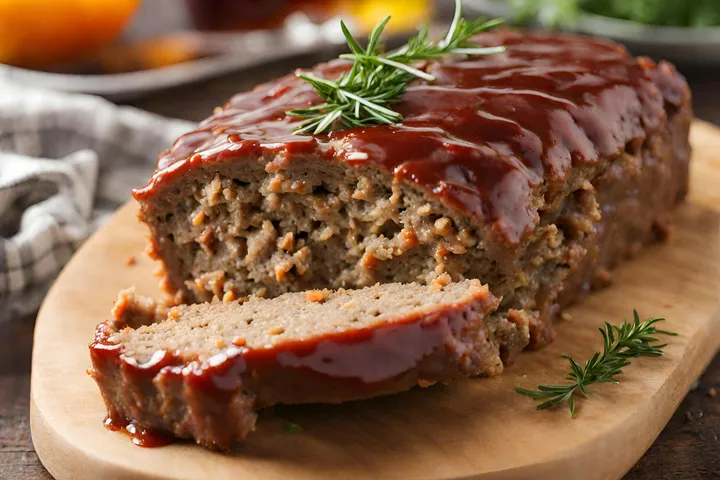
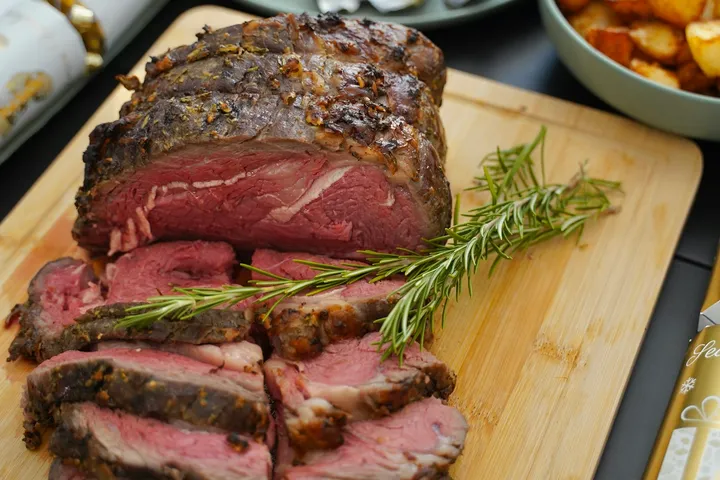
If you’d rather slice your beef than shred it, smoked prime rib is a very different cook on a similar grill setting. The smoked meatloaf uses the same hickory and the same 250°F in half the time.
Pellets and probes for chuck roast
Straight hickory. The cook is 6 hours, the beef is strong enough to carry it, and hickory is the flavor most people mean when they say something tastes smoked. Swap in oak for a milder roast or pecan for a sweeter one. Which bags are worth buying, and which to skip, is covered in best pellets for smoking.
A leave-in probe gets you through the bare stage without opening the lid, and an instant-read tells you when the roast is truly done, since the feel at 205°F matters more than the number. The probes I’d pick for chuck and every other beef cook are in best wireless meat thermometers. Once you’ve done a chuck roast and want the bigger version of the same cook, pellet grill brisket is next.