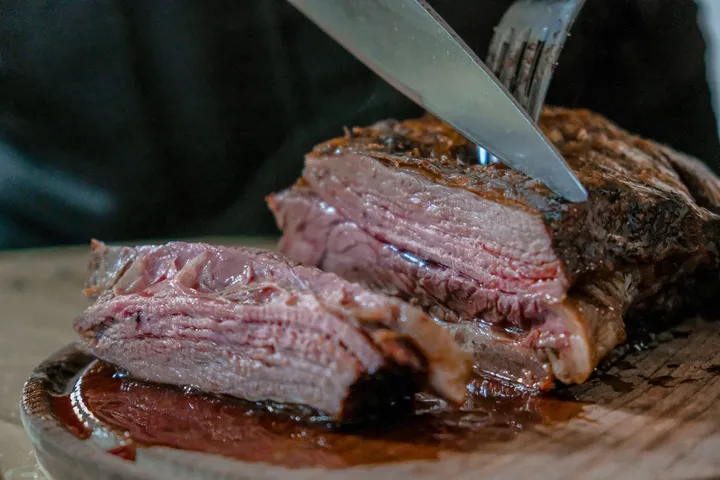
Smoked chuck roast
Smoke the chuck roast at 250°F on hickory for about 3 hours until the bark sets near 165°F, then cover it in a foil pan with broth and cook to 205°F, about 3 hours more. Rest 30 minutes and shred.
- Grill
- 250°F
- Pull at
- Time
- 6¾ hr
Smoked meatloaf on a pellet grill: 250°F on hickory and apple, free form on a wire rack, glazed at 140°F and pulled at 160°F. About 2 hours 45 min for 2.5 lb.
Each recipe gives the pellets, grill temperature, pull temperature and time first. Pull temperatures meet USDA minimums or the doneness barbecue cooks aim for, whichever is higher. Our own cook photos are being added page by page; current photos are credited stock.
Smoke the meatloaf on a wire rack at 250°F with hickory and apple pellets, glaze it at 140°F and again at 150°F, and pull at 160°F in the center. A 2.5 lb loaf takes about 2 hours 45 minutes.
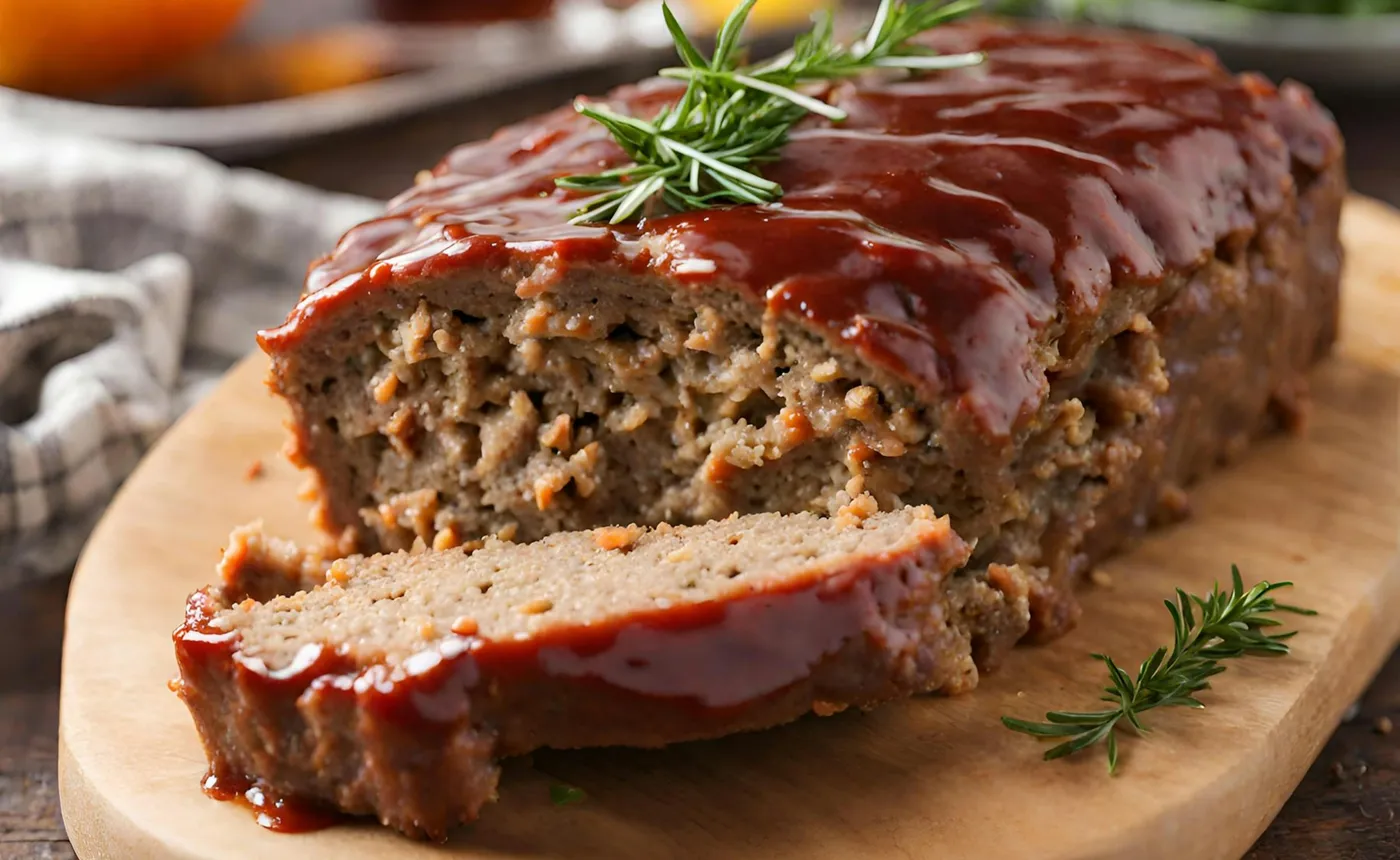
Smoked meatloaf is done at 160°F in the center, and at 250°F on hickory and apple pellets a 2.5 lb loaf gets there in about 2 hours 45 minutes. Shape it free form on a wire rack instead of in a loaf pan, and hold the glaze until the last half hour.
This recipe is written for a Pit Boss, with times for a mild evening. It sits with the beef recipes, though the mix includes half a pound of ground pork for fat and a softer bite. If you already have an oven meatloaf you like, keep it. The grill changes the outside of the loaf far more than the inside, so your family recipe will smoke fine on a rack.
The obvious move is a loaf pan, because that’s what meatloaf goes in. In a pan the top takes on smoke while the sides come out gray and steamed, sitting in about a quarter inch of grease. Moving it onto a rack fixes nearly everything, and it’s the one change I’d make if you change nothing else.
Use 80/20 ground chuck as the base. Leaner beef makes a dry, crumbly loaf on the grill, because nothing inside keeps it moist over three hours. I use 2 lb of chuck and half a pound of ground pork, which adds fat and gives a finer texture. All beef works too, as long as it’s no leaner than 80/20.
Buy the meat the day you cook or the day before. Ground meat is one thing I don’t keep in the fridge for days before a cook.
The binder is a cup of panko soaked in half a cup of whole milk, two eggs, one finely diced onion cooked in butter until soft, two cloves of garlic, a tablespoon each of Worcestershire and barbecue rub, and a teaspoon of salt. Cook the onion first. Raw onion stays crunchy inside a loaf and gives off water that pools under the bark.
| Loaf | Grill temp | Time | Pull at |
|---|---|---|---|
| 1.5 lb | 250°F | 1 hour 45 min to 2 hours | 160°F |
| 2 lb | 250°F | 2 to 2.5 hours | 160°F |
| 2.5 to 3 lb | 250°F | 2.5 to 3 hours | 160°F |
| Two 1.5 lb loaves side by side | 250°F | About 2 hours | 160°F |
| 2.5 lb | 225°F | 3 to 3.5 hours | 160°F |
| 2.5 lb | 275°F | 2 to 2.25 hours | 160°F |
Shape counts as much as weight. A loaf 4 inches tall cooks slower than the same meat shaped 3 inches tall and wider, so these times assume roughly 9 by 5 by 3 inches. If you’re feeding a crowd on a weeknight, two 1.5 lb loaves finish faster than one big one and give you twice the crusty ends. For anything outside the table, the smoke time calculator will get you close, and the probe covers the rest.
Mix everything by hand in a big bowl until it holds together and no longer. Overmixing gives a dense, springy loaf, and 30 seconds is plenty. To check the seasoning, fry a teaspoon of the mix in a small pan and taste it. That costs a minute, and finding out after three hours costs dinner.
On a sheet of parchment, shape the mix into a loaf about 9 inches long, 5 wide and 3 tall, with a flat top. Press the outside firm so it doesn’t crack as it shrinks, then dust it all over with more rub.
Move the loaf onto a wire cooling rack, and that rack goes straight onto the grill grate. To catch the drips, set a foil pan on the grate under the rack or on a lower shelf if your grill has one. A perforated grill mat works too, though the rack gives a better bark on the bottom.
Stir the glaze together while the grill heats: half a cup of ketchup, 2 tablespoons of brown sugar, a tablespoon of cider vinegar, a teaspoon of Worcestershire and a pinch of the rub.
Pit tip: Press a shallow groove down the length of the top with the side of your hand before it goes on. The glaze pools there instead of running off the sides, and you get a thicker layer down the middle of every slice.
I use hickory and apple, half and half. Hickory gives the smoky taste people expect, and apple softens it enough that the beef and the glaze still come through. Straight hickory is fine if that’s what’s in the hopper, and cherry can take apple’s place. I’d leave mesquite out, because ground meat takes on smoke fast and mesquite makes it taste like a campfire.
Set the Pit Boss to 250°F and give it 15 minutes after it comes up to temperature. Put the rack in the middle of the grate, away from the hot end, and push a leave-in probe in from one end so the tip sits in the center of the loaf. Close the lid.
Leave it for 90 minutes. A meatloaf doesn’t need spritzing, since the fat keeps it moist. By the 90 minute mark the outside should have turned from pink to a deep reddish brown, with the probe reading somewhere around 120°F.
| Probe reading | About when | What to do |
|---|---|---|
| 120°F | 90 minutes | Nothing yet; the bark is forming |
| 140°F | 2 hours 15 minutes | First thick coat of glaze |
| 150°F | 2 hours 30 minutes | Second coat |
| 160°F | 2 hours 45 minutes | Pull it |
Glazing too early is the easy mistake to make. Brush it on at the one hour mark because the loaf looks ready, and by the time the center hits 160°F the glaze has been on the grill for nearly two hours and the top is black and bitter. Waiting until 140°F gives the glaze 20 to 30 minutes to set and caramelize, which is enough without burning it.
At 140°F, brush on a thick coat. At 150°F, add a second, which sets to a shine over the first. Close the lid and let it run to 160°F.
Ground beef is done at 160°F, so that’s where I pull. There’s no tenderness test and no connective tissue to wait for, and the thermometer reading is the whole answer. Check it with an instant-read in two places, since the ends get there before the middle.
Carryover in a loaf this size is about 5°F. Pull at 155°F and rest it 10 minutes, and you’ll reach 160°F. I pull at 160°F anyway. With the fat from the chuck and pork, a meatloaf that drifts to 165°F is still moist, and I’d rather not guess.
Rest it on the rack for 10 to 15 minutes before you cut. The slices hold together and the glaze stops being sticky. Slice 3/4 inch thick with a serrated knife; a straight blade drags through the bark and crumbles the slice.
A loaf 3 inches thick is big enough for weather to matter. On a 35°F night with wind, expect something like 3 hours 20 minutes instead of 2 hours 45, and the glaze takes longer to set because the grill keeps cycling. On a 90°F day it can be done in about 2 hours 20 minutes. Start checking at the 2 hour mark whatever the weather.
Pit Boss owners often report a hot zone near the hopper, and AmazingRibs measured the left, hopper side of a Pit Boss 820 about 20°F hotter than the right at 225°F, so the loaf goes in the middle of the grate. If your grill has a strong hot end, turn the rack end to end at the halfway point. Otherwise one end of the loaf runs well ahead of the other.
On a hot day, if you want more smoke, run the Pit Boss on its smoke setting for the first 45 minutes and then go to 250°F. Don’t leave it there much longer, because the loaf needs to reach 160°F in a reasonable time. Rain makes no difference as long as the pellets stay dry.
A 2.5 lb loaf cuts into six thick slices. Smoked mac and cheese can go on for the last hour at the same 250°F and come off at the same time, or serve it with mashed potatoes and the drippings from the pan under the rack.
Leftover meatloaf may be better than the first night. Cold, cut thick, on white bread with mayo, it makes a sandwich I’d happily pay for. It keeps 4 days in the fridge and freezes well as slices with parchment between them. Reheat slices in a covered skillet, or on the grill at 300°F for 10 minutes.
If you have extra ground chuck and the grill is already hot, burgers on a pellet grill take under an hour. For beef that’s pulled instead of sliced, smoked chuck roast runs at the same 250°F.
Hickory and apple, half and half. Ground meat takes smoke quickly and the cook is under three hours, so a softened blend keeps it from tasting like an ashtray. Which bags are worth buying, and which blends to skip, is covered in best pellets for smoking.
A leave-in probe through the end of the loaf tells you when to glaze without opening the lid, and an instant-read confirms 160°F in two spots before you pull. Cheap probes can drift by several degrees, and a meatloaf that’s really at 150°F is undercooked ground meat. The probes that read true are in best wireless meat thermometers.
thepelletpit.com/recipes/meatloaf/
Soak the crumbs, soften the onion
Stir the panko into the milk and let it sit 5 minutes. Cook the diced onion in butter over medium heat for about 6 minutes until soft, then let it cool.
Mix gently
Combine the beef, pork, soaked panko, eggs, onion, garlic, Worcestershire, rub and salt with your hands, stopping as soon as it holds together. About 30 seconds of mixing is enough.
Shape on a rack
Form a flat-topped loaf about 9 inches long, 5 wide and 3 tall. Dust it with rub and set it on a wire cooling rack.
Heat the grill
Fill the hopper with hickory and apple, set 250°F, and wait 15 minutes after it reaches temperature.
Smoke
Set the rack in the middle of the grate and push a leave-in probe into the center from one end. Close the lid for 90 minutes.
Glaze twice
When the probe reads 140°F, brush on a thick coat of glaze. At 150°F, brush on a second coat.
Pull, rest, slice
Pull at 160°F, checked with an instant-read in two places. Rest on the rack 10 to 15 minutes and slice 3/4 inch thick with a serrated knife.
About 2.5 to 3 hours for a 2.5 lb loaf shaped 3 inches tall, and 2 to 2.5 hours for a 2 lb loaf. The height of the loaf changes the time more than the weight does, so go by the probe.
160°F in the center, checked with an instant-read in two spots because the ends run ahead. Carryover adds about 5°F, so pulling at 155°F with a 10 minute rest also gets you there.
On a wire rack set on the grate, shaped free form. A loaf pan steams the sides and leaves the meat sitting in its own grease. The rack lets smoke reach every side and the fat drip away.
At 140°F internal, which is usually the last 20 to 30 minutes, then a second coat at 150°F. Glaze any earlier and the sugar scorches before the middle is done.
Smoke the chuck roast at 250°F on hickory for about 3 hours until the bark sets near 165°F, then cover it in a foil pan with broth and cook to 205°F, about 3 hours more. Rest 30 minutes and shred.
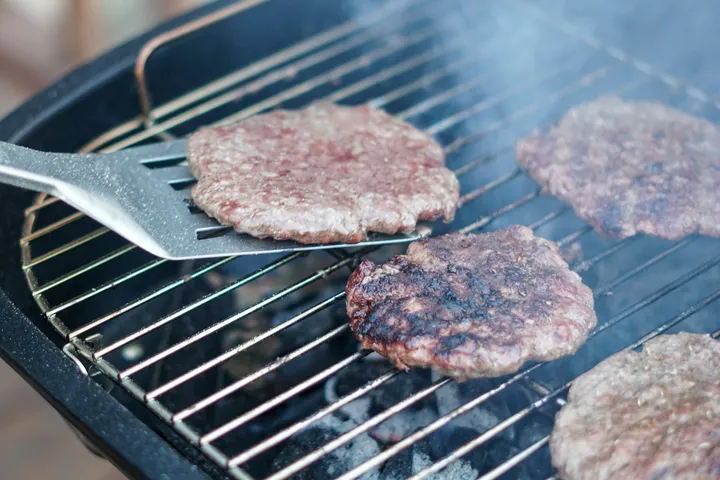
Smoke half pound patties at 225°F on hickory for 30 to 35 minutes until they read about 115°F, then sear at 450°F for 2 to 3 minutes a side to 160°F. Total time is under an hour.
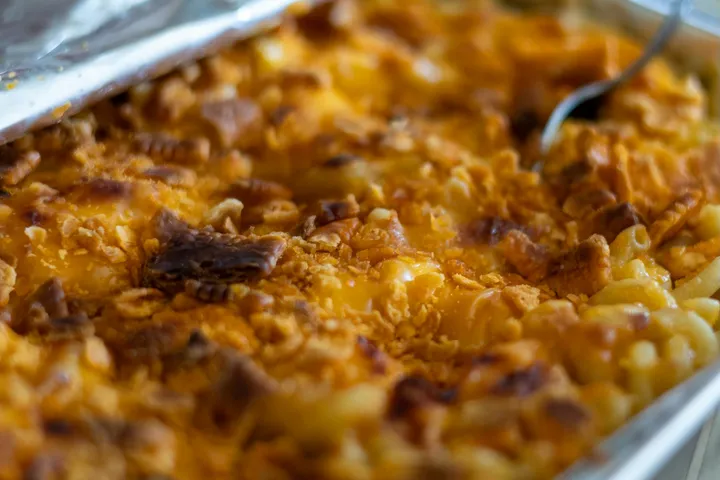
Put the skillet on uncovered at 250°F with apple or cherry pellets (or whatever the meat is running), stir once at 20 minutes, add the panko at 30, and pull at 165°F in the center. It takes 45 to 60 minutes.
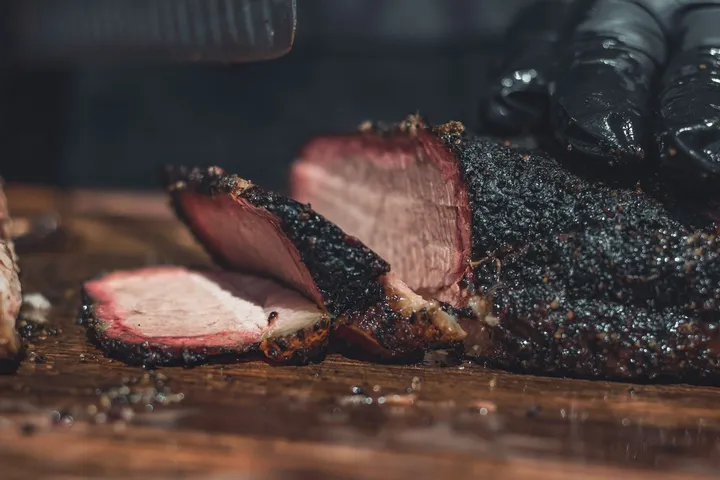
Set the grill to 250°F with oak and hickory pellets, wrap the brisket in butcher paper around 165°F, and pull it at about 203°F when the probe slides in easily. A 13 lb packer needs about 10 hours on the grill plus 1 to 2 hours of rest.