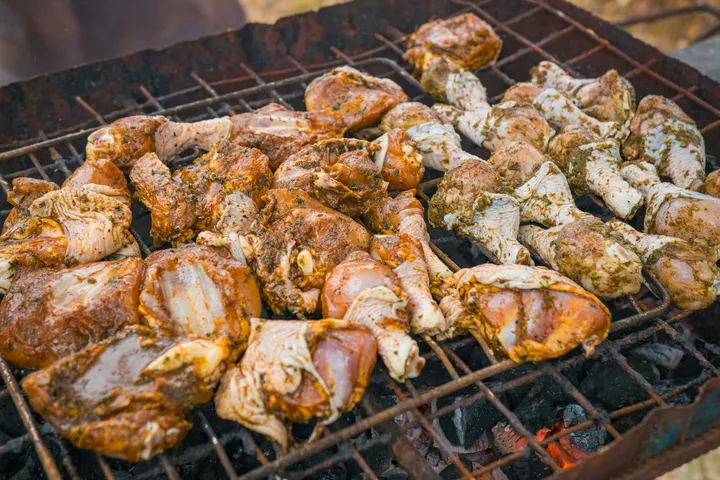
Chicken legs on a pellet grill
Smoke drumsticks at 275°F on hickory pellets for 45 minutes, then turn the grill to 400°F for 15 to 20 minutes, about 70 minutes in all. Pull at 180°F next to the bone.
- Grill
- 275°F
- Pull at
- Time
- 85 min
Bone-in chicken thighs on a pellet grill take about 70 minutes: 45 at 275°F on hickory and apple, then 400°F until the skin crisps. Pull at 175°F to 180°F.
Each recipe gives the pellets, grill temperature, pull temperature and time first. Pull temperatures meet USDA minimums or the doneness barbecue cooks aim for, whichever is higher. Our own cook photos are being added page by page; current photos are credited stock.
Smoke bone-in thighs at 275°F on hickory and apple pellets for 45 minutes, then turn the grill to 400°F for 15 to 20 minutes, about 70 minutes in all. Pull at 175°F to 180°F next to the bone.
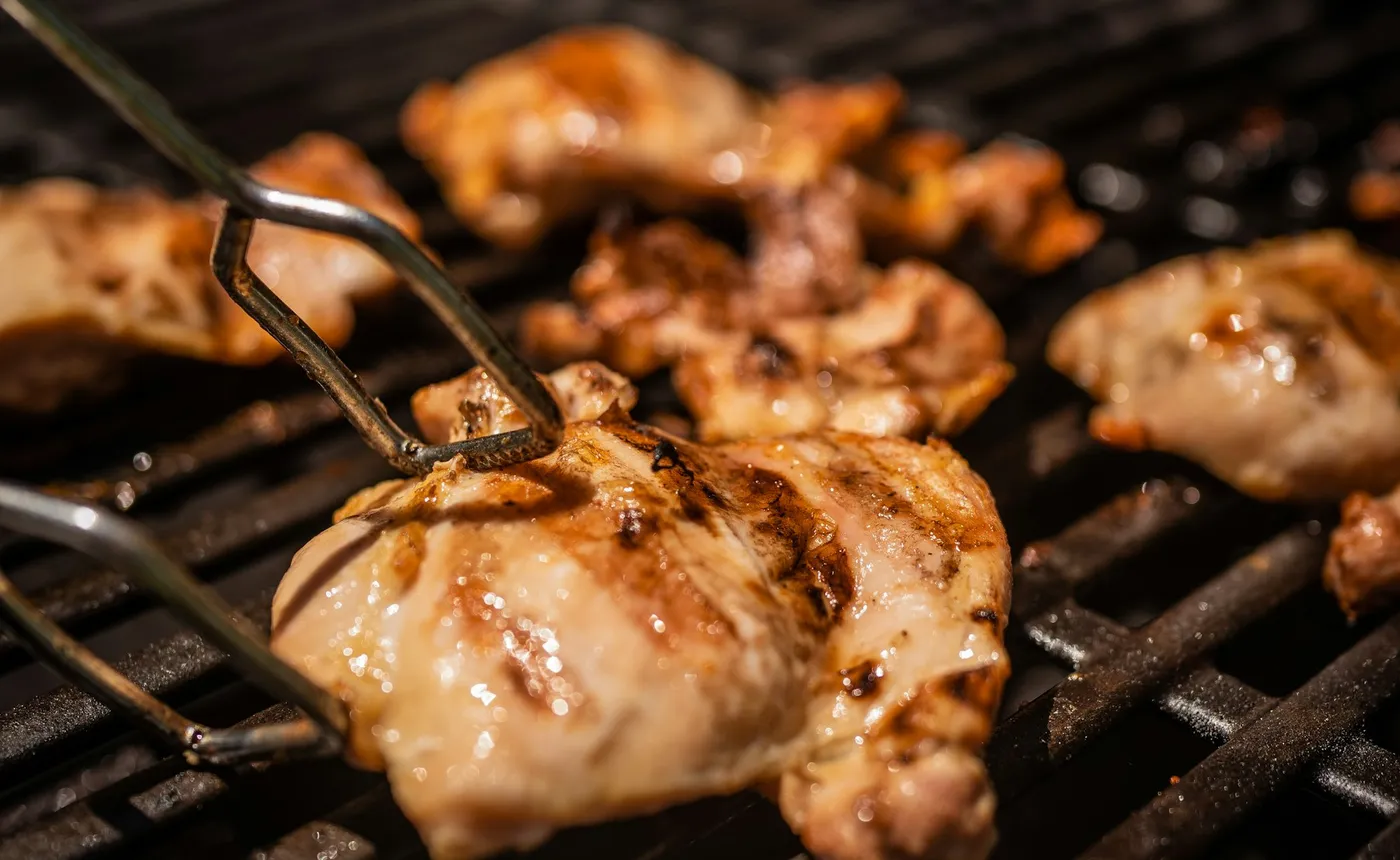
Bone-in chicken thighs are done on a pellet grill in about 70 minutes if you smoke them 45 minutes at 275°F on hickory and apple, then turn the grill up to 400°F for 15 to 20 minutes to crisp the skin. Pull them at 175°F next to the bone, and 180°F is better.
This recipe is written for eight thighs on a Z Grills. Thighs are where I’d tell anyone to start with poultry on a pellet grill. They’re dark meat with enough fat and connective tissue to forgive a 10°F overshoot, they’re usually cheaper per pound than breasts, and they come off looking like a lot more effort than they took.
A lot of cooks smoke thighs at 225°F for two hours, because that’s how they learned to run pork. The meat is tender and the skin is a wet, loose wrapper that nobody eats. The 400°F finish fixes the skin on the first cook.
Bone-in, skin-on thighs of 6 to 8 oz each. Eight of them is about 3.5 lb and feeds four. Choose a pack where the pieces are close in size, because a 5 oz thigh and a 10 oz thigh on the same grate finish 15 minutes apart.
The thigh is the top of the leg, above the knee joint. The muscle works harder than the breast, so it’s darker and carries more fat, and that fat is what keeps it juicy through a smoke that would dry a breast out. Look for thighs where the skin covers the whole top. Some packs have the skin trimmed back to a narrow strip down the middle, and those never crisp evenly.
| Cut | How to cook it | Worth it? |
|---|---|---|
| Bone-in, skin-on | Two stages, this page | Yes; the best smoke and the best skin |
| Bone-in, skinless | 275°F the whole way, pulled by thermometer | Fine, but the top dries a little |
| Boneless, skinless | 350°F for 30 to 35 minutes | Good for tacos; very little smoke time |
| Leg quarters (thigh and drum joined) | See chicken legs | Yes, and often the cheapest per pound |
| Thighs | Smoke stage | Crisp stage | Total | Pull at |
|---|---|---|---|---|
| 4 bone-in, 6 to 8 oz | 275°F, 40 min | 400°F, 15 min | 55 to 65 min | 175 to 180°F |
| 8 bone-in, 6 to 8 oz | 275°F, 45 min | 400°F, 15 to 20 min | 65 to 75 min | 175 to 180°F |
| 12 bone-in, two grates | 275°F, 50 min | 400°F, 20 to 25 min | 75 to 90 min | 175 to 180°F |
| 8 bone-in, all at 350°F | 350°F, 50 to 60 min | none | 50 to 60 min | 175 to 180°F |
| 8 bone-in, all at 250°F (not recommended) | 250°F, 90 to 120 min | none | 90 to 120 min | 175°F, soft skin |
Totals include the 10 minutes or so the grill takes to climb from 275°F to 400°F with the lid shut. Cold days add 10 to 15 minutes to the crisp stage. The smoke time calculator is built for large cuts, but it gives a fair starting number for a big batch.
The single-temperature 350°F row is the weeknight version. It’s 15 minutes quicker, the skin still crisps, and the smoke is lighter. With time to spare, run the two stages; on a night when you walk in late and hungry, run 350°F and don’t feel bad about it.
Start with a knife. Cut off any skin hanging past the edge of the meat and any big lumps of fat on the underside. Then stretch the skin so it covers the top of the thigh in one flat layer. Skin bunched into a fold stays soft under the fold, and the fold is always the bite people leave on the plate.
Pat every thigh dry. Rub them with a tablespoon of olive oil, enough to help the rub stick, and season both sides. Mix the salt, pepper, paprika, garlic powder, onion powder, brown sugar and cayenne in a jar and shake it on from about a foot up so it lands evenly. A zip bag works too, two thighs at a time. Whatever rub is left in the bag goes in the trash, since it’s touched raw chicken.
Pit tip: Keep the sugar to the one teaspoon in the rub. Any more and it scorches black during the 400°F finish, long before the skin is done. If you want a sweeter thigh, get the sugar from sauce in the last 5 minutes.
Set the thighs skin side up on a rack over a sheet pan, uncovered, in the fridge for an hour. Overnight is better, because the salt has time to work into the meat and the skin dries from shiny to matte. If it’s 4:00 now and dinner is at 6:00, an hour is enough.
I don’t brine thighs. They have enough fat to stay juicy without it, and brined skin holds water.
Hickory and apple, half and half. Hickory is the smoke you can taste on chicken, and apple rounds it off and helps the skin color. Straight hickory is fine; straight apple is too mild for a cook this short.
Set 275°F and give the grill 10 minutes after the controller says it’s ready. The thighs go on skin side up with an inch between them so air moves around each one. Most pellet grills run hotter at one end, so the biggest thighs go there.
Close the lid for 45 minutes and leave them alone. No flipping. The bone and the fat underneath shield the meat from below, and the skin on top needs uninterrupted heat to dry. Each look costs about 25°F and a few minutes of recovery.
Then, lid still shut, set the controller to 400°F. It takes about 10 minutes to climb, and the thighs keep cooking on the way up. Give them 15 to 20 minutes once it’s there. The skin goes from tan and tight to brown and blistered, and if you stand by the grill you can hear the fat sizzle.
The reason for two stages is the skin. Chicken skin is water and collagen over a layer of fat. Below roughly 300°F that fat doesn’t render and the water leaves too slowly, so the skin stays chewy no matter how long it cooks. At 400°F the fat runs out, the water cooks off and the skin tightens and browns. Drop the low stage and you lose most of the smoke; drop the hot one and you lose the skin.
The crowded-grate mistake is the one I’d warn anyone about. Put 12 thighs on a grate that holds 8 properly and the ones in the middle sit skin to skin, steam gets trapped between them, and their touching edges come out pale and soft while the outside thighs are done. Use both racks or cook in two batches, because the inch between pieces isn’t optional.
| Problem | Fix |
|---|---|
| Skin brown on top, flabby at the edges | Thighs were touching; space them and give 5 more minutes at 400°F |
| Bottoms scorching over the fire pot | Move them to the cool end halfway through the crisp stage |
| Rub turned black before the skin crisped | Too much sugar; cut it back next time and finish with sauce |
| Biggest thigh at 170°F, rest are done | Pull the small ones and give the big one 5 more minutes |
Pull the thighs at 175°F, probed in the thickest part alongside the bone without touching it. I like them nearer 180°F, and 185°F is still fine. This is the number people get wrong. The 165°F you see everywhere is the safe minimum and the right target for breast meat. Thigh meat at 165°F is safe but chewy, because the connective tissue around the bone hasn’t softened yet. Another 10 to 15°F turns it silky, and the fat in the cut keeps it from drying out.
Check more than one thigh. The ones at the hot end will usually be ahead of the others.
There’s a visual check too. Wiggle the exposed end of the bone; on a done thigh it moves freely and the meat has pulled back from it a little. Treat that as a sign and the thermometer as the answer.
Sauce, if you’re using it, goes on in the last 5 minutes, brushed thin with the lid closed so it tacks up. Longer than that at 400°F and the sugar burns. Rest the thighs 5 minutes on a board and serve them while the skin is at its best.
The crisp stage is the weather-sensitive part. On a 35°F day with wind, a pellet grill set to 400°F may only hold 360 to 370°F at the grate, and the skin takes about 10 extra minutes to brown. Set the controller to 425°F on a cold day and trust the skin color over the clock.
Watch out: High heat in cold air eats pellets fast. A hopper that was a quarter full when the thighs went on can run dry in the middle of the crisp stage, and the fire goes out right when the skin needs it most. Top it up before you turn the dial to 400°F.
On a hot day above 85°F the climb to 400°F is quick and the thighs over the fire pot can scorch on the bottom before the skin is done. Move them to the cooler end halfway through.
Most pellet grills have a hot end. Find yours once with a cheap oven thermometer at each side and put the biggest thighs there every time.
Eight thighs feed four, two each, with sides. They want something sharp next to them, like slaw, pickles or a vinegary hot sauce. Smoked mac and cheese fits on the upper rack through the 275°F stage. For a mixed platter, smoked chicken wings use nearly the same two-stage cook and can share the grate.
Leftovers keep three to four days in the fridge. Reheat them on a rack on the grill or in a 400°F oven for 10 minutes to bring the skin back, because the microwave turns it rubbery in a minute. Cold thigh meat pulled off the bone makes the best taco filling of the week.
Hickory and apple, half and half, is my chicken mix, with hickory for smoke and apple for color and a softer finish. If you only have one bag, make it hickory. Brand notes and blends are in best pellets for smoking.
Thighs need an instant-read thermometer with a thin tip that slides in alongside the bone, since a leave-in probe in one thigh only tells you about that thigh. The ones I’d buy are in best wireless meat thermometers.
thepelletpit.com/recipes/chicken-thighs/
Trim and tuck
Cut off skin that hangs past the meat and any big lumps of fat underneath. Pat each thigh dry, then stretch the skin so it covers the top in one flat layer.
Oil and season
Rub the thighs with the oil and shake the salt, pepper, paprika, garlic, onion, sugar and cayenne over both sides. Throw out any rub that touched raw chicken.
Dry them in the fridge
Set the thighs skin side up on a rack over a sheet pan and refrigerate uncovered for at least an hour, or overnight.
Preheat to 275°F
Fill the hopper with hickory and apple pellets, set 275°F and let the grill hold for 10 minutes.
Smoke for 45 minutes
Lay the thighs skin side up with an inch between them, biggest ones toward the hot end. Close the lid for 45 minutes and don't flip them.
Finish at 400°F
Without opening the lid, set the controller to 400°F. Give them 15 to 20 minutes once it's there, until the skin is brown and blistered.
Probe at the bone
Check the thickest thigh next to the bone without touching it. Pull at 175°F, and 180°F is better for texture.
Sauce and serve
If you want sauce, brush it on thin in the last 5 minutes only. Rest the thighs 5 minutes and serve.
About 70 minutes using two stages, 45 minutes at 275°F and then 15 to 20 minutes at 400°F to crisp the skin. At 250°F the whole way, bone-in thighs take 1.5 to 2 hours and the skin stays soft.
Pull them at 175°F in the thickest part next to the bone, and anywhere up to 185°F is fine. Thighs are dark meat with connective tissue that doesn't soften until the mid 170s. The 165°F figure is the safe minimum, and it's the right target for breast meat, not thighs.
The grill wasn't hot enough at the end. Below about 300°F the fat under the skin doesn't render and the skin stays wet. Finish at 400°F for 15 to 20 minutes, and dry the thighs uncovered in the fridge before they go on.
Skin on. It keeps the meat from drying out and it's the best part once it's crisp. If you don't want to eat it, cook with it on and peel it off at the table.
Yes, but they're a different cook. Boneless, skinless thighs take 30 to 35 minutes at 350°F with no second stage. Bone-in, skin-on gives you more smoke time and juicier meat.
Smoke drumsticks at 275°F on hickory pellets for 45 minutes, then turn the grill to 400°F for 15 to 20 minutes, about 70 minutes in all. Pull at 180°F next to the bone.
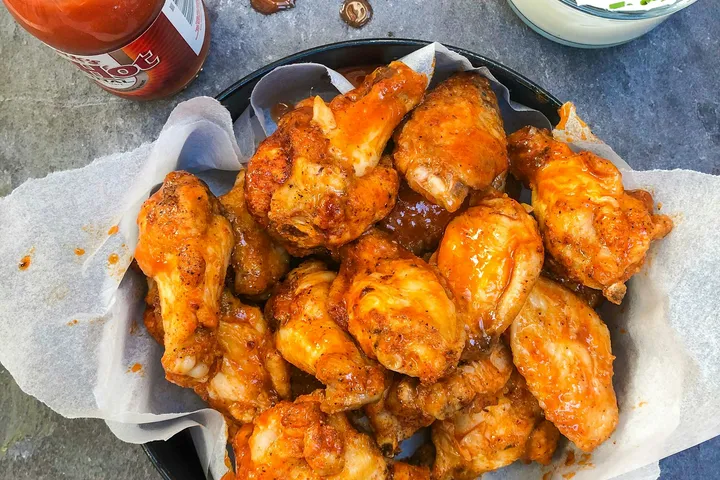
Smoke the wings at 225°F on hickory pellets for 30 minutes, then turn the grill to 400°F and cook 25 to 35 minutes more, about 75 minutes in all for 4 lb. They're done at 175°F in the thickest drum.
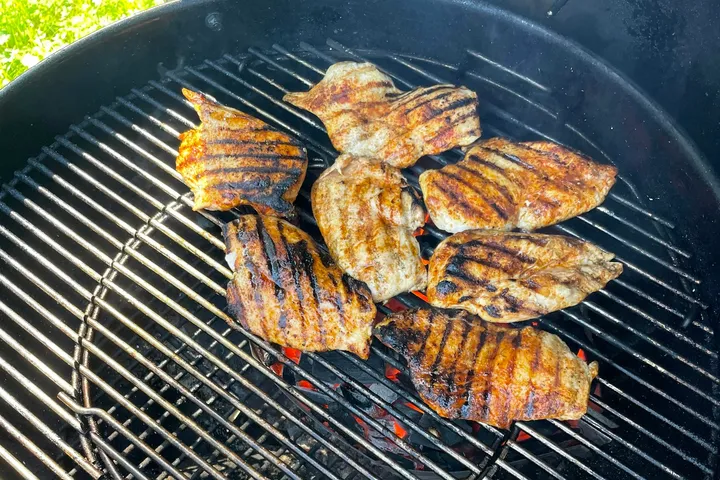
Brine the breasts for 45 minutes, then smoke them at 250°F on apple pellets for 50 to 70 minutes, about 2 hours start to finish. Pull each one at 160°F and rest it 5 to 10 minutes to reach 165°F.
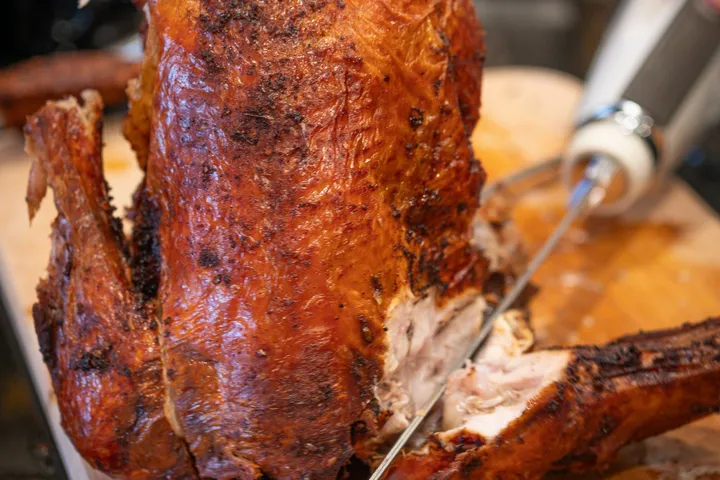
Cook the flattened bird at 300°F on cherry and hickory pellets; a 13 lb turkey takes about 2 hours. Pull when the breast reads 162°F and the thigh 175°F, then rest it 20 minutes.