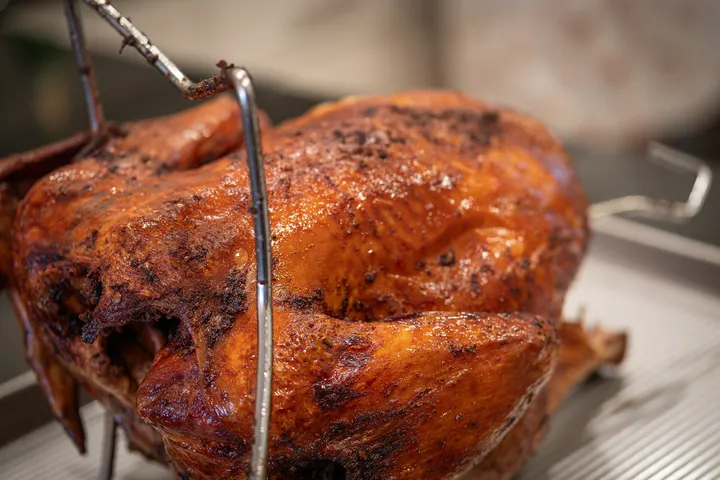
Pellet grill turkey
Set the grill to 300°F with cherry and pecan pellets and plan on about 3 hours 15 minutes for a brined 14 lb turkey. Pull when the breast reads 162°F and the thigh 175°F, then rest it 30 minutes.
- Grill
- 300°F
- Pull at
- Time
- 4 hr
A spatchcock turkey on a pellet grill cooks in about 2 hours at 300°F for a 13 lb bird, with breast and thighs done together. Dry brine, cherry and hickory.
Each recipe gives the pellets, grill temperature, pull temperature and time first. Pull temperatures meet USDA minimums or the doneness barbecue cooks aim for, whichever is higher. Our own cook photos are being added page by page; current photos are credited stock.
Cook the flattened bird at 300°F on cherry and hickory pellets; a 13 lb turkey takes about 2 hours. Pull when the breast reads 162°F and the thigh 175°F, then rest it 20 minutes.
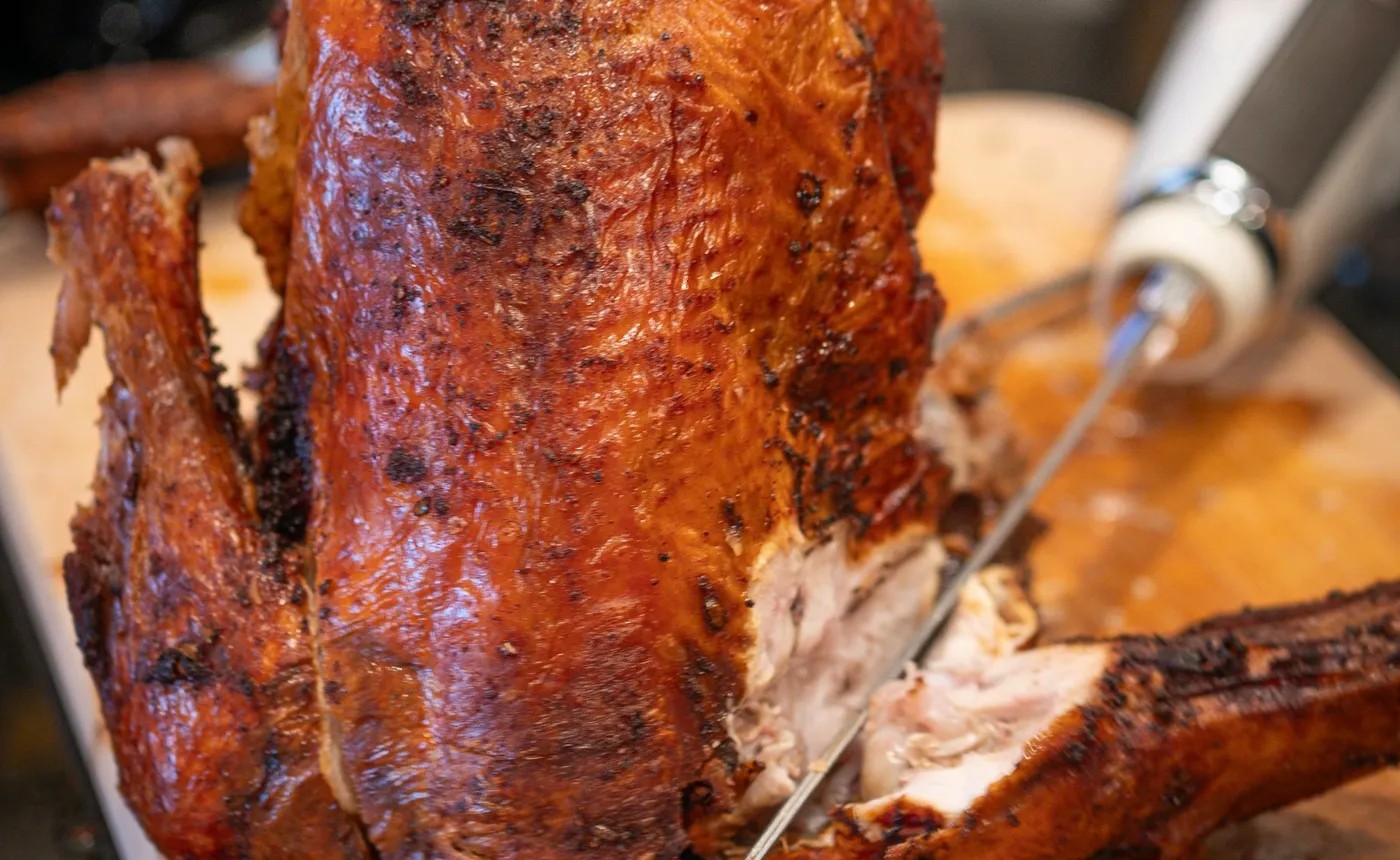
Two hours at 300°F is what a 13 lb spatchcock turkey needs on a pellet grill, and the breast at 162°F and the thighs at 175°F show up within about 10 minutes of each other. That timing match is the reason to flatten a bird at all, and it’s why I’d cut the backbone out of any turkey over 14 lb.
This recipe is written for a Camp Chef, with cherry and hickory pellets, a dry brine from the night before and a pan of stock and vegetables under the rack. It’s the fast version of smoking a whole turkey on a pellet grill, and among the poultry recipes it’s the one I recommend to anyone who has burned a whole bird’s breast waiting on the legs. On a whole turkey you are always choosing which end to overcook. Flat, the choice goes away.
A common first attempt runs the flat bird at 250°F, treating it as smoking rather than roasting. Expect about two hours and forty minutes that way, with pale, loose skin. At 300°F the same size bird is done in about two hours, and the skin crackles under the knife.
A 12 to 14 lb bird is the right size for most grills. Flattened, it lies about 18 inches wide and 14 deep, which leaves room on a full-size main grate for the pan underneath it. Measure your grate before you shop, because a bird that hangs off the edges cooks unevenly and drips outside the pan.
| Bird weight | Flattened footprint | What it needs |
|---|---|---|
| 12 to 14 lb | About 18 by 14 inches | A main grate at least 20 inches wide |
| 16 to 18 lb | Bigger; measure after flattening | A large grill |
| 20 lb | Needs about 22 inches of width | More grill than most people own |
The 16 to 18 lb birds are where spatchcocking earns its keep. Whole, that size takes over four hours at 300°F with the breast done an hour early; flat, it’s 2.5 to 3 hours and the two finish together.
“Enhanced” and “self-basting” turkeys were injected with a salt solution at the plant, so skip the salt in the dry brine for those. A bird marked “no solution added” takes the brine as written.
Thaw it completely first, at a day in the fridge for every 4 to 5 lb. Shears won’t get through a backbone that’s still frozen in the middle. If you only need white meat, a smoked turkey breast is shorter still and needs no shears.
| Turkey weight | Grill temp | Approximate time | Pull at |
|---|---|---|---|
| 10 to 12 lb | 300°F | 1.5 to 1.75 hours | 162°F breast, 175°F thigh |
| 12 to 14 lb | 300°F | 1.75 to 2.25 hours | 162°F breast, 175°F thigh |
| 14 to 16 lb | 300°F | 2.25 to 2.5 hours | 162°F breast, 175°F thigh |
| 16 to 18 lb | 300°F | 2.5 to 3 hours | 162°F breast, 175°F thigh |
| 12 to 14 lb | 325°F | 1.5 to 2 hours | 162°F breast, 175°F thigh |
Figure 9 to 10 minutes a pound at 300°F for a bird that went on from the fridge, on a grill holding temperature at the grate on a day above 40°F. A cold, windy day adds 15 to 20 minutes. For a weight that isn’t listed, the smoke time calculator will give you a starting number.
How the same size bird compares when cooked whole:
| Whole, 13 to 14 lb | Spatchcocked, 13 lb | |
|---|---|---|
| Time at 300°F | About 3 hours 15 minutes | About 2 hours |
| Breast and thigh finish | Breast usually first, by a lot | Within about 10 minutes |
| Skin | Crisp on top, softer underneath | Crisp across the whole top |
| Platter look | The classic picture | Flat, and you carve in the kitchen |
| Brine | Wet brine in a bucket | Dry brine on a sheet pan |
If the table matters more than the photo, flatten it.
The backbone is the only hard part, and it takes about five minutes. Set the turkey breast side down on a big board. With heavy poultry shears (a knife won’t do it), cut along one side of the backbone from the tail end to the neck, snipping through the small rib bones one at a time. Do the other side, lift the backbone out and put it in the freezer for stock.
Flip the bird. Put the heels of both hands on the breastbone and lean on it hard until you hear a crack and the turkey lies flat. If it won’t give, turn it back over and score the cartilage along the inside of the breastbone with a knife, then press again. Tuck the wing tips behind the shoulders so they don’t burn.
The dry brine is 3 tablespoons of kosher salt mixed with a tablespoon of brown sugar. Rub it over every surface you can reach and push some under the breast skin. Set the flat turkey on a rack over a sheet pan and leave it uncovered in the fridge for 12 to 24 hours. The salt works into the meat while the cold, dry fridge air dries the skin, and both of those are what make the cook work.
The next day, don’t rinse it. Pat off any beads of moisture, work half a stick of soft butter under the breast skin and spread the rest over the top. Season with the pepper, garlic powder, thyme and smoked paprika, and leave salt out of the rub since the brine already took care of it.
Cherry and hickory, half and half. Cherry colors turkey skin a deep red-brown, which matters here because two hours is short for skin to pick up color, and hickory puts enough smoke in the meat that you can taste it under gravy. Pecan instead of hickory is softer and also good.
Set 300°F and let the grill hold for 15 minutes with the lid shut after it says it’s ready. Spread the chopped onion and carrot in a full-size foil pan, pour in the stock and set a wire rack across the top. The turkey lies on the rack, skin up, with the legs toward the hot end of the grill, since the thighs need the higher pull temperature anyway. If you don’t know where your hot end is, an oven thermometer at each side during an earlier cook will tell you.
One probe goes into the thickest part of the breast from the side, and a second into a thigh beside the bone without touching it. Close the lid for 75 minutes.
The reason this runs at 300°F instead of the 225°F you’d use for ribs is the skin. Turkey skin is water and collagen over a layer of fat, and at 225°F that fat never gets hot enough to render while the water leaves too slowly, so the skin stays soft whatever you do. At 300°F the fat melts out and the skin dries, tightens and crisps. A flat bird has its whole skin surface facing the heat at once, so it crisps more evenly than a whole one ever does.
At 75 minutes, turn the pan end for end and read the probes. On a 13 lb bird the breast is usually at 130 to 140°F, with the thigh 10 to 15°F ahead of it, which is the gap you want. If the breast skin is browning faster than you like, lay a loose sheet of foil over the breast only.
Watch out: Keep a pan under the bird. Set the turkey straight on the grate to get smoke on the underside and the drippings hit the heat deflector and scorch. The bottom of the bird comes out sooty and the grill smells like a burnt pan for the rest of the afternoon. The stock keeps the drippings from burning, and the onion and carrot turn them into gravy.
Pull the turkey when the breast reads 162°F in its thickest part and the thigh reads at least 175°F next to the bone. On a flat bird those usually arrive within 10 minutes of each other. The breast carries over about 3°F while it rests and lands at 165°F, the USDA number and still on the moist side for white meat. The thigh at 175 to 180°F has had time for its connective tissue to soften.
Check the other breast lobe and the other thigh with an instant-read before you pull. The side that sat toward the hot end will be ahead, sometimes by 5°F or more.
If the thighs are done and the breast is still at 155°F, that’s the reverse of the usual problem and it’s easy to fix. Slide a sheet of foil over the thighs and give the breast another 10 minutes.
Rest the bird under loose foil for 20 minutes. A flat turkey rests faster than a whole one because there’s no cavity holding heat, and loose foil keeps the skin from steaming soft.
December is cold-weather cooking for most of the country, and a pellet grill holding 300°F in 30-something air with wind is working hard. The fan pulls cold air through the fire pot, the controller feeds faster to keep up, and the grate swings more on each cycle. On a 38°F day with wind, expect a 13 lb bird to burn about 4.5 lb of pellets over two hours and fifteen minutes. On a calm 60°F day I’d expect something closer to 3 lb.
Even on a bad day, that’s well under a single 20 lb bag, which is one of the quiet advantages of a two hour turkey over a four hour one. Run the pellet calculator if you’re cooking a bigger bird, and fill the hopper before you start.
Set the grill out of the wind with the hopper side downwind, and give it 20 to 25 minutes to settle instead of 15. An insulated grill blanket helps below 40°F. A flat turkey covers most of the grate, so it sits over the hot and cool ends at once, and the rotation at 75 minutes does more here than it would for a smaller cut.
Carving a spatchcock turkey is easier than carving a whole one. Cut through the skin between breast and thigh, bend the leg out until the joint pops, and take each leg quarter off. Then run a knife down one side of the breastbone and lift the whole lobe off the ribs in one piece, and slice it across the grain on the board. Repeat on the other side. Four big pieces, then slices, and the platter looks better than a whole bird hacked at the table.
A 13 lb bird feeds 10 to 12 with sides. Strain the pan through a sieve and you have stock, drippings and soft vegetables that make a gravy with a smoke edge; taste before salting. Smoked mac and cheese goes on the upper rack for the last hour at 300°F if there’s room above the bird. A smoked ham runs at the same temperature, and the two fit on most full-size grills if you stagger the start.
Leftovers keep three to four days in the fridge. Pull the meat off the bones the same night and store it with some of the pan juices. The carcass and the backbone you froze make a stock worth having in January.
Cherry and hickory, half and half, is what I’d run on a spatchcock bird. Cherry gets color onto the skin in a short cook, and hickory gives you smoke that holds up under gravy. My brand notes, including which bags are mostly oak, are in best pellets for smoking.
Two probes, one in the breast and one in the thigh, are what let you leave the lid shut for 75 minutes, and an instant-read on the other side settles it before you pull. The ones I’d buy are in best wireless meat thermometers.
thepelletpit.com/recipes/spatchcock-turkey/
Remove the backbone
Set the turkey breast side down and cut along both sides of the backbone with poultry shears, tail to neck. Lift it out and freeze it for stock.
Press it flat
Turn the bird breast side up, put the heels of both hands on the breastbone and push down hard until it cracks and the turkey lies flat. Tuck the wing tips behind the shoulders.
Dry brine overnight
Mix the salt and sugar and rub it over every surface, including under the breast skin. Leave the turkey flat on a rack over a sheet pan, uncovered, in the fridge for 12 to 24 hours.
Butter and season
Pat off any moisture without rinsing. Push half the butter under the breast skin, spread the rest on top, and season with the pepper, garlic powder, thyme and smoked paprika.
Preheat to 300°F
Fill the hopper with cherry and hickory pellets, set 300°F and let the grill hold for 15 minutes after it reports ready.
Build the pan
Spread the onion and carrot in a full-size foil pan, pour in the stock and set a wire rack on top. Lay the turkey on the rack skin up with the legs toward the hot end, and probe a breast and a thigh.
Smoke 75 minutes, then rotate
Close the lid for 75 minutes, then turn the pan end for end. The breast usually reads 130 to 140°F at this check.
Pull and rest
Pull when the breast reads 162°F and the thigh at least 175°F, usually between 1 hour 50 minutes and 2 hours 15 minutes. Rest 20 minutes under loose foil, then carve.
About 9 to 10 minutes per pound at 300°F, so a 13 lb bird takes roughly 2 hours. That's about an hour and a quarter less than the same bird cooked whole. Start checking the breast at 90 minutes.
300°F. Flat on the grate, the whole bird sits close to the heat, so 300°F cooks it through quickly and renders the skin. At 225°F the skin stays rubbery and the breast dries while you wait on the thighs.
A flattened 12 to 14 lb bird is about 18 inches wide and 14 deep, which fits any full-size pellet grill with a main grate at least 20 inches wide. A 20 lb bird needs about 22 inches. On a small grill, cook a turkey breast or two chickens instead.
Dry brine it overnight with 3 tablespoons of kosher salt and a spoonful of brown sugar. A wet brine works, but a flattened bird is awkward in a bucket, and the dry brine dries the skin at the same time, which is what you want before a 300°F cook.
Set the grill to 300°F with cherry and pecan pellets and plan on about 3 hours 15 minutes for a brined 14 lb turkey. Pull when the breast reads 162°F and the thigh 175°F, then rest it 30 minutes.
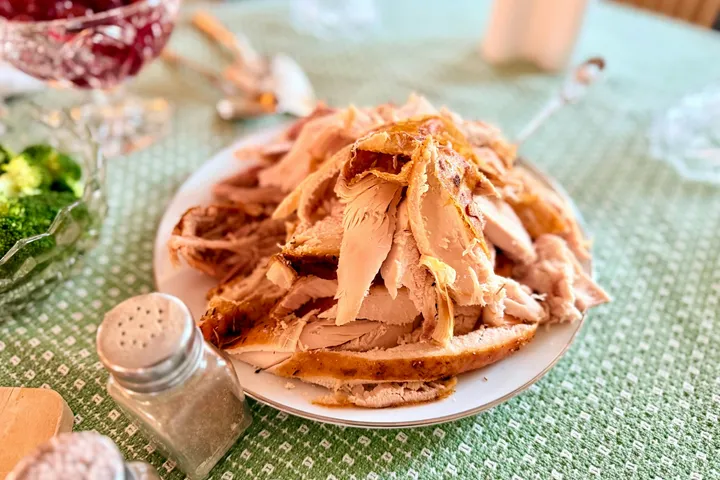
Smoke at 250°F on apple and hickory pellets, then turn the grill up to 375°F when the breast reads 150°F. A 6 to 7 lb bone-in breast takes about 2.5 hours; pull at 160°F and rest 20 minutes to reach 165°F.
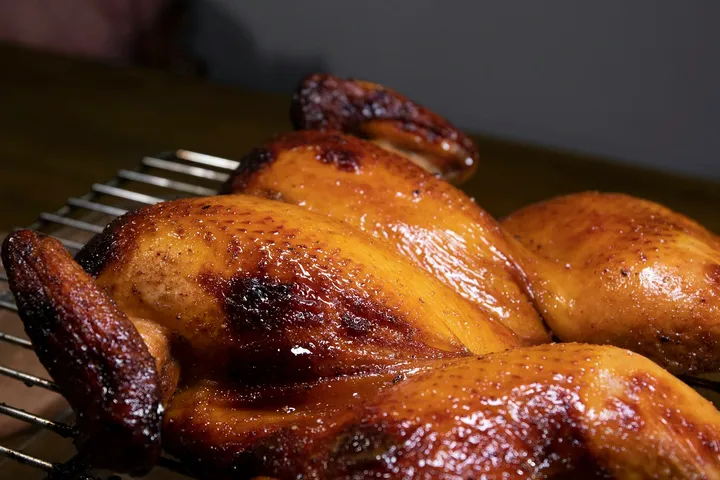
Cook a 4 to 5 lb chicken at 350°F on pecan pellets for 70 to 85 minutes, or 50 to 60 minutes spatchcocked. Pull when the breast reads 160°F and the thigh at least 175°F, then rest it 15 minutes.
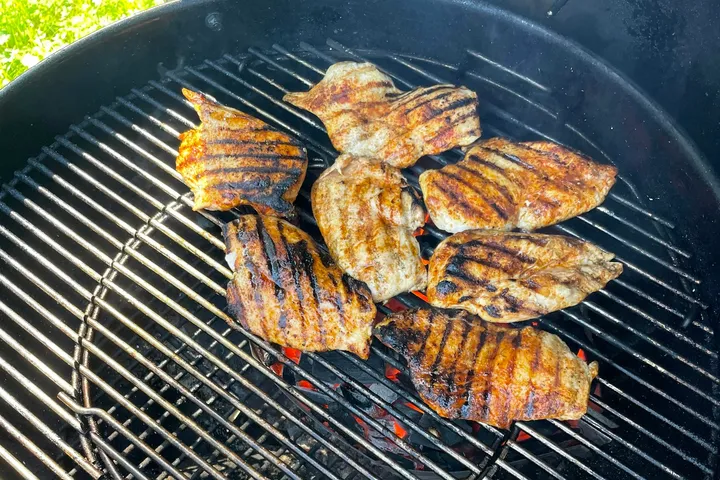
Brine the breasts for 45 minutes, then smoke them at 250°F on apple pellets for 50 to 70 minutes, about 2 hours start to finish. Pull each one at 160°F and rest it 5 to 10 minutes to reach 165°F.