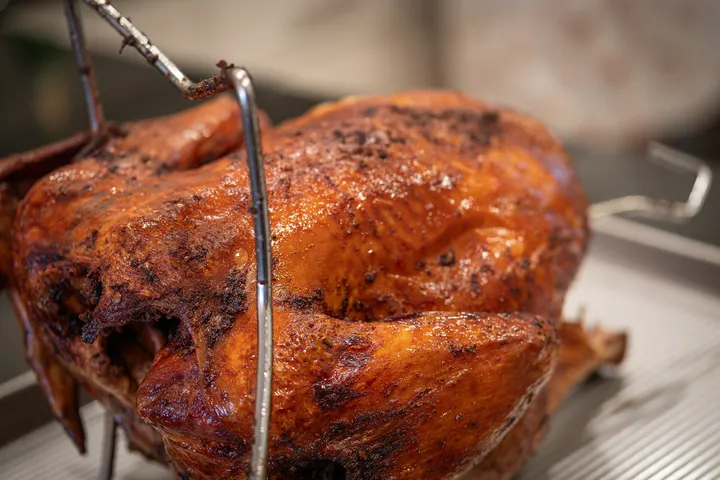
Pellet grill turkey
Set the grill to 300°F with cherry and pecan pellets and plan on about 3 hours 15 minutes for a brined 14 lb turkey. Pull when the breast reads 162°F and the thigh 175°F, then rest it 30 minutes.
- Grill
- 300°F
- Pull at
- Time
- 4 hr
How to smoke a ham on a pellet grill: a fully cooked bone-in ham at 225°F for about 3 hours to 140°F, with three coats of glaze at the end. Timing by weight.
Each recipe gives the pellets, grill temperature, pull temperature and time first. Pull temperatures meet USDA minimums or the doneness barbecue cooks aim for, whichever is higher. Our own cook photos are being added page by page; current photos are credited stock.
Warm a fully cooked 8 lb bone-in ham at 225°F on half cherry, half maple pellets for about 2.5 to 3 hours, glazing at 120°F and 130°F and turning the grill to 300°F for the finish. Pull at 140°F; plan about 3.5 hours including a 20 minute rest.
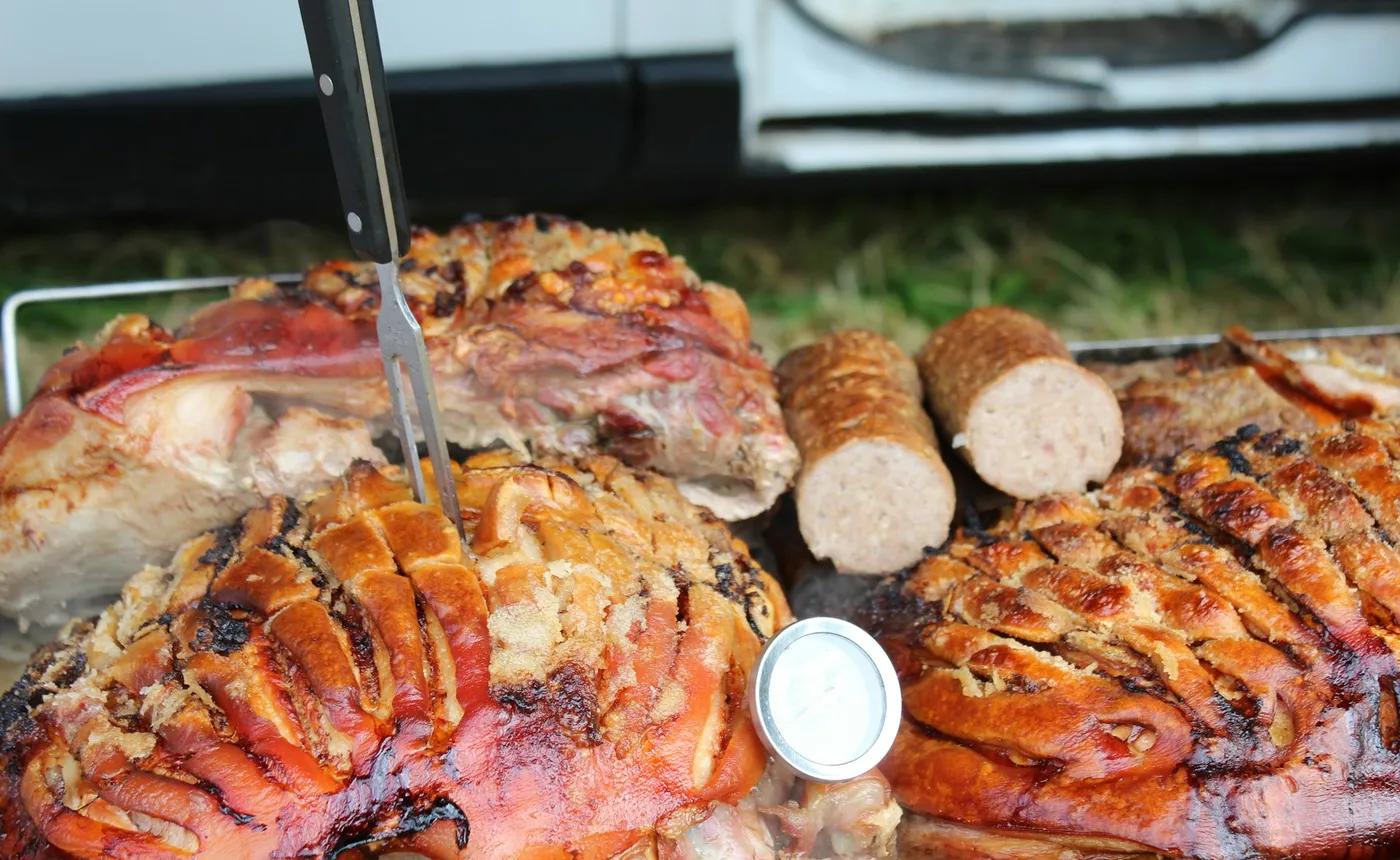
Most hams at the grocery store are already cured and fully cooked, so smoking one on a pellet grill means warming it through slowly and adding wood smoke and a glaze. For an 8 lb bone-in ham, that’s 2.5 to 3 hours at 225°F until it reads 140°F inside, with the glaze going on in the last 30 minutes.
This recipe is written for an 8 to 9 lb bone-in spiral ham on a Traeger with cherry and maple pellets. A ham that goes on at 9 a.m. is usually glazed and off the grill before noon. If you’re putting together a holiday table from the pork recipes here, this is the one that frees your oven for sides. A turkey can go on the same grill the day before, and the ham the morning of.
The common mistake is following the packet: 325°F with glaze from the start. By the time the center hits 140°F, the outer slices have turned to leather and the glaze has blackened at the edges. Low heat and late glaze solve both problems.
Buy a bone-in, fully cooked smoked ham, 7 to 10 lb for a half or 14 to 18 lb for a whole. The label will say “fully cooked” or “ready to eat”. A ham marked “cook before eating” or sold as “fresh ham” is raw pork leg, and that’s a much longer cook with a different target temperature. Bone-in stays moister than boneless, and the bone makes stock afterward.
The real choice is spiral-cut or whole. A spiral ham is sliced to the bone at the plant, which makes serving easy and lets smoke and glaze into every slice, but all those exposed faces dry out faster. An unsliced ham is more forgiving on the grill and carves into thicker slices, though you do the carving. For a pellet grill I’d buy spiral-cut and protect it with a pan of juice.
The shank half has the pointed end, less bone and cleaner carving. The butt half is rounder with more meat and an awkward bone. Both cook the same way. Where there’s a choice, skip hams labeled “water added” or “with natural juices”, because a drier cure takes smoke better.
| Ham | Pros | Watch for |
|---|---|---|
| Bone-in spiral | Easy to serve, glaze gets between slices | Outer slices dry out; keep it in a pan |
| Bone-in whole (unsliced) | Most forgiving, thick slices | You carve it; score the fat |
| Boneless | Cooks faster, slices evenly | Drier, often more water added |
| Fresh or “cook before eating” | Raw, so you control the smoke | Longer cook, cook to 145°F |
| Ham | Grill temp | Time | Pull at |
|---|---|---|---|
| Half ham, bone-in, 5 lb | 225°F | 1.75 to 2.25 hours | 140°F |
| Half ham, bone-in spiral, 8 lb | 225°F | 2.5 to 3 hours | 140°F |
| Half ham, bone-in whole, 10 lb | 225°F | 3 to 3.5 hours | 140°F |
| Boneless ham, 8 lb | 225°F | 2 to 2.5 hours | 140°F |
| Whole ham, bone-in, 16 lb | 225°F | 4.5 to 5.5 hours | 140°F |
| Half ham, bone-in, 8 lb | 275°F | 1.75 to 2.25 hours | 140°F |
Work on 15 to 20 minutes per pound at 225°F straight from the fridge. A ham has no stall and no collagen to break down, so the clock is more reliable than it is with a pork butt, though the probe still has the final say. The smoke time calculator covers other weights and grill settings. For a 16 lb whole ham on a long holiday morning, run the pellet calculator first so the hopper doesn’t run dry halfway through.
Pull the ham from the fridge an hour before it goes on. Take off the plastic disc over the bone and any netting. On an unsliced ham with a fat layer, score a diamond pattern a quarter inch deep so smoke and glaze can get in. A spiral ham is already open.
Set the ham cut side down in a foil pan and pour half a cup of apple juice or cider into the bottom. The pan catches drippings, and the juice keeps the lower slices from drying while the top takes smoke. On a bare grate, a spiral ham loses moisture through every cut face, and the outer slices come out like jerky.
Keep the rub light and leave out salt, since the ham is already cured. Brown sugar, pepper, a little paprika and dry mustard are enough, about 2 tablespoons total for an 8 lb ham, pressed onto the outside and between a few slices.
Make the glaze before the ham goes on: half a cup of brown sugar, a quarter cup of honey, 2 tablespoons of Dijon, a tablespoon of cider vinegar and a pinch of ground cloves, warmed in a small pan until it pours. Keep it by the grill so it’s ready at 120°F.
I use equal parts cherry and maple. The ham was smoked once at the plant, so what you’re adding is a second, sweeter layer that sits on top of the cure. Cherry gives color and maple matches the glaze. Hickory works if it’s all you have, though it can push a cured ham toward bacon. Apple is the other safe option.
Set the Traeger to 225°F and wait 15 minutes after it reports ready. Put the pan in the center of the grate with the probe in the thickest part of the meat, clear of the bone, and close the lid.
Leave it alone for about two hours. There’s nothing to spritz or wrap. If the top starts to look dry, tent the pan loosely with foil, but with juice in the pan at 225°F that rarely happens.
The glaze goes on in three stages:
| Internal temp | Grill setting | What to do |
|---|---|---|
| 120°F (about 2 hours in) | 225°F | Brush on the first third of the glaze |
| 130°F | Raise to 300°F | Brush on the second third |
| 140°F | 300°F | Final coat, pan comes off |
The last stretch at 300°F caramelizes the sugar without burning it, which is where the shine comes from.
Watch out: Glazing too early fails the other way. Brush it on at 100°F out of worry it won’t set, leave the grill at 225°F throughout, and it never caramelizes. It sits on the ham like syrup, slides into the pan, and leaves the slices sticky instead of lacquered. Glaze late and give it about 20 minutes at 300°F at the end.
Take a fully cooked ham off at 140°F in the thickest part, away from the bone. That’s the USDA reheating guideline for cooked ham from a federally inspected plant, and it’s also where the ham is hot through without drying out. A 20 minute rest carries it to about 145°F. Going higher gains you nothing. A ham at 160°F isn’t any safer, only drier, and a spiral ham at 160°F turns into a stack of pork chips.
If you’ve bought a “cook before eating” ham by mistake, cook it to 145°F and rest it at least 3 minutes, and plan on about 25 minutes per pound. Read the label before the grill goes on.
Rest the ham in its pan under loose foil for 20 minutes. The glaze firms and the slices stop sliding apart when you move it. Spoon the pan juices over the cut face right before serving.
Most people smoke a ham in December, so plan for cold. Even on a still 28°F morning, a Traeger should hold 225°F without trouble, but expect an 8.5 lb ham to take closer to 2 hours 50 minutes, about 20 minutes longer than the same size ham in October. Wind adds more, since the lid loses heat and the fan pulls in cold air. Turn the back of the grill to the wind and add 30 minutes to the plan. An insulated blanket from the accessories list helps on any winter cook over two hours.
If you’re behind schedule, resist turning the grill up to 325°F. The outer slices of a spiral ham dry out faster than the center warms. Until the glaze goes on, 275°F is the highest I’d go.
When AmazingRibs tested a Traeger Pro 575, the left side, where the chimney pulls heat and smoke out, ran about 10°F hotter than the right at low settings. Point the thick, bone end of the ham toward your grill’s hot side and put the probe in from the other end.
Allow about half a pound of bone-in ham per person, so an 8 lb half feeds 14 to 16. On a holiday table it sits well next to smoked mac and cheese, which shares the grill at 225°F for the last hour, and a turkey breast if ham isn’t the main event. Serve it warm off the bone with the pan juices and any extra glaze on the side.
Leftover ham keeps five days in the fridge and two months frozen, and it’s better cold than reheated. To warm slices, cover them with a splash of water or juice and heat at 250°F until hot, about 15 minutes. The bone goes into a pot of beans or split pea soup the next day, which is half the reason to buy bone-in.
Cherry and maple in equal parts give a cured ham color and a sweetness that lines up with the glaze. Apple can stand in for either. Keep mesquite away from a cured ham. The best pellets for smoking guide covers which bags are worth the money.
A leave-in probe is the right tool here, because every glaze step is triggered by an internal temperature, and you don’t want to open the lid to find out where you are. The ones I’d buy are in best wireless meat thermometers.
thepelletpit.com/recipes/ham/
Unwrap and score
Take the ham out of the fridge an hour before cooking and remove the plastic bone cap and any netting. Score the fat of an unsliced ham in a diamond pattern a quarter inch deep; a spiral ham needs no scoring.
Into the pan
Set the ham cut side down in a foil pan and pour the apple juice into the bottom.
Light rub, no salt
Mix 2 tablespoons of brown sugar with the pepper, paprika and dry mustard, and press it onto the outside and between a few slices. Leave out salt, since the ham is already cured.
Make the glaze
Warm the half cup of brown sugar with the honey, Dijon, vinegar and cloves in a small pan until it pours. Keep it by the grill.
Heat to 225°F
Fill the hopper with equal parts cherry and maple. Set 225°F and wait 15 minutes with the lid closed after the grill reads ready.
Smoke to 120°F
Put the pan in the center of the grate with a leave-in probe in the thickest part, clear of the bone. Close the lid for about 2 hours, until the probe reads 120°F.
Glaze twice and turn it up
Brush on a third of the glaze at 120°F. At 130°F, brush on another third and raise the grill to 300°F.
Final coat at 140°F
When the probe reads 140°F, brush on the rest of the glaze and take the pan off the grill.
Rest and baste
Rest the ham in its pan under loose foil for 20 minutes. Spoon the pan juices over the cut face before serving.
About 15 to 20 minutes per pound at 225°F straight from the fridge, so an 8 lb bone-in ham takes 2.5 to 3 hours to reach 140°F. A 5 lb half needs about 2 hours and a 16 lb whole ham 5 or more. Add 20 minutes to rest.
225°F for the smoke, then 300°F for the last 10 degrees to set the glaze, pulling at 140°F inside. Running the whole cook at 325°F dries out the outer slices before the center warms, especially on a spiral ham.
No. A foil pan with half a cup of apple juice, ham cut side down, does the job a wrap would. Tent the pan loosely with foil only if the top starts to look dry, which rarely happens at 225°F.
In the last 30 to 40 minutes, in three thin coats at 120°F, at 130°F when you raise the grill to 300°F, and at 140°F as it comes off. Glaze any earlier and the sugar burns or slides into the pan before it sets.
Yes, and it's the easiest ham to serve. The cut faces dry out quickly, so keep it cut side down in a pan with juice, hold 225°F, and pull at 140°F. Smoke and glaze get between every slice.
Set the grill to 300°F with cherry and pecan pellets and plan on about 3 hours 15 minutes for a brined 14 lb turkey. Pull when the breast reads 162°F and the thigh 175°F, then rest it 30 minutes.
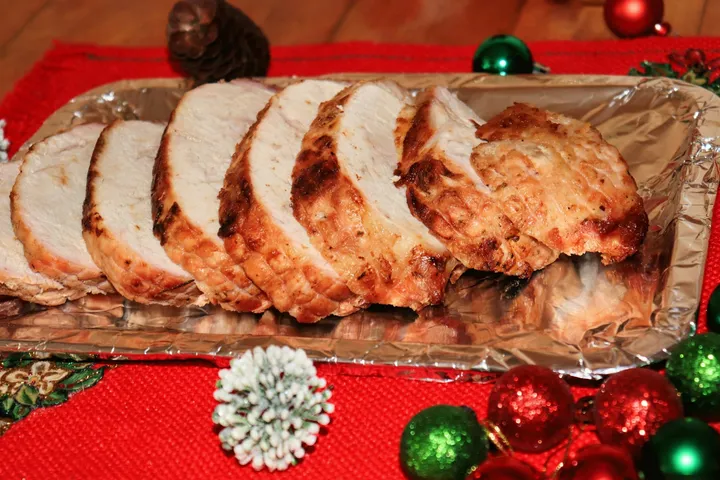
Smoke a 4 lb boneless loin fat side up at 225°F on straight apple pellets for about 2 hours 45 minutes, and pull at 140°F in the thickest part. Rest 15 minutes to 145°F; total time is a little over 3 hours.
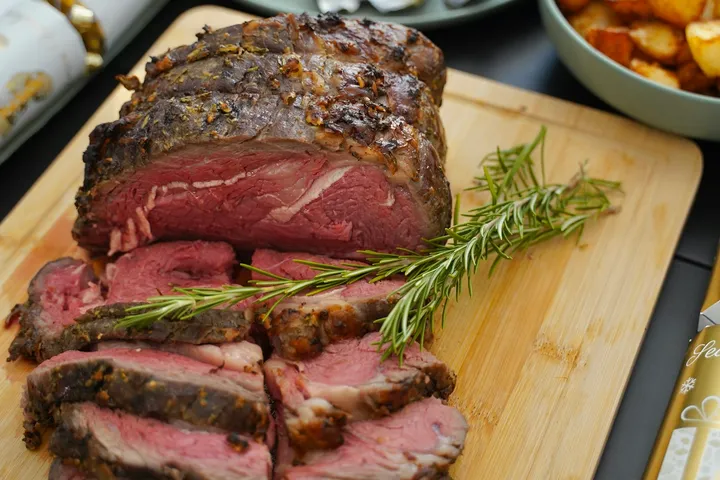
Smoke the roast at 225°F on oak and cherry pellets until the center reads 120 to 125°F, about 4 hours for a 7 lb 3 bone roast. Rest it while the grill heats to 450°F, sear 8 to 12 minutes, and rest 20 minutes for 130 to 135°F medium rare.
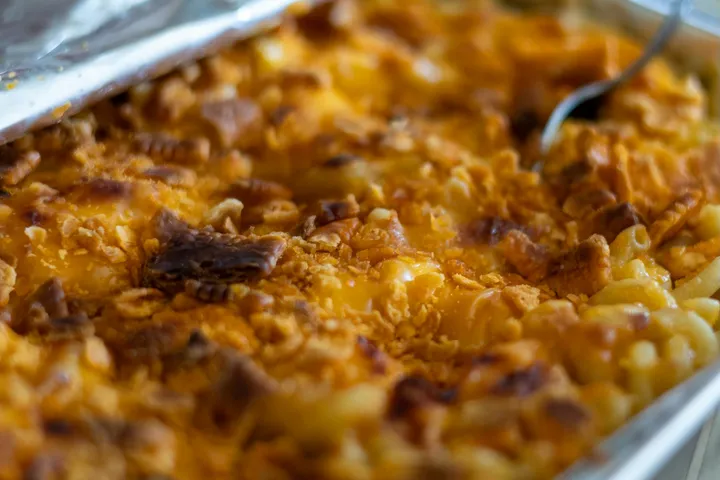
Put the skillet on uncovered at 250°F with apple or cherry pellets (or whatever the meat is running), stir once at 20 minutes, add the panko at 30, and pull at 165°F in the center. It takes 45 to 60 minutes.