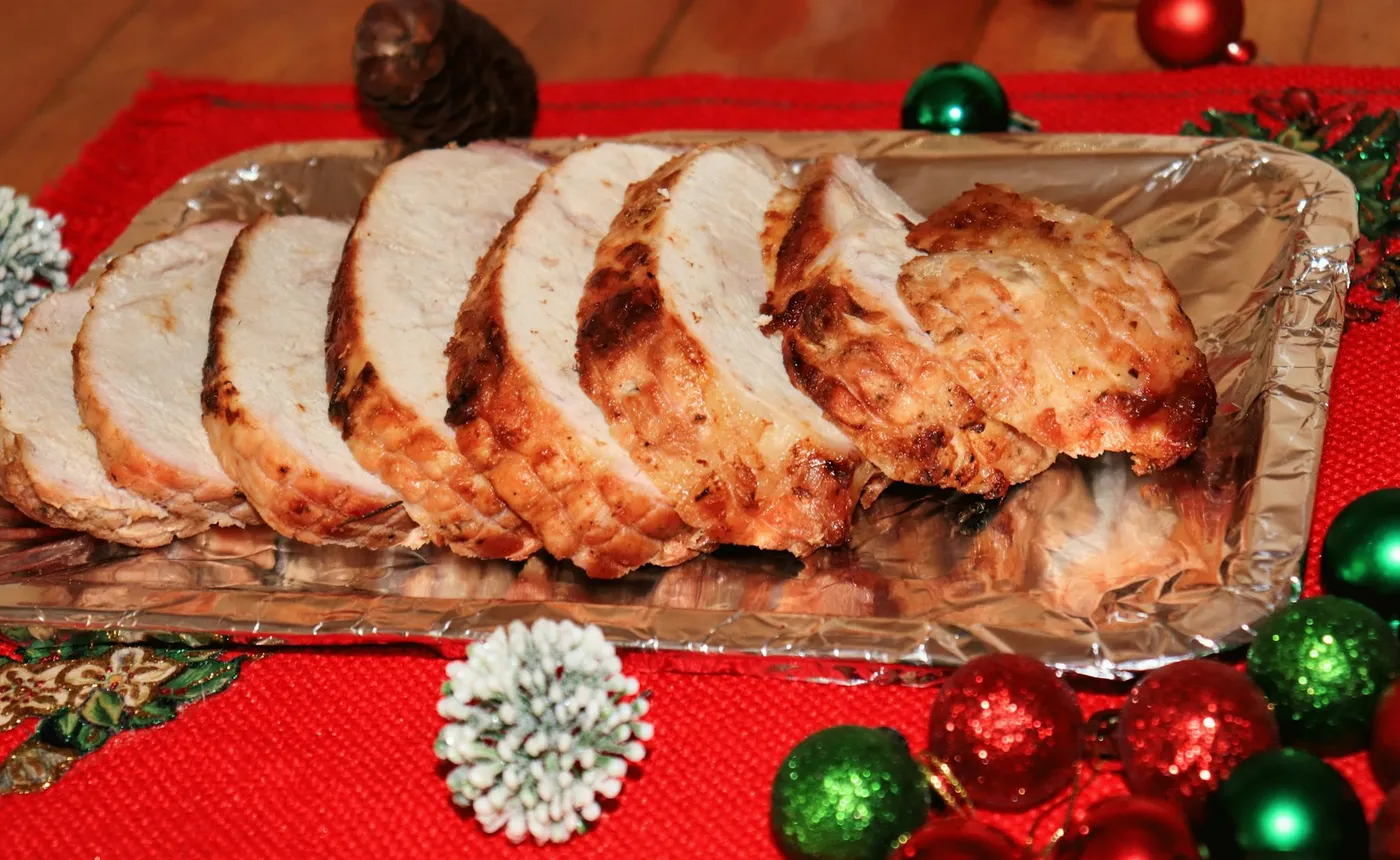
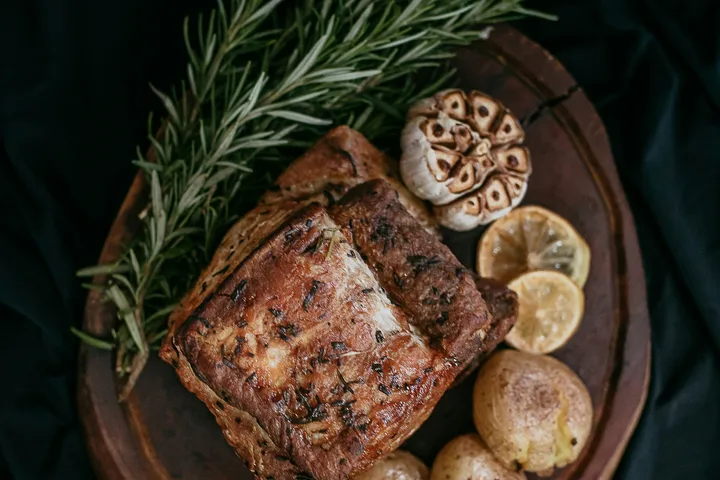
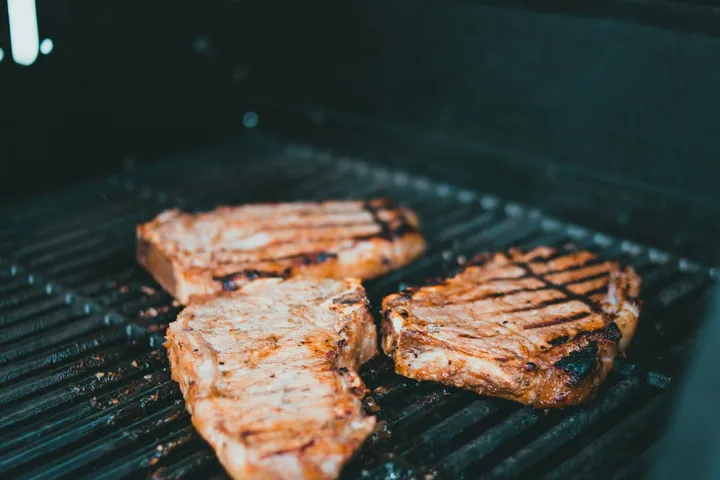
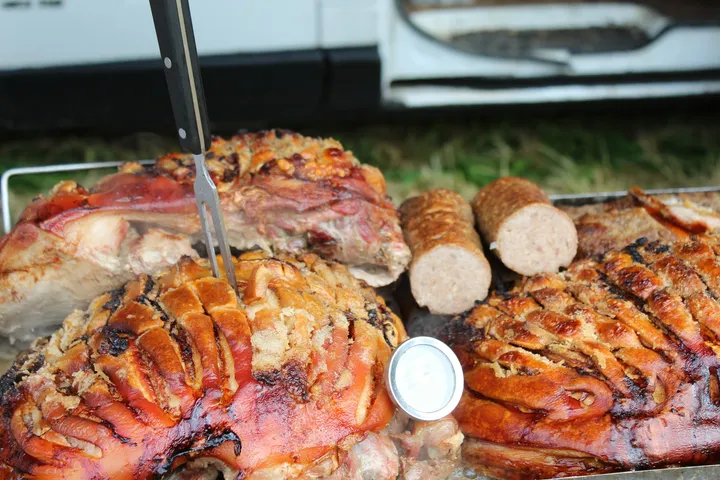
At 225°F with apple pellets, a 4 lb boneless pork loin on a pellet grill takes about 2 hours 45 minutes to reach 140°F, and a 15 minute rest carries it to 145°F. There’s no wrap, no stall and no overnight work, which makes it the simplest big cut you can smoke, and also one of the easiest to dry out, because 145°F and 160°F are very different pieces of meat.
This recipe is written for a Z Grills with straight apple pellets, and a loin that goes on at 4:30 is usually sliced by about 7:15. Of the pork recipes on the site, this is the weeknight one. It’s lean, it’s inexpensive for the amount of meat, and the leftovers slice into a week of sandwiches.
The most common loin mistake is cooking it to 160°F, a number a lot of people still carry around from old cookbooks. It comes out grey all the way through with dry edges. The USDA guideline for whole cuts of pork has been 145°F with a short rest since 2011, and cooking to that number changes the roast completely.
Buying a pork loin (and not a tenderloin)
Pick a boneless center-cut loin between 3 and 5 lb. It’s a long, round roast with a thin fat cap on one side and very little fat inside. Look for one that’s the same thickness from end to end. A loin that tapers will overcook at the narrow end before the thick end is ready, so if that’s all the store has, cut off the thin end and cook it on its own, or fold it under and tie it.
Pork loin and pork tenderloin aren’t interchangeable. Tenderloin is the slim 1 lb muscle that sits under the loin and cooks in about an hour, and it has its own recipe. The loin is the big roast that chops are cut from.
Skip packages that say “contains up to 12 percent solution”. They’ve been injected with salt water, the texture goes spongy and ham-like, and you can’t brine or season them properly. A plain loin with a quarter inch fat cap is what you want.
Pork loin smoking time per pound
| Cut and weight |
Grill temp |
Time |
Pull at |
| Boneless loin, 2.5 lb |
225°F |
1 hour 45 min to 2 hours |
140°F, rest to 145°F |
| Boneless loin, 4 lb |
225°F |
2.5 to 3 hours |
140°F, rest to 145°F |
| Boneless loin, 5 lb |
225°F |
3 to 3.5 hours |
140°F, rest to 145°F |
| Bone-in loin roast, 4 lb |
225°F |
3 to 3.5 hours |
140°F, rest to 145°F |
| Boneless loin, 4 lb |
275°F |
1.75 to 2.25 hours |
140°F, rest to 145°F |
| Boneless loin, 4 lb, seared at the end |
225°F then 450°F |
2.5 hours plus 6 min |
135°F, sear to 140°F |
Work out 35 to 45 minutes per pound at 225°F on a day above 50°F, adding about 10 minutes a pound for bone-in. Because a loin doesn’t stall, the clock is more reliable here than on a pork butt, though the probe still decides. For other weights and grill settings, try the smoke time calculator.
Choosing between 225°F and 275°F comes down to time. The lower setting gives you more smoke flavor and a wider margin near the finish, while 275°F saves about 45 minutes and leaves less room for error in the last 20 degrees.
Prep: brine, rub and tie
Trim the fat cap to about a quarter inch and score it in a crosshatch an eighth of an inch deep, so the rub gets in and the fat renders. If there’s silverskin on the underside (a thin, pearly membrane), slide a knife under it and peel it off, because it tightens into a tough strip as it cooks.
Brine it if you have four hours. A loin carries almost no internal fat, and brining is the cheapest protection against dry slices. Dissolve half a cup of kosher salt and a quarter cup of brown sugar in 2 quarts of water, submerge the loin, and refrigerate 4 to 8 hours. Much longer than that and the texture turns hammy. Rinse, pat dry, and leave the salt out of the rub.
No time to brine? Salt and rub the loin the night before and leave it uncovered in the fridge. Either way, coat it with a little olive oil first so the rub sticks to the smooth surface, then season with pepper, brown sugar, paprika, garlic powder and dried thyme. A 4 lb loin takes about 3 tablespoons of rub.
Tie it with butcher’s twine every 2 inches if it’s uneven or the fat cap is loose. A round loin cooks evenly from end to end, and a flat one doesn’t.
Smoking the loin at 225°F
I use straight apple for loin. It’s a mild cut on a short cook, and a heavy wood has nothing to balance it. Apple gives a light smoke and a golden surface, and cherry does much the same with a darker fat cap. Mesquite takes over the whole roast within two hours, so save it for beef.
Set 225°F and let the grill settle for 15 minutes after it reports ready. Put the loin in the center of the grate, fat side up, with the probe in the thickest part. On a Z Grills the chimney end is often the warmer one, so point the thick end of the loin that way.
Then close the lid and leave it. A loin gets no spritz and no wrap. Spritzing cools the surface and stretches a cook that’s already short, and wrapping steams the fat cap into something nobody wants. Check the probe at 90 minutes, then every 20 minutes once it passes 120°F, because the last 20 degrees move faster than the first hundred.
Watch out: A probe can drift toward the thin end as the loin firms up. It reads 140°F, the loin comes off, and the thick end turns out to be 128°F, which sends the center slices back to the grill. Before you pull, check the thickest part and the center with an instant-read. It takes ten seconds.
For a browned crust, take the loin off at 135°F and turn the grill up to 450°F with the lid closed. Once it’s there, put the loin back fat side down for 3 minutes, then turn it for 3 more. It’ll reach about 140°F during the sear.
When to pull pork loin: 140°F, then rest
Take the loin off at 140°F in its thickest part, tent it loosely with foil, and rest it 15 minutes. Carryover lifts it to 145°F, the USDA number for whole cuts of pork, and the center will be pale pink and moist. That pink is correct and safe.
| Pulled at |
After rest |
What you get |
| 140°F |
About 145°F |
Pale pink, juicy, the target |
| 145°F |
About 150°F |
Barely pink, still moist |
| 150°F |
About 155°F |
No pink, edges starting to dry |
| 160°F |
Mid 160s |
Grey and dry, needs gravy |
If pink pork bothers your table, 150°F is as far as I’d take it. At 160°F the slices are dry at the edges and the fat cap is the only soft part left.
Resting matters more on a lean roast than on a fatty one, because there’s no internal fat to cover for a mistake. Slice it straight off the grill and the juice floods the board. After 15 minutes it stays in the slices.
Cold nights, wind and your grill’s hot end
A loin at 225°F is a gentle cook and weather affects it less than a 10 hour pork butt, but it adds up. On a 40°F night with wind, expect the same 4 lb loin to take closer to 3 hours 20 minutes, because the grill cycles hard and the grate can swing about 20°F either way. On an 85°F summer evening it can be done in about 2 hours 30 minutes.
Cold also affects the rest. A tented loin on a freezing deck loses heat fast, and carryover can stop around 143°F. Bring it inside to rest, and on a night below freezing, pull at 142°F instead of 140°F.
One review that mapped a Z Grills 700D3 at 225°F found the chimney side warmest, with about 18°F between the coolest and hottest spots on the grate, though other testers found theirs close to even. If yours leans like that, turn the loin end for end at the one hour mark. If you have a probe clipped at grate level, trust it over the controller display.
Slicing, serving and leftover pork loin
Slice half an inch thick across the grain. A 4 lb loin gives about 16 slices, which feeds eight with sides. It wants something sharp alongside it, such as a grainy mustard sauce, apple chutney or a vinegar slaw. Thick barbecue sauce works but covers up the smoke.
Smoked mac and cheese fits beside it at 225°F for the last 90 minutes. If you want the same meat in a faster cook, pork chops are loin cut thick, and a smoked ham is the holiday version of a big pork roast.
Leftover slices keep four days in the fridge. They’re better cold in a sandwich than reheated, because warming a lean slice past 145°F dries it out. If you do reheat, cover the slices with a splash of stock and warm them at 250°F until hot, about 15 minutes.
Pellets and thermometer for pork loin
Straight apple is the wood for loin, since the cook is short and the meat is mild. Cherry is the other good choice. The best pellets for smoking guide covers which bags are real fruit wood and which are oak with flavoring.
The setup that works is a leave-in probe in the thick end and an instant-read for the final check. The gap between done and overdone on a loin is about 5°F, which is too narrow to guess. The thermometers I’d buy are in best wireless meat thermometers.