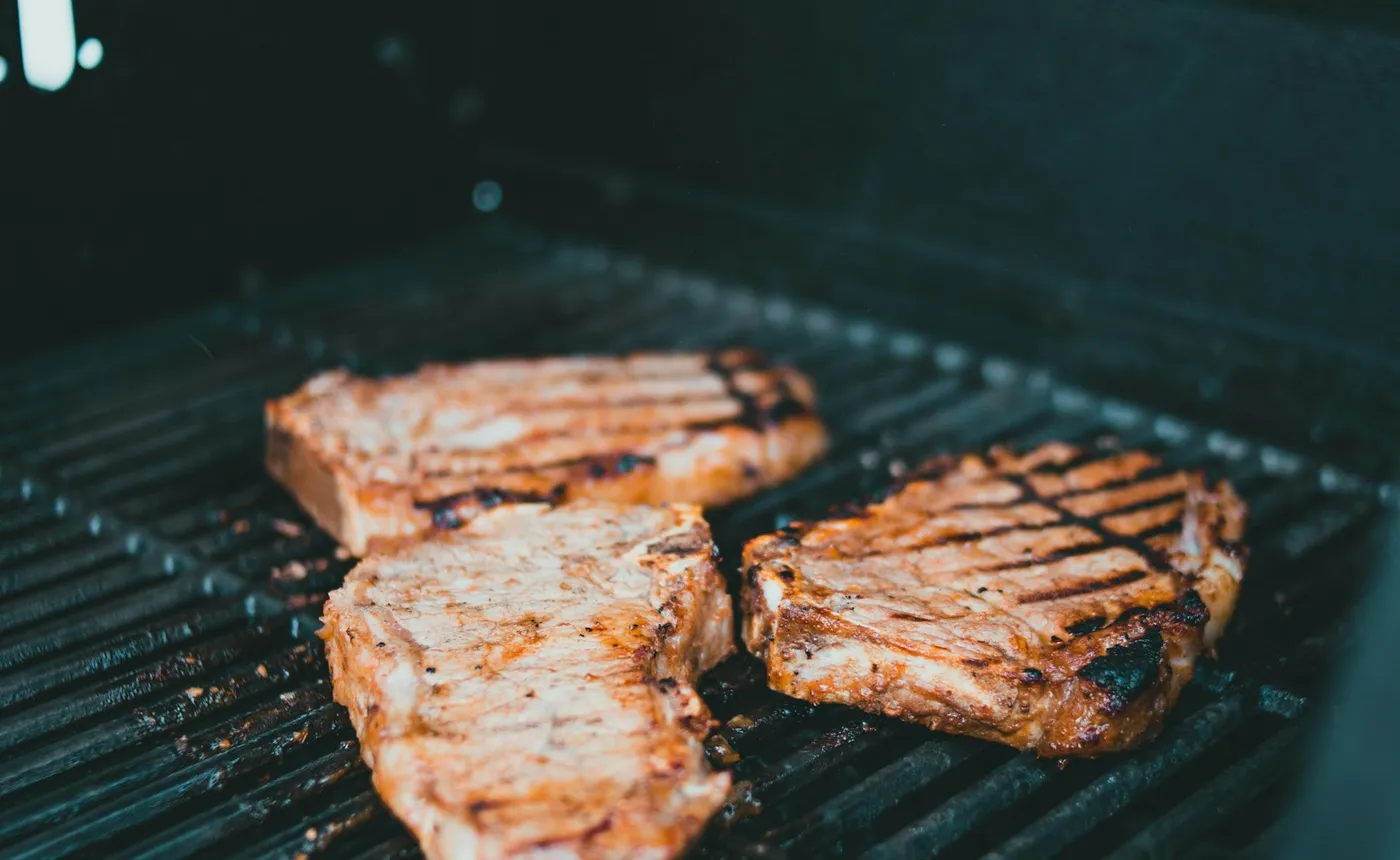
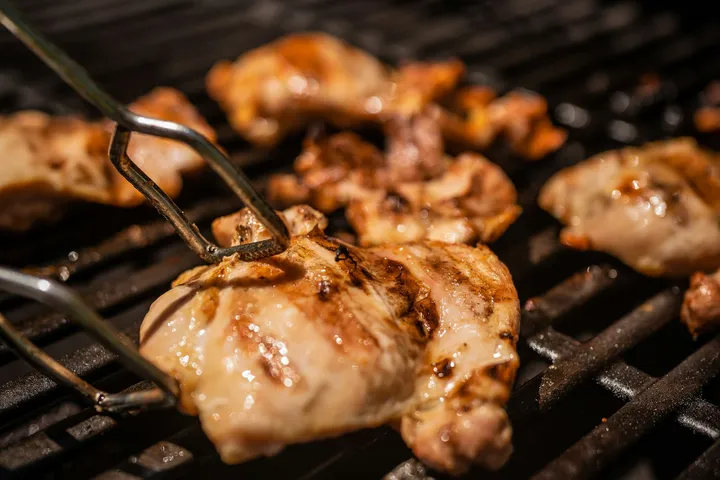
I smoke 1.25 inch bone-in pork chops at 225°F on a pellet grill for about 45 minutes, until they read 120°F, then sear them over open flame for 60 to 90 seconds a side and take them off at 140°F. A 5 minute rest brings them to 145°F, and the whole cook takes about an hour, with a pink center and a crust that tastes like charcoal.
This recipe is written for four bone-in rib chops, each 1.25 inches thick and about 12 oz, on a Pit Boss with straight hickory. Chops that go on at 5:30 are usually off the fire by about 6:30. Of the pork recipes on the site, it’s the quickest one that still puts real smoke on the meat, and it’s the cook that makes the most of the Pit Boss slide plate over the fire.
The usual first attempt is a three-quarter inch chop treated like a steak. It goes from raw to 165°F in about 20 minutes, comes out grey through the middle, and tastes mostly of rub. Thicker chops and two stages fix every part of that.
Buying pork chops: thickness first
Buy bone-in rib chops or center-cut loin chops at least 1.25 inches thick, and 1.5 inches if you can find them. Thickness decides how the cook goes, because a thick chop can take 45 minutes of smoke plus a hard sear without overcooking, and a thin one can’t. If the case only has thin chops, ask the meat counter to cut some thicker from a whole loin. Most stores will do it at no charge.
Rib chops come from the shoulder end of the loin and carry a bit more fat and flavor. Center-cut loin chops are leaner and have a small piece of tenderloin on the far side of the bone, which cooks faster. At this thickness, either works. Boneless chops are fine too, but they finish about 10 minutes sooner and have less to protect them, so pull them 5°F earlier from the smoke.
Skip packages labeled “enhanced” or “with up to 12 percent solution”. Those chops are injected with salt water and never brown properly. You want a plain chop with a strip of fat along one edge.
| Chop |
Thickness |
Best for |
| Bone-in rib chop |
1.25 to 1.5 inches |
Most flavor, most forgiving |
| Center-cut loin chop |
1.25 to 1.5 inches |
Leaner, tenderloin side cooks faster |
| Boneless loin chop |
1 inch |
Quick, pull 5°F early |
| Thin chop |
3/4 inch |
Only with careful low smoke and a 20 second sear |
Pork chop timing by thickness
| Chop |
Grill temp |
Smoke, then sear |
Pull at |
| 1 inch boneless |
225°F |
30 to 40 min, then 1 min per side |
115°F from smoke, 140°F after sear |
| 1.25 inch bone-in |
225°F |
40 to 50 min, then 60 to 90 sec per side |
120°F from smoke, 140°F after sear |
| 1.5 inch bone-in |
225°F |
55 to 70 min, then 90 sec per side |
125°F from smoke, 140°F after sear |
| 2 inch bone-in |
225°F |
75 to 90 min, then 2 min per side |
125°F from smoke, 140°F after sear |
| 3/4 inch thin |
180 to 200°F |
25 to 30 min, then 20 sec per side |
125°F from smoke, 140°F after sear |
| 1.5 inch bone-in, no sear |
225°F |
75 to 90 min |
140°F, rest to 145°F |
Chops cook by thickness rather than weight, so four take the same time as one. The smoke time calculator gives a starting figure for other grill settings, but with chops, the thermometer decides almost everything.
Prep: brine, rub and scoring the fat
If you have an hour, brine them. Chops are lean, and a short brine gives you about 5°F of forgiveness at the end. Dissolve 3 tablespoons of kosher salt and 2 tablespoons of brown sugar in a quart of water, add the chops, and refrigerate 1 to 2 hours. Rinse, pat dry, and leave the salt out of the rub.
Without a brine, salt the chops an hour ahead instead. Either way, pat them dry afterward and let them sit uncovered in the fridge while the grill heats, because a dry surface browns faster on the sear.
The rub is pepper, paprika, brown sugar, garlic powder, onion powder and a pinch of dry mustard, plus salt if you didn’t brine. Oil the chops lightly first so it sticks, and use about 2 teaspoons per chop. Then nick the fat along the edge every half inch. Unscored fat shrinks as it cooks and bows the chop up off the grate.
Smoke, then sear: the two-stage cook
I use straight hickory for chops. The smoke stage is only about 45 minutes, and a mild fruit wood barely shows up in that time. Hickory comes through clearly and stands up to the char from the sear. Oak works as well, and apple is fine if you want them milder.
Set the Pit Boss to 225°F with the slide plate closed and wait 15 minutes after it reports ready. Lay the chops on with the bones pointing toward the hot end and put the probe in the thickest chop, away from the bone. Close the lid.
Leave them for 30 minutes, then check. For 1.25 inch chops, you’re aiming for 120°F. From about 100°F they climb roughly a degree a minute, so once they’re past 110°F, stay at the grill. When they hit 120°F, move them to a plate and tent loosely with foil.
Now open the lid, slide the plate open to expose the fire pot, and set the grill to its highest setting (the Pit Boss has a sear setting for this). Give it 8 to 10 minutes with the lid closed. You’ll see flame through the slots, and it’s hotter than it looks because the fan is blowing on it.
Watch out: The tempting move on a first open-flame sear is to put all four chops over the slots and give them 2 minutes a side like steaks. The fat catches, the rub blackens, and the chops can shoot from 120°F to nearly 160°F before you get them off. Sear two at a time, 60 to 90 seconds a side, with tongs in one hand and the instant-read in the other. If the fat flares, slide the chop off the flame for 10 seconds.
Pull each chop at 140°F in the center, and close the slide plate once the last one is off. If your pellet grill has no open-flame option, run it to 450°F and sear the chops 2 minutes a side over the hottest part of the grate, or finish them in a cast iron pan on a side burner or the stove. The smoke is already in the meat, so all the sear adds is crust.
To skip the sear completely, leave the chops at 225°F until they reach 140°F, about 75 to 90 minutes for a 1.5 inch chop. They’ll be tender and smoky, without much color.
When to pull pork chops (and where to probe)
Pull at 140°F in the thickest part, away from the bone, then rest 5 minutes under loose foil. They’ll finish at 145°F, the USDA guideline for whole cuts of pork, with a pale pink, juicy center. A grey chop isn’t any safer, only drier.
If pink pork is a problem at your table, 150°F is as far as I’d go. At 160°F a chop is dry, and the fat is the only part worth eating.
Keep the probe away from the bone. Bone conducts heat and reads several degrees high, so you’ll pull early and find the meat next to it underdone. Probe the center of the eye of the chop.
Cold weather and setting up the grate for searing
Chops cook in about an hour, so cold adds 10 to 15 minutes to the smoke and barely touches the sear. On a 30°F night with wind, expect the grill to need closer to 12 minutes to reach sear heat instead of 8, and the smoke stage to run about 55 minutes for 1.25 inch chops, against about 40 in July.
The sear holds up best in bad weather, because the open fire is as hot at 30°F as at 90°F. What changes in the cold is how fast the chops lose heat on the plate between stages, so tent them well and move quickly.
Pit Boss grills often run hot at the end near the hopper, even with the plate closed, so the thickest chop goes there during the smoke. The open slots sit in the middle of the grate. If your grill has removable grate sections, it helps to plan where the chops will land before the plate opens, so you can move them on and off the fire without reaching across flame.
What to serve with smoked pork chops
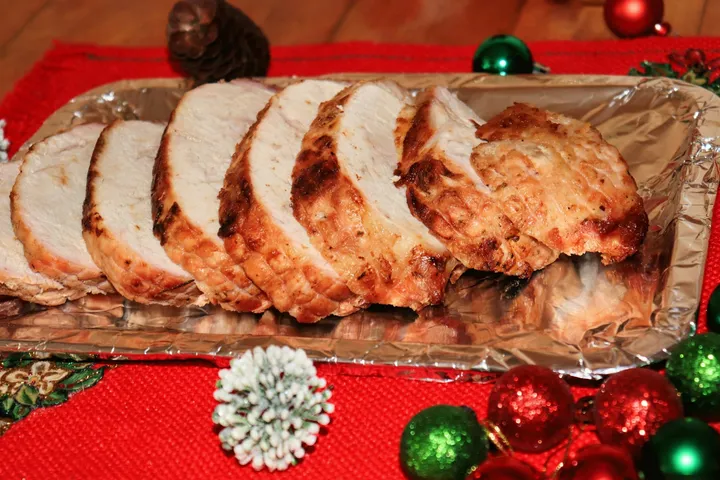
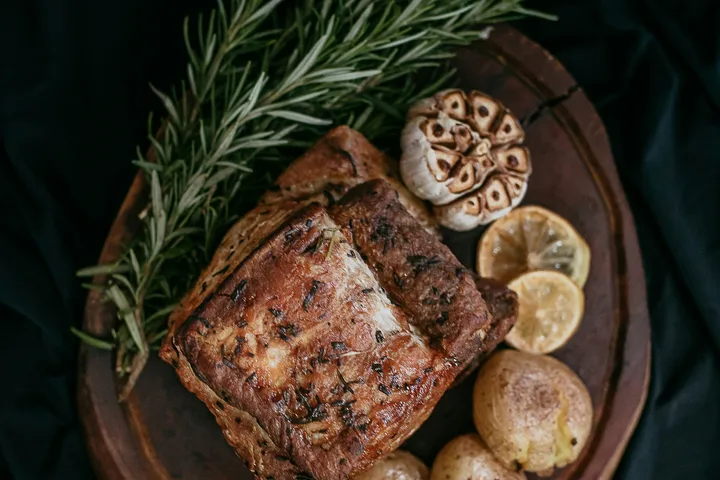
One 12 oz bone-in chop is a serving, so four chops feed four. They go well with something sharp and something soft, such as a mustard pan sauce, applesauce or vinegar slaw, plus smoked mac and cheese, which can go on the grill an hour ahead at the same 225°F. For a bigger table, a pork loin is the same meat as a roast. For a faster, boneless option, see pork tenderloin.
Leftover chops keep three days. Slice the meat off the bone and eat it cold in a sandwich, or warm the slices gently in a covered pan with a splash of stock. Reheating a whole chop past 145°F undoes the careful cooking.
Pellets and thermometer for pork chops
Straight hickory, since the cook is short and a thick chop can handle it. Cut it with apple if you want something milder. The best pellets for smoking guide covers which bags are what they claim to be.
An instant-read thermometer matters most during the sear, when things move too fast for a leave-in probe and a phone app to keep up. A leave-in probe in the thickest chop during the smoke stage saves you from lifting the lid. The thermometers I’d buy are in best wireless meat thermometers.