If smoke flavor is the reason you’re shopping, the Lone Star Grillz 20’’ x 42’’ pellet smoker is the one owners rank first, and it costs $3,145 plus freight on Lone Star’s site in November 2026. Former offset owners describe it as the first pellet grill that didn’t make them miss the firebox, and the 3/16 inch steel chamber comes with a lifetime warranty.
The trade-offs are physical. It weighs 445 lb, the main chamber tops out at 450°F, and it’s built after you order, with lead times of 8 to 14 weeks. The rest of my pellet grill reviews cover the mainstream brands, and if you’re still deciding whether a pellet grill belongs in the same conversation as a stick burner, start with pellet grill vs offset smoker.
This review comes from Lone Star’s product page, owners on the AmazingRibs and Smoking Meat forums, and the long-term reviews that exist. My own temperature logs will be added with a date.
Lone Star Grillz is a Conroe, Texas shop best known for heavy offsets and cabinet smokers, and the pellet line is built the same way: thick plate, welded, made to order. Besides the 20 x 42 there’s a 20 x 36 (about $2,950), a cabinet pellet smoker (about $4,000) and all-stainless versions at about $7,000.
Who the 20 x 42 is for
Buy it if smoke is the thing every mainstream pellet grill has let you down on. Owners say over and over that nothing else in the category puts out this much. The design explains why. A thick chamber, a big fire pot, a tall adjustable stack and a pellet feed that pushes more fuel at low temperatures than a thin grill could take all add up to more smoke on the meat.
It’s also the grill to compare if you’ve been eyeing a Yoder YS640S. The Lone Star has thicker steel, double the hopper, more grate, the same FireBoard brain, and costs about $1,750 less than the Outlander version in November 2026. My Yoder review covers where the Yoder still wins, mainly its cart and its 600°F ceiling.
Skip it if your grill has to move, if you want to roast at 500°F in the main chamber, or if you need it this month. Skip it too if you want gadgets. The FireBoard app is excellent, but there’s no touchscreen, no lid sensor and no built-in light.
20 x 42 specs that matter
From Lone Star’s product page in November 2026:
| Spec |
Lone Star Grillz 20 x 42 |
| Price |
$3,145 cart or built-in; $6,995 all stainless; freight extra |
| Cooking area |
1,278 sq in (20.5 x 35.5 in bottom, 15.5 x 35.5 in top) |
| Hopper |
40 lb with pellet dump |
| Temperature range |
160 to 450°F air; 700°F and up at the direct grill grate |
| Controller |
FireBoard PID built for Lone Star; Wi-Fi and Bluetooth |
| Probes |
2 meat probes and 1 ambient probe included; reads up to 6 |
| Steel |
3/16 in chamber, 1/8 in deflector |
| Igniter |
Ceramic hot-air, rated for 100,000 cycles |
| Weight |
445 lb |
| Warranty |
Lifetime chamber and structural steel; 3 years controller and igniter; 1 year auger motor and fans |
In the box you also get two pull-out food trays, a folding 10 x 34 inch front table, a Tel-Tru dial thermometer, an adjustable 4 inch stack and a 1.25 inch drain with a cap.
The 450°F air ceiling is the number people miss. This is a smoker that can grill over its fire pot, not a 600°F pizza oven. Spatchcock chicken at 400°F is fine; a 500°F roast isn’t happening in the main chamber.
How it cooks: smoke, temperature and searing
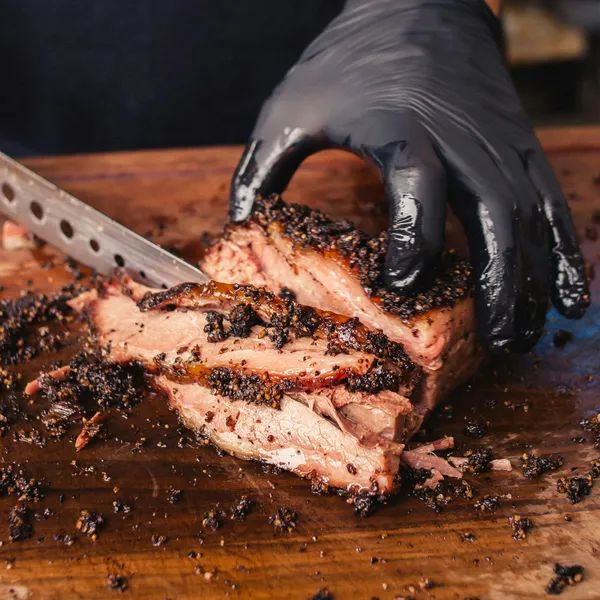
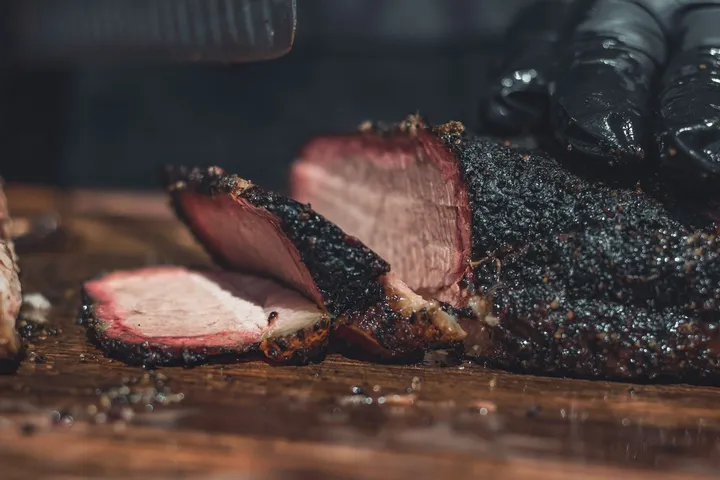
Smoke is the headline and the one thing every owner report agrees on. One owner who has run his since 2022 wrote that he hasn’t seen or heard of a pellet smoker putting out this much smoke. A reviewer who has cooked on most of the field called the 20 x 42 his favorite pellet grill. Several ex-offset owners describe the bark and smoke ring as the first from a pellet grill they didn’t have to make excuses for.
Temperature holding is reported as steady, as you’d expect from 3/16 inch plate and a PID. The trade-off matches the Yoder’s: the box takes a while to come up, and pellet use during warm-up is high. Once settled at 225°F, owners describe consumption as a bit above the thin grills, because the fire pot is fed to make smoke rather than to hit a number with the least fuel. One owner of the smaller 20 x 36 burned nearly a full hopper in one long run.
Pit tip: Fill the 40 lb hopper before any cook over ten hours, and run the numbers in the pellet calculator with a margin on top. This grill is tuned for smoke, not fuel economy, and an empty hopper at 4 a.m. is the one way to ruin a brisket on it.
Searing works without being fancy. Pull the direct-grill section of the deflector and the grate over the fire pot runs past 700°F. Owners use it for steaks and burgers and say it does the job. The rest of the chamber stays a smoker under the 450°F air ceiling, so you don’t get the side-by-side hot and cool zones a Yoder’s split diffuser gives you.
Auger feeding gets good marks. Owners running Lumber Jack and similar pellets report no jams, and Lone Star’s own pellets are chipped smaller, which owners credit for even fewer. The one mechanical complaint I found, on the smaller 20 x 36, is a gap around the fire pot that traps small pellet pieces and ash and makes cleanup fussier. Keep a shop vac handy.
Build, the FireBoard app and the warranty
Build is where the money goes. 3/16 inch plate is thicker than a Yoder’s 10 gauge and more than double the steel on a Traeger. Owners describe offset-quality welds, a lid that seals without a gasket because the steel doesn’t warp, and a folding front table that doesn’t wobble. The cost of all that steel is 445 lb, so plan on two people and a pallet jack for delivery day, and pick the spot before the truck arrives.
The controller is a FireBoard, the same brain Yoder uses. The app graphs pit and meat temperatures across the whole cook, alerts your phone and lets you schedule set-point changes. Six probe channels is more than most people need, and handy for a turkey and two butts at once.
The warranty is the best in the category, with lifetime cover on the chamber and structural steel, 3 years on the electronics and 1 year on the motor and fans. Lone Star is a small shop, and owners describe support as a phone call to someone who knows how the thing was built.
The wait is the real complaint. Buyers report 8 to 14 weeks from order to delivery, and freight on a 445 lb crate is extra, so order in winter if you want it for spring.
Price and the grills to compare it with
$3,145 in November 2026, plus freight, for the cart or built-in version. The all-stainless version is $6,995 and exists for outdoor kitchens where carbon steel would rust.
| Grill |
Price (Oct 2026) |
Steel |
Cooking area |
Hopper |
Top temp |
Chamber warranty |
| Lone Star Grillz 20 x 42 |
$3,145 plus freight |
3/16 in |
1,278 sq in |
40 lb with dump |
450°F air |
Lifetime |
| Yoder YS640S |
about $4,900 |
10 gauge |
1,070 sq in |
20 lb |
600°F |
10 years |
| Traeger Ironwood XL |
about $2,000 |
Thinner, insulated |
924 sq in |
22 lb |
500°F |
10 years limited |
| Camp Chef Woodwind Pro 24 |
about $1,300 |
Powder-coated |
811 sq in |
22 lb |
500°F |
3 years |
The Yoder wins on grilling, with its split diffuser and higher ceiling, and on the cart. The Lone Star wins on smoke, hopper, warranty and about $1,750. The Ironwood XL spends the money on a touchscreen and Traeger’s app instead of steel. The Woodwind Pro 24 is the budget route to heavier smoke, burning wood chunks in its Smoke Box for well under half the price, with thin steel, a 3-year warranty and no built-in sear.
First cooks on the 20 x 42
Start with the cooks that reward heavy smoke and thick steel.
The smoke time calculator gives starting times for each.
Should you buy the Lone Star Grillz 20 x 42?
Buy it if smoke flavor is why you’re here, the grill never has to move, and you can wait two to three months. Buy the Yoder YS640S instead if you want a sear zone and a 600°F ceiling and the extra $1,750 doesn’t hurt. If $3,150 is a stretch, the Camp Chef Woodwind Pro 24 gets you wood-chunk smoke for about $1,300.